
By Dr Adeline M. Nembot, Dr Vera Kum & Larissa Ntoubia
Executive Summary
The policy brief examines how the rising participation of women in Sub-Saharan Africa’s labour market has intensified a dual burden of paid work and unpaid care responsibilities. Women spend significantly more time on unpaid domestic work, which remains undervalued despite its substantial economic contribution. This imbalance leads to time poverty, limited career progression, and adverse health outcomes. Driven by entrenched gender norms and weak support systems, unpaid care work constrains women’s economic opportunities. The brief proposes policy measures to support women’s career advancement and redistribute care responsibilities through parental leave, anti-discrimination laws, and flexible work arrangements.
Key Messages
- Women in SSA face a dual burden of paid work and unpaid care, resulting in time poverty, limited access to education and employment, and constrained career advancement.
- Unpaid care work remains undervalued despite its significant contribution to national economies, reinforcing its invisibility in policy frameworks.
- Entrenched gender norms and restrictive legal frameworks sustain an unequal division of labour and broader economic inequality.
- Expanding parental leave, enforcing equal pay, and promoting flexible work arrangements are essential to reducing unpaid care burdens and advancing women’s careers.
Introduction
Over the past decades, the increase in Sub-Saharan African (SSA) women’s work in the labour market as a result of a combination of educational shifts, economic necessity, policy efforts, or social change, has induced them to shoulder a dual burden. In their quest for professional careers, these women struggle to combine their career with care home chores. While they usually carry the lion’s share of unpaid domestic and care responsibilities, they also participate in paid work and income-generating activities. However, this double burden of care work and career tends to lead to time poverty, limited access to career advancement opportunities, and health effects on women.
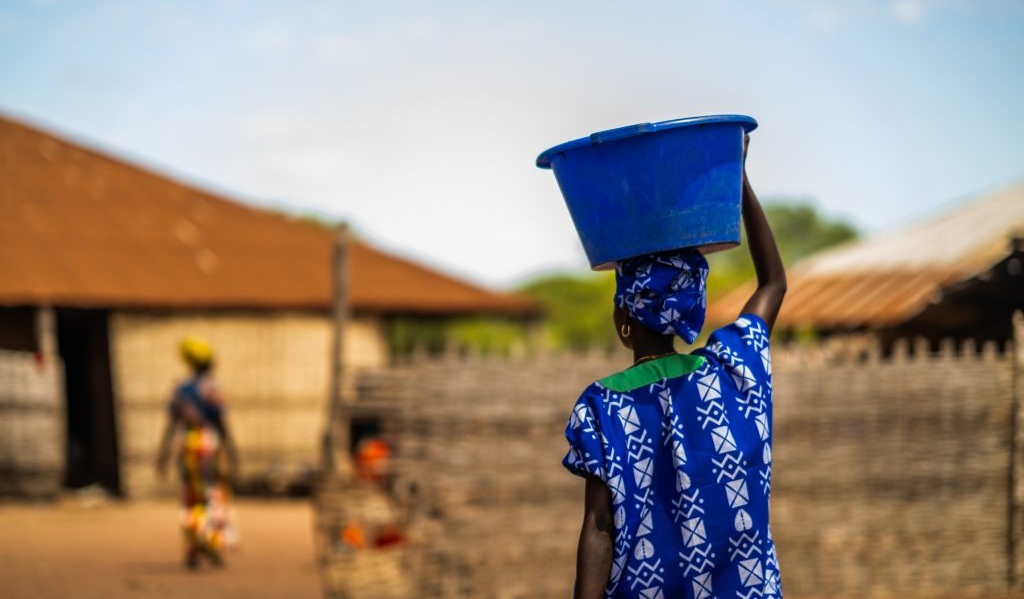
In fact, SSA women spend 3.1 times more time on unpaid care work than men including fetching water, collecting firewood, doing laundry, preparing food, and caring for children, sick, older persons, and people with disability. Such care responsibilities, though necessary to the functioning of society, is typically underpaid, undervalued, and invisible. For instance, if accounted for, women’s unpaid care and domestic work produced would have represented 13.9% of GDP in Senegal and 17.6% of GDP in Mali. Despite its potential for countries’ sustainable development trajectories, care work is often overlooked in policy making in the region.
The overloaded responsibility of unpaid and domestic work on women and girls relative to men and boys, is a structural driver to gender inequality. In fact, the division of labour in the majority of SSA continues to place a significant burden on women to provide both reproductive and productive labour. As a result, this dual burden hinders or delay their career trajectories and long-term economic security. As estimated by the International Labour Organization (ILO), unpaid care work keeps hundreds of millions (780 million) of women out of the labour force globally, particularly acute in SSA where public care services and social protection coverage are limited.
Hence, the main objective of this policy brief is to explain how unpaid and domestic work limit women’s careers in SSA and propose to national governments, development partners, and regional bodies, actionable policy recommendations to advance women’s career while reducing unpaid burden.
- Perception of Careersand Unpaid Domestic work in SSA
Across all regions in the world, cultural expectations often assign women to care giving and household responsibilities, while men are expected to focus on paid jobs outside the home. In fact, in traditional African societies, women primarily worked within the homestead and in the fields alongside their daughters, while men engaged in hunting and gathering activities with their sons. However, the event of the modern world has not changed this pattern significantly. Entrenched cultural norms and traditional conceptions of gender roles frequently prescribe distinct duties and expectations for men and women. These social frameworks typically emphasize men’s engagement in paid employment while confining women largely to domestic and care giving responsibilities. As a result, women’s access to education, skills acquisition, and gainful employment is often constrained, perpetuating structural gender inequalities. According to the African Union Strategy for Gender Equality and Women’s Empowerment, women in Africa shoulder the burden of care. This is especially true in areas where violence, famine, and epidemics have impacted heavily on national resources and infrastructure. This reflects a clearly defined gender division of labour, separating domestic responsibilities from activities conducted outside the household.
Similarly, gender norms and traditional roles have a profound influence on how women and men perceive careers and unpaid care work in SSA. The responsibility for unpaid work affects women across all socioeconomic backgrounds but weighs more heavily on those in lower-income households who lack access to affordable childcare and paid domestic assistance. This reflects the daily reality of many women in Africa, whose labour within the home and community remains largely invisible and undervalued, as it is often not recognized as legitimate or “formal” employment.
Furthermore, legal frameworks that limit women’s rights to own property, inherit assets, or access credit significantly constrain their capacity to launch businesses and achieve financial autonomy. Discriminatory labour regulations, such as restrictions on certain occupations or working hours, narrow women’s employment opportunities and impede their professional advancement. In fact, it is reported 75% of Francophone African economies had regulations restricting women’s employment, many of which reflect a 1954 ordinance of the former French West Africa federation. These economies include Benin, Burkina Faso, Cameroon, the Republic of Congo, the Democratic Republic of the Congo, Côte d’Ivoire, Gabon, Guinea, Madagascar, Mali, Mauritania, the Central African Republic, Senegal, and Chad. However, some improvements have been made in this regard. A notable example is the Democratic Republic of Congo (DRC), where, prior to the 2016, reform of the Family Code, women were required to obtain spousal authorization to sign legally binding contracts or to present written permission in order to take up employment or register a business.
Gender-based occupational segregation and persistent wage disparities remain defining characteristics of Sub-Saharan African labour markets. Approximately 74% of employed women work in low-paying occupations. The imbalance is also evident in professional fields, recording the lowest share of female medical doctors worldwide. According to a 2019 World Health Organization analysis covering 91 countries, women account for only 28% of physicians on the continent.
- How Unpaid and Domestic work constitute a hindrance to women’s Career in Sub-Saharan Africa
Although career work in the formal economy has become an increasingly appealing activity for women in recent years, care work remains predominantly a feminized sector and essential to family and community well being. Care work, whether paid or unpaid, is vital for both human well being and overall economic productivity, yet women carry a disproportionate share of unpaid care and household responsibilities. This imbalance constrains their participation in formal and informal employment, limits opportunities for career growth, and creates time poverty and significant opportunity costs, especially for marginalized women and girls. Women frequently leave jobs or face barriers to advancement, particularly in leadership positions, due to gender biases, inflexible work schedules, inadequate parental leave, and limited access to quality childcare services.
Time spent on unpaid work leaves less time for education or vocational training, limiting women’s competitiveness in higher-skilled job markets. In fact, even when men and women perform the same work, women are often paid less than men, even after controlling for factors such as education, experience, and occupation. As a result, women typically earn less than their male counterparts in Africa. For instance, in sub-Saharan Africa, the gender pay gap is at 30% in sub-Saharan Africa, compared to 24% globally including both the formal and informal sectors. Also, even when women are employed, they are frequently expected to handle most of unpaid tasks, such as cooking and childcare, which constrains their career opportunities. This dual burden also restricts participation in networking and professional development opportunities, reducing access to connections critical for career advancement.
Studies show that women with young children experience a “motherhood employment penalty”, resulting in lower employment rates. For instance, childcare responsibilities often push women out of the labour market, and re-entry can be challenging once these duties ease. Moreover, they often face physical and emotional strain in balancing paid work with unpaid care responsibilities, leaving little time for rest, leisure, or self-care. This heavy burden can increase their financial dependence on men, heightening vulnerability to abuse and violence. Extensive caregiving responsibilities can hinder women from attending to their own health needs, contributing to poorer health outcomes and difficulties accessing necessary medical care.
- Policy Recommendations toReduce Unpaid Care Work and Advance Women’s Careers in Sub-Saharan Africa
Workplace policies that support caregivers can enable both men and women to fulfill their caregiving responsibilities without sacrificing financial stability or career growth. Sub-Saharan Africa government and development partners should promote gender equality by ensuring equal pay for women in the health and social sectors, increasing their representation in leadership positions, and prioritizing access to comprehensive healthcare, including reproductive and mental health services, as well as support for survivors of violence. Hence:
- Governments should adopt and implement full parental leave policies, including paid maternity and paternity leaves, to share caregiving responsibilities, lessen the burden on women, and allow active participation by men in home care for better gender equality, both within the home and at work.
- Governments should apply equal pay policies and workplace anti-discrimination laws, and business incentives, to encourage the hiring of women by employers from the private and public sectors and their retention and promotion. This will reduce biased hiring practices against women associated with maternity leave that increase inequality in formal employment and leadership.
- Governments and the private sector (employers, telecom firms)should expand digital work and flexible remote working arrangements, especially for women in informal and formal sectors. This can be done through investment in digital infrastructure, affordable internet access, and workplace guidelines for flexible work. In low resource SSA settings, leveraging mobile based solutions and public private partnerships can make implementation more feasible while extending access to both informal and formal workers.
Conclusion
The challenges of juggling careers and care giving for women in Sub-Saharan Africa need to be addressed by governments, civil society, and the private sector. The legal reforms related to parental leave and anti-discrimination can be coupled with investments in childcare infrastructure and education reforms,alongside flexible work arrangements that encourage shared responsibilities. Stakeholders must translate these insights into concrete policies and sustained commitments ensuring that gender equality is not just discussed, but decisively advanced across the region.

Dr. Adeline Nembot
Adeline is a Head of Gender, Women’s Empowerment, and the Care Economy in the Economic Affairs Division at the Nkafu Policy Institute. She holds a PhD in Labour and Development Economics from the Collaborative PhD Program (CPP), obtained under the auspices of the African Economic Research Consortium (AERC),

Dr Fuein Vera Kum is a Research Fellow at the Nkafu Policy Institute. She joined the institute as Economic Policy Analyst in 2017 with a focus on health economics and development policy. She holds a Ph.D in Economics from the University of Benin, Nigeria.

Larissa Ntoubia
Ntoubia Ngapmen Larissa, holds a Bachelor’s degree in Banking and Finance and a Master’s degree in Economics and Financial Engineering from the University of Yaoundé II Soa. She is currently a Research Associate at the Nkafu Policy Institute of Denis and Lenora Foretia Foundation under the Economic Affairs Division.



Leave A Comment