
By Enowbachem Agbortanyi
Executive summary
Ten years into the Anglophone crisis, Cameroon is grappling with an ongoing crisis that has humanitarian, political, socio-economic, and other impacts on the country. Although there have been efforts to resolve the crisis, such as major national dialogue, decentralization, and disarmament, among others, the issue persists. This paper argues that it is not the lack of action but rather the failure in implementing them effectively that has resulted in the limited success of previous attempts. Several initiatives have struggled to adequately address long-standing grievances related to governance, identity, representation, language, and autonomy. A more realistic way forward would be a gradual, diplomatically led process aimed at building trust through dialogue, reform, involvement, humanitarian assistance, and accompanying support from the international community. Prospects for sustainable peace may improve if security measures are accompanied by an inclusive and credible political process.
Key messages
- The humanitarian consequences of the Anglophone crisis remain severe, with over 1.5 million people requiring humanitarian assistance and continued displacement across affected communities.
- Multiple peace initiatives have been undertaken at national and international levels, but implementation challenges and limited stakeholder buy-in have reduced their effectiveness.
- Sustainable peace is likely to require more inclusive dialogue, stronger confidence-building measures, and more effective implementation of governance reforms.
Background and Context
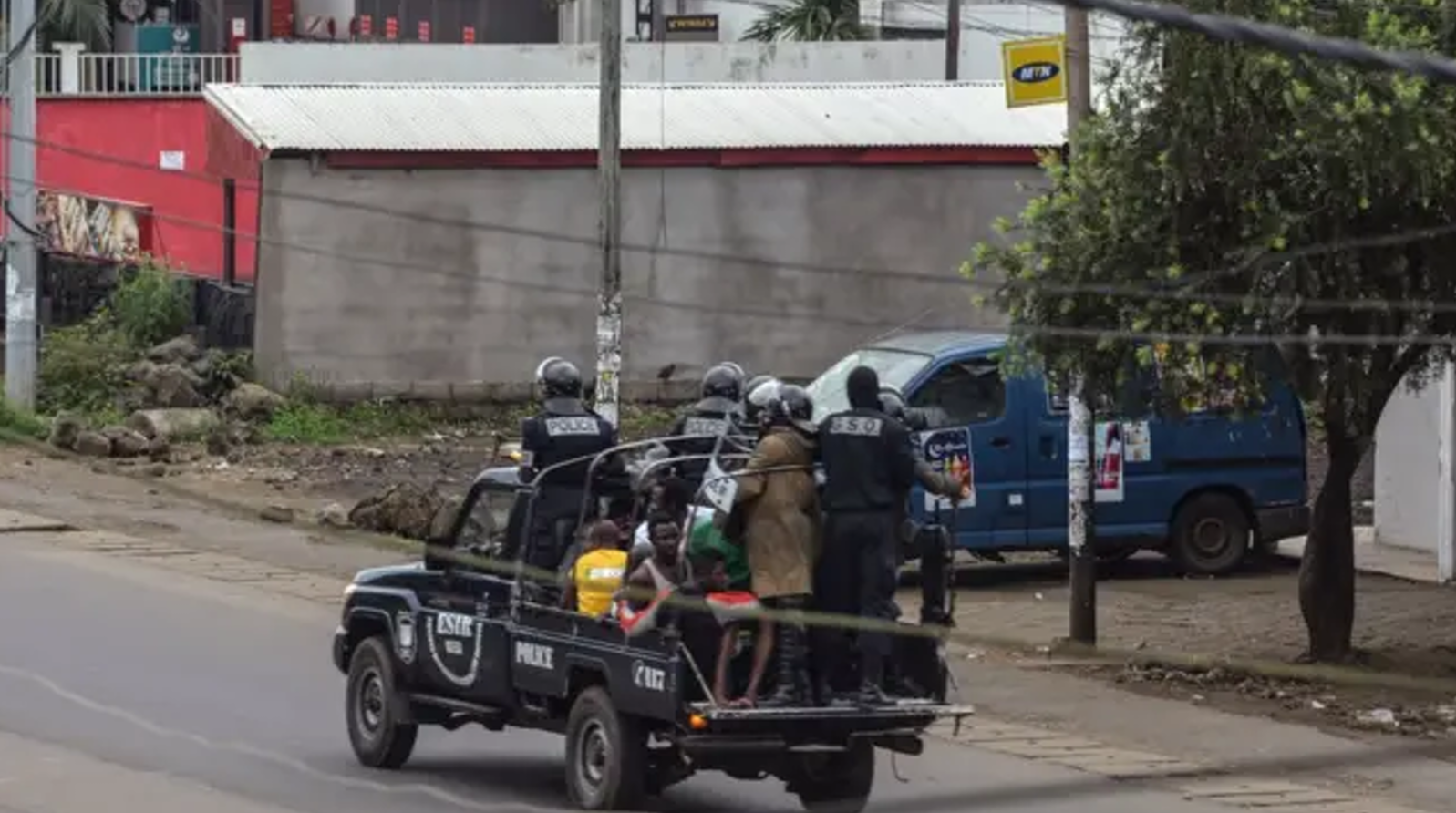
The immediate cause of the present-day crisis dates back to 2016, when lawyers and teachers in the Anglophone regions took to the streets in protest at what they considered the erosion of the common law system and Anglophone educational institutions. The protests initially began peacefully but later escalated into a broader conflict amid confrontations with security forces, increasing tensions, and the emergence of armed separatist movements. Advocates of secession then formed armed groups, now termed separatist fighters, calling for secession to form an independent state called the Federal Republic of Ambazonia.
Since then, the situation has had humanitarian and developmental implications. Reports 2019 say that more than 6000 lives have been lost; over 76,493 others have fled to Nigeria, and there has been disruption in education, health, agriculture, transportation, and business. More than 855,000 remain out of school due to insecurity and schools being destroyed, thus adversely affecting children and young people from conflict-affected areas.
Overview of some past peace efforts
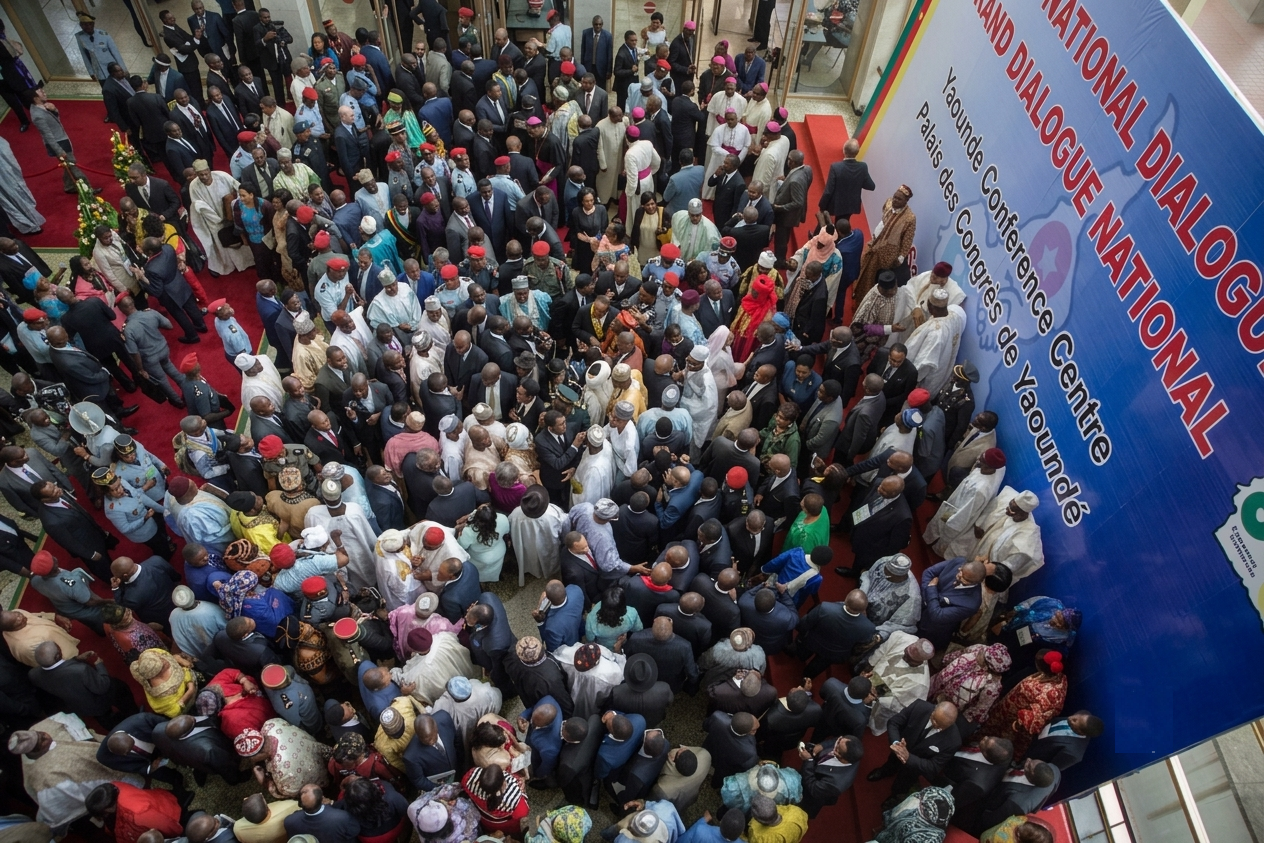
The most significant government-led initiative was the Major National Dialogue convened in September–October 2019 by the Government of Cameroon. The dialogue brought together political leaders, traditional rulers, civil society actors, religious representatives, and selected members of the Anglophone community to discuss the crisis and propose solutions. The dialogue produced several recommendations, including the granting of a “special status” to the Anglophone regions; greater decentralization; promotion of bilingualism and multiculturalism; reconstruction and development initiatives for conflict-affected areas.
In 2019, Switzerland announced its willingness to facilitate mediation in Cameroon between the Cameroonian government and separatist groups. Some separatist movements and international observers who hoped for a neutral mediation welcomed the initiative. However, due to issues including division amongst the separatists, disagreement on representation and negotiation framework, distrust between parties, and the non-formalisation of the process by the government, all these challenges contributed to the limited progress of mediation initiatives.
The government established the Disarmament, Demobilisation, and Reintegration (DDR) programme to inspire former fighters to surrender their weapons and reintegrate into civilian life. The programme aims at curbing violence by allowing ex-fighters to undergo the rehabilitation process and receive vocational training in the different DDR centres. This programme has recorded with more than 2500 ex-combatants accommodated in different centres, yet some fighters lack trust in the government initiative and perceive the programme as insufficient and inconsistent, citing the unresolved political root cause of the conflict.
Women in Cameroon convened in July 2021 under the initiative of the National Women’s Convention for Peace. This platform is made-up of 81 women representing women from all sectors of Cameroon, women Peace activists, displaced women and girls, victims of war-related violence, female traditional and religious leaders, female soldiers, sportswomen, women entrepreneurs, women prisoners, domestic workers, sex workers, women from civil society and political parties, and many more. While the initiative contributed to peace advocacy and dialogue efforts, its impact was constrained by the broader conflict environment and the involvement of multiple stakeholders beyond the platform.
The government also established the Presidential Plan for the Reconstruction and Development (PPRD) of the Northwest and Southwest regions. This framework aims to implement projects in the two conflict regions to improve the living conditions of the population and consolidate national unity and social cohesion by focusing on three main pillars, including rehabilitation and development of the basic infrastructure, economic revitalisation, and promotion of social cohesion. There are still communities that lack the basic infrastructures which were destroyed as a result of the armed conflict, including hospitals and schools.
Why have peace efforts fallen short?
Among the major shortcomings of past peace efforts is the fact that the processes lacked inclusivity, as some major stakeholders have been inadequately involved in the talks and consultations. The Major National Dialogue of 2019 was one effort to politically resolve the crisis. Outcomes of the dialogue include the granting of “special status” to the Northwest and Southwest regions and further enforcement of decentralization. Peace processes require general ownership for sustainable implementation. When stakeholders consider dialogue agendas as predetermined or not inclusive, it leads to a lack of trust.
There is deep mistrust amongst the different stakeholders, including the government, the separatists, and the various civil society actors. Many communities in conflict zones remain sceptical about state-led initiatives, while authorities continue to express concerns regarding armed violence, territorial integrity, and national security. International efforts, such as the Swiss mediation effort, struggled partly because of political interpretations of the same by local actors. The population evaluate peace efforts based on security, movement, education, and economic activities.
The various factions and political actors have their respective aims, leadership, and strategies. This has made negotiations difficult because there is no one who has control of the whole situation. Even where some of the actors are willing to enter into negotiations, others may refuse to negotiate and continue with military operations. Moreover, diaspora politics has affected internal relationships to the extent that there is division amongst actors and political leaders, especially amongst the separatist groups. The lack of coordination impedes peace efforts, especially with different groups representing diverse interests.
Several reforms implemented since 2019 have met with problems. Reforms such as decentralization and special status have set high hopes among the people concerned, but their implementation has often been seen as slow or inadequate to address the root causes of the conflict. Critics argue that institutional reforms have not yet substantially altered governance dynamics in ways visible to local populations. While the government introduced policies like the Special Status that signalled recognition of grievances, implementation gaps reduced public confidence in reform commitments. Concrete benchmarks like local autonomy, judicial processes, investment, and security sector behaviour measure reforms.
Reports from human rights organizations and other observers have documented allegations of abuses involving both armed separatist groups and security actors, contributing to civilian suffering and weakening confidence in peace efforts. Most conflict resolution programs have been centered more on politics among elites. Local communities, traditional leaderships, women’s organizations, youth groups, religious groups, and humanitarian organizations play a vital role in ensuring social cohesion. In many situations, community-based peacebuilding processes have provided some solutions, but have not always been well incorporated into the national approach to peacebuilding.
What can be done better
- The Cameroon government’s future dialogues will need to include more stakeholders, ranging from community leaders, civil society organizations, women’s groups, youth representatives, religious groups, political parties, the diaspora, and individuals associated with armed groups who are willing to participate through peaceful means.
- The government should prioritise confidence-building measures. These may include localized ceasefires; humanitarian access guarantees; protection of schools and hospitals; safe movement corridors; community-level reconciliation and peacebuilding programmes; meaningful representation of Anglophones in governance and political spaces.
- Strengthening local authority over development planning, education, justice administration, and service delivery could help improve public confidence in state institutions and enhance local governance.
- The government and development partners should strengthen community-based peacebuilding through dedicated financial and institutional support mechanisms.
- International actors, governmental bodies, and local organizations need to coordinate actions to foster recovery efforts. In particular, there is a need to focus on the areas of education recovery, psychosocial support for internally displaced people, job creation among youth, and reconstruction of public infrastructure.

Enowbachem Agbortanyi
Enowbachem Agbortanyi is a human rights, peace and political advocate with extensive experience in peacebuilding, democratic governance, and conflict resolution, particularly within the context of Cameroon. He is a Swedish Institute Alumnus and holds a Master’s degree in Political Science from Gothenburg University, Sweden.

Leave A Comment