

By Dr. Adeline M. Nembot & Larissa Ntoubia
Executive Summary
Central Africa’s extractive zones reflect a deep paradox: abundant natural resources coexist with persistent poverty, environmental degradation, and weak governance. Despite significant revenues from oil, minerals, and timber, communities in the Congo Basin continue to face pollution, conflict, inadequate infrastructure, and limited social protection. Weak enforcement of legal frameworks, corruption, and poor revenue distribution prevent resource wealth from translating into inclusive development. This policy brief aims to analyse the social and environmental dimensions of the resource curse and propose justice-oriented policy responses for extractive zones. It recommends strengthening transparency in contracting, enforcing revenue-sharing mechanisms, ensuring meaningful community participation, establishing independent oversight bodies, and mandating environmental restoration. Embedding accountability, equity, and social protection in extractive governance is essential to transform resource wealth into sustainable and inclusive development.
Introduction
Central Africa is endowed with abundant natural resources, including oil, minerals, and vast forests. Yet, paradoxically, many communities in resource rich areas remain entrenched in poverty. High level of investments in extractive industries in this region includes the Democratic Republic of Congo (DRC), Cameroon, and the Central African Republic (CAR). The region’s wealth, generated largely from natural resources, has not helped in improving the living standards for local communities. Since the year 2000, oil drilling operations led by the French-British company Perenco in the Republic of Congo have resulted in significant environmental degradation. The activities have caused soil pollution, frequent oil spills, and the release of hazardous gases through flaring. Between 2012 and 2022, more than two billion cubic meters of natural gas were flared by an extractive company in the Republic of Congo. This practice has had detrimental effects on both public health and the environment, as reported by the Environmental Investigative Forum.
Persistent issues of corruption and a lack of transparency, as highlighted by Transparency International, continue to restrict the benefits that the local communities receive from these extractive activities. Many residents, including those in Kimpozia village, have inadequate infrastructure, such as insufficient access to schools, hospitals, with poor roads. This situation demonstrates a persistent inability to convert resource wealth into substantial social development. Commonly known as the “resource curse,” this issue underscores the gap between national economic gains and improvements in local living conditions. In this context, the resource curse describes a pattern in which mineral and fuel abundance in less developed countries contributes to weak growth, governance failures, corruption, and political instability, often due to rent capture, distorted incentives, and weak institutional accountability.
This policy brief analyses the social and environmental dimensions of the resource curse and proposes justice-oriented policy responses for extractive zones. It calls on national policymakers, regional institutions (ECCAS/CEMAC), civil society and development partners to address environmental, social, and economic challenges in Central Africa’s extractive regions. Drawing on secondary data and applying a justice-oriented framework distributional, procedural, and restorative justice it assesses the impacts of extraction across the region. The paper is organized into two main sections. The first examines how the resource curse manifests through social and environmental consequences. The second analyses weaknesses in existing social and environmental protection frameworks and highlights governance gaps. The conclusion presents focused policy recommendations aimed at improving accountability, social protection, and environmental governance.
1. Unmasking Resource Curse in Central Africa: Social and Environmental consequences
The resource curse in Central Africa manifests in severe social and environmental consequences that undermine long-term development. The Congo Basin forest, for instance spanning approximately 300 million hectares across 11 countries in Central Africa, is not only a biodiversity hotspot hosting over 10,000 plant species, but also a critical carbon sink storing billions of tons of CO2 and stabilizing the global climate. It generates about $1 trillion in global ecosystem services with over 90% of that value stemming from climate regulation. This estimate refers to the imputed global economic value of ecosystem services (including carbon sequestration and climate regulation) as measured in environmental and natural capital accounting frameworks. By contrast, local governments captured only $8 billion in domestic benefits in 2020, primarily from timber, bushmeat, wild foods, and ecotourism. Extractive activities such as mining, oil extraction, and illegal logging ravage this invaluable ecosystem as shown by a 2022 DRC government audit uncovering management failures like illegal concessions, unpaid royalties exceeding $3 million, and violations of a logging moratorium by six former ministers. Environmental degradation including deforestation, soil erosion, water contamination, and toxic pollution directly harm local communities’ health and livelihoods. Artisanal loggers in Cameroon for instance lack protective gear like gloves or helmets, which cause accidents and exposure to risk, while villages like Nkollo face chronic medicine shortages at health centers due to lost forest resources. Flaring of natural gas releases methane and soot (black carbon) that contribute to respiratory diseases and contaminate soil and water, impacting agriculture and food security.
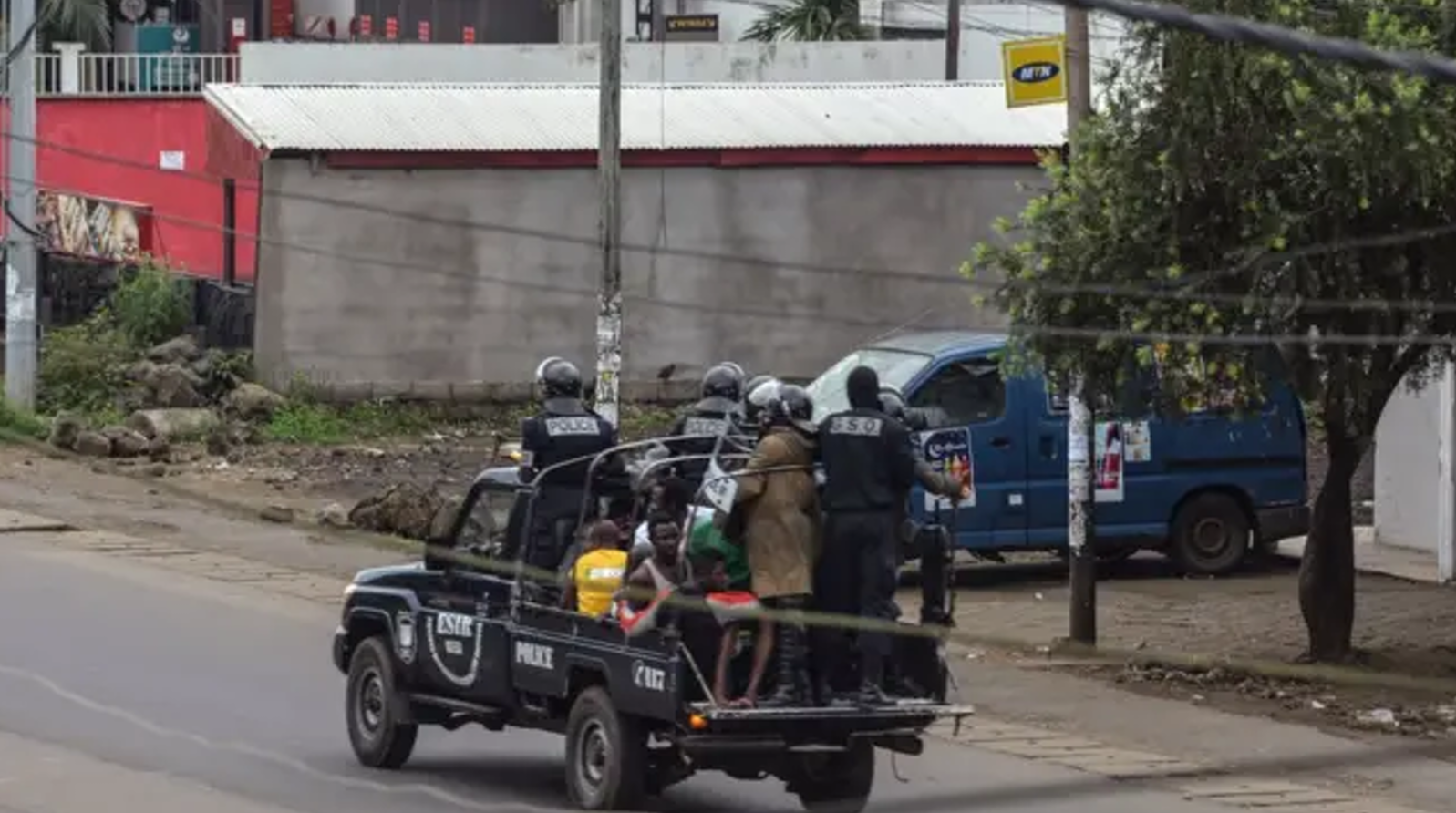
Socially, extraction fuels displacement and conflict, especially in countries like DRC and CAR where armed groups finance their operations through smuggling minerals like coltan and diamonds. In East DRC, M23 rebels tax coltan ($7/kg) and smuggle tin, tantalum, tungsten, and gold via Rwanda/Uganda routes from sites like Rubaya, of about $800,000 monthly. In CAR, armed groups profit from diamond smuggling across Cameroon borders to hubs like Belgium/China, evading Kimberley Process controls. This fuels cycles of violence and poverty, with communities often caught between competing interests and denied equitable access to resource benefits. For instance, in the Central African Republic, resource wealth has been linked to ongoing violence that continuously disrupts lives and economic activities. The communities around extraction sites frequently lack basic infrastructure which further deepens socio-economic disparities, prompts migration, and contributes to regional instability.
Weak governance and institutional capacity are also an issue to manage resource wealth sustainably. Corruption negatively affects revenue, and weak regulatory frameworks allow environmental standards to be ignored. This undermines attempts to use resource wealth to fund development projects. Corruption leads to the protection of personal interests rather than community welfare. Thus, instead of transforming natural riches into inclusive prosperity, the resource curse perpetuates economic fragility, environmental loss, and social marginalization posing a critical challenge to governments and development partners.
Resource extraction drives local poverty through environmental damage, destroys livelihoods, poor revenue sharing starves communities, elites capture central rents, and smuggling finances conflict. While extraction generates substantial national revenues (over $1 billion annually in DRC mining), the core issue lies in flawed distribution and governance that fail to channel benefits locally.
2.Challenges in Social and Environmental Protection Implementation
Despite existing legal frameworks such as the DRC’s 2018 Mining Code (environmental impact assessments), Cameroon’s 2016 Mining Code (community development funds), and EITI compliance requirements across Central Africa targeting environmental and social protection within extractive zones, their implementation remains deeply problematic across Central Africa. The lack of technical, financial, and human resources to supervise companies’ compliance with environmental standards or monitor social impacts effectively poses a serious problem to these communities in extractive zones. The collapse or absence of effective institutions at local levels generates management gaps where companies operate with little or no accountability. For instance, in many resource-producing areas, environmental inspectorates are severely under-resourced, lacking personnel, equipment, and transport to conduct regular site inspections. In some districts, environmental monitoring stations are either non-functional or entirely absent, making it impossible to track pollution levels.Additionally, corruption and political interference frequently hinder enforcement, enabling exploitation and community harm to continue unchecked. For example, communities in Congo’s Moanda territory report worsening pollution and health impacts decades after extraction began, with minimal governmental intervention.Local people are often excluded from decision-making processes, limiting their voice in determining how resources are developed and how revenues are allocated. Meaningful participation should involve timely consultations before key decisions are made, full disclosure of Environmental and Social Impact Assessments (ESIAs), accessible grievance redress mechanisms, and credible consent procedures for affected communities, rather than perfunctory or post-hoc engagement.
Local people are often excluded from decision-making processes, limiting their voice in how resources are developed and revenues allocated. This exclusion fosters frustration and mistrust, while many communities remain without essential services schools, healthcare, roads, and clean water despite living amid resource wealth. Economic benefits are minimal or non-existent, as external companies and elites reap disproportionate profits. Governments frequently fail to state clear development objectives in contracts, allowing companies to operate without defined community commitments. Contracts should therefore include measurable community development obligations with clear KPIs and penalties for non-compliance. At the same time, social protection mechanisms remain underdeveloped and insufficiently inclusive. Cash transfers, healthcare, education programs, and livelihood diversification efforts are often scarce or politically constrained, weakening communities’ ability to withstand environmental and economic shocks. Social protection is essential as a transparent and participatory safety net to reduce vulnerability in extractive zones. Currently, the lack of appropriate methods to social and environmental governance perpetuates cycles of poverty and exclusion in these rich yet marginalized regions.
Conclusion and Policy Recommendations
The policy brief investigates persistent poverty and environmental injustice in Central Africa’s resource-rich extractive zones, revealing how mining and extraction yield minimal local benefits amid heavy social and environmental costs from degradation and corruption to conflict and weak social protections. Current frameworks fall short in implementation and community responsiveness.Hence, breaking the resource curse requires re-imagining governance systems that integrate robust social and environmental protections at all levels. To address these challenges, governments should:
- Establish an independent, legally mandated multi-stakeholder oversight committees for major extractive projects, composed of representatives from government institutions, affected local communities, civil society organizations (CSOs), and independent technical experts. These communities should have a clear legal basis defining their authority, operational procedures, and reporting obligations.
- Establish a transparent and standardised contracting processes for extractive projects that explicitly guarantee contract transparency and public access to ESIAs, project agreements, and related documents, in line with the international norms such as the Extractive Industries Transparency Initiative (EITI) and open contracting principles. Also, these contracts should clearly define binding community development obligations, including timelines, budget allocations, monitoring indicators, and reporting requirements.
- Establish a clear and strengthened revenue-sharing mechanisms that allocate a fixed percentage of extractive revenues to local governments or dedicated community development funds. Transfers should be audited and publicly reported to ensure reinvestment in health, education, infrastructure, and livelihood diversification in extractive zones.
- Empower local communities by ensuring meaningful participation and consent in resource governance, including Free, Prior, and Informed Consent (FPIC) for indigenous peoples and broad consultation mechanisms for all affected communities. Expand inclusive social protection systems that cover informal workers and vulnerable groups. Also ensuring they benefit from economic opportunities and safeguards in extractive zones
Establish environmental restoration initiatives with mandatory rehabilitation plans, backed by restoration bonds and independent monitoring for compliance. Pair this with economic diversification via livelihood programs in agriculture, SMEs, and green jobs for sustainable extractive zones. Ultimately, distributional, procedural, and restorative justice demands channeling resource wealth into real community benefits, embedding accountability, transparency, and equity throughout governance to end resource-fueled inequality and harm.

Dr. Adeline Nembot
Adeline is a Head of Gender, Women’s Empowerment, and the Care Economy in the Economic Affairs Division at the Nkafu Policy Institute. She holds a PhD in Labour and Development Economics from the Collaborative PhD Program (CPP), obtained under the auspices of the African Economic Research Consortium (AERC),

Larissa Ntoubia
Ntoubia Ngapmen Larissa, holds a Bachelor’s degree in Banking and Finance and a Master’s degree in Economics and Financial Engineering from the University of Yaoundé II Soa. She is currently a Research Associate at the Nkafu Policy Institute of Denis and Lenora Foretia Foundation under the Economic Affairs Division.


Leave A Comment