

Dr Atangana Stéphane & Larissa Ntoubia
Executive summary
Around seven out of ten working women in Cameroon earn their living in the informal economy, in activities that generate most national employment and about half of gross domestic product. Informal work provides essential income but is characterized by low productivity, lack of social protection and high vulnerability. Supporting women to move progressively towards formal employment and structured entrepreneurship is therefore both an economic priority and a matter of social justice. It is also central to the achievement of Cameroon’s Vision 2035 and to progress on the Sustainable Development Goals, especially those relating to gender equality and decent work.
This policy brief summarizes key findings from the report “Women in the Informal Sector in Cameroon: Opportunities and Economic Contributions” and proposes a set of practical measures to encourage formalization while improving the quality of work in the informal economy.
Headline recommendations
- Simplify and reduce the cost of formalizationfor women-led micro and small enterprises through gender-sensitive services in the “Centres de Formalités de Création d’Entreprises (CFCEs)” and dedicated advisory support.
- Develop targeted support for women’s formal employment and structured entrepreneurship, including sector-focused small- and medium-enterprise (SME) programme, gender-sensitive incubators and preferential access to public procurement.
- Expand inclusive, gender-responsive financial instruments for women in the informal economy, combining adapted credit products, guarantee mechanisms and financial-literacy training.
- Gradually extend social protection coverage to informal workers and institutionalizethe gender approach in growth and employment strategies so that formalization brings real rights and security.
Background and justification
comprises a wide range of activities, including petty trade, subsistence agriculture and unregistered services. It absorbs more than ninety per cent of the labour force and generates roughly half of national output. For millions of people excluded from formal salaried employment, it functions as a safety net and the main entry point into economic life. Women are particularly concentrated in these activities because of limited access to formal jobs, lower levels of education or training and heavy family responsibilities.
Although the informal sector provides livelihoods, its predominance raises major challenges for inclusive development. Low productivity and low incomes limit domestic demand and tax revenues, while the absence of social protection and enforceable rights exposes workers to long working hours, harassment and income shocks. For women, informality often reinforces existing inequalities: they shoulder most unpaid domestic work, have limited decision-making power over household resources and are more exposed to precarious, low-paid activities.
Data analysis: An overview of female informality
The report provides a set of stylized data that sheds light on the situation of women in Cameroon’s informal sector. The main findings are as follows:
- Over-representation of women in the informal sector. The data show that approximately seven out of ten female workers in Cameroon are in informal or self-employed activities, compared with about half of men. All the women surveyed cited the lack of accessible paid employment as the main reason for their informal work, while the search for flexible working hours came second and was mentioned more often by men. In other words, women’s informality is largely the result of constrained choices, rather than a deliberate preference for informal status.
- Working conditions and satisfaction. Informal work is characterizedby job insecurity and the absence of social benefits; nevertheless, women report higher satisfaction with their informal situation than men, despite these precarious conditions, reflecting resilience and adaptation rather than genuinely favourable circumstances.
- Obstacles to formalizing and expanding their businesses. 87% of the women surveyed said they were encountering major difficulties in growing their businesses. Lack of capital was the primary obstacle. This is followed by high tax burdens and cumbersome administrative procedures. Other constraints include fierce competition in local markets, lack of access to outlets, and unfavorable sociocultural norms. These multiple obstacles create an environment that is not conducive to the growth of women-owned micro-enterprises and discourage the transition to formal status.
Key obstacles highlighted by women in the informal sector include:
- Limited access to capital and productive assets.
- High tax burdens relative to very small profit margins.
- Cumbersome and costly administrative procedures for registration and compliance.
- Intense local competition and weak access to formal markets and outlets.
- Unfavourable sociocultural norms that limit women’s mobility, decision-making power and control over income.
- Access to finance. 57% of the women surveyed had no access to any source of finance, compared with 0% of the men in the sample. Additionally, none of the women surveyed reported having good access to formal credit. This glaring lack of financial inclusion can be explained by several factors: lack of collateral required by banks, loan amounts that are often too small to interest institutions, lack of information on financial products, and possible discriminatory biases.
Recommendations
The general objective is to implement targeted measures to encourage the formalization of women’s economic activities and improve their working conditions by mobilizing all stakeholders (government, local authorities, private sector, civil society, regional, and international partners). Priority actions are organized below by timeline.
Short-term priorities (2025): simplify procedures and pilot support mechanisms
In 2025, the Government of Cameroon should give particular priority to the following actions:
- Make formalizationmore accessible for women-led micro and small enterprises. Improve the effectiveness and gender sensitivity of the existing one-stop shop system, the “Centres de Formalités de Création d’Entreprises (CFCEs)”, by providing dedicated counters or specialized assistance (physical and digital) for businesses run by women, accompanied by free or heavily subsidized legal and accounting support tailored to informal workers.
- Pilot dedicated systems for formal female entrepreneurship. Establish pilot gender-focused incubators and simplified management requirements for micro-businesses run by women, and introduce clear targets or quotas for access to public contracts for women-owned enterprises.
- Launch targeted functional literacy and vocational training programme. Develop programsadapted to the constraints women face (time, mobility, literacy), combined with mentoring, networking and coaching to help them build viable, structured businesses and prepare for formal status.
These urgent actions would send a strong signal of political commitment and quickly reduce the informational and administrative barriers that currently make formalization inaccessible for many women.
Medium-term actions (2026–2028): inclusive finance, tax incentives and SME support
From 2026 to 2028, priority actions include:
- Targeted support for SMEs in sectors with high employment potential for women. Provide tax incentives and improved access to land, public contracts and infrastructure for women-owned SMEs in sectors such as agri-food, crafts, digital services and local value-added activities.
- Introduce a tax system tailored to very small businesses. Design simplified and predictable tax regimes for micro and small enterprises, with exemptions or reduced rates during the first years of formalization, combined with community information campaigns on the advantages and rights associated with formal status.
- Develop inclusive financial mechanisms for women excluded from traditional credit. Create or strengthen public guarantee funds, gender-sensitive microfinance schemes and solidarity or community loan mechanisms, combined with training in financial education and business management, so that women can invest and grow their activities once formalized.
These medium-term reforms will help make formality economically viable by relaxing capital constraints and improving the profitability prospects of women-owned enterprises.
Long-term reforms (2029 and beyond): social protection and institutional change
In the longer term, formalization should be anchored in broader social protection and institutional reforms:
- Gradually extend social protection to informal and self-employed workers. Develop flexible contributory mechanisms (proportional contributions, mutualized cover, specific schemes for micro-entrepreneurs) and targeted subsidies (health, maternity, retirement) so that formalizationprovides tangible security for women and their families.
- Integrate gender-sensitive measures into public policies and labour regulations. Expand childcare services in or near informal workplaces, improve legal recognition of street work and other informal occupations, and strengthen the enforcement of measures to combat discrimination in recruitment and employment.
- Institutionalizethe gender approach in all growth and employment strategies. Ensure effective implementation of the National Gender Policy, systematic production of gender-dis aggregated statistics, recognition of unpaid domestic work, and legal reforms that protect and value women’s economic activities across the formal and informal spectrum.
Taken together, these short-, medium- and long-term measures offer a coherent roadmap to support women’s transition from informal to formal work, while strengthening the productivity, resilience and inclusiveness of Cameroon’s economy.
Conclusion
In conclusion, the transition of women from the informal to the formal sector is no mean feat, but it is essential if Cameroon is to realize its economic potential and achieve inclusive development. The data in the report confirms the scale of the contribution made by women in the informal sector to the economy and households, while exposing the many barriers that prevent them from making progress. Concerted and ambitious action is needed now. At national level, the government has a responsibility to create an enabling environment – by offering formal employment alternatives, lowering administrative barriers, better financing and protecting these workers, and changing the norms that restrict their opportunities. Supporting the formalization of women’s work means investing in more robust, equitable and sustainable growth for Cameroon. This agenda is also consistent with the World Bank Group’s Gender Strategy 2024–2030, which prioritizes expanding women’s economic opportunities, and with the African Union’s Agenda 2063, which calls for a prosperous and inclusive Africa where women play a central role in economic transformation. Women in Cameroon’s informal sector have already proved their resilience and contribution; it’s time to remove the obstacles on their way to full economic recognition.
Sources: Report “Women in the Informal Sector in Cameroon: Opportunities and Economic Contributions”, Nkafu Policy Institute (2025) and sources cited.
Other references included in the text.

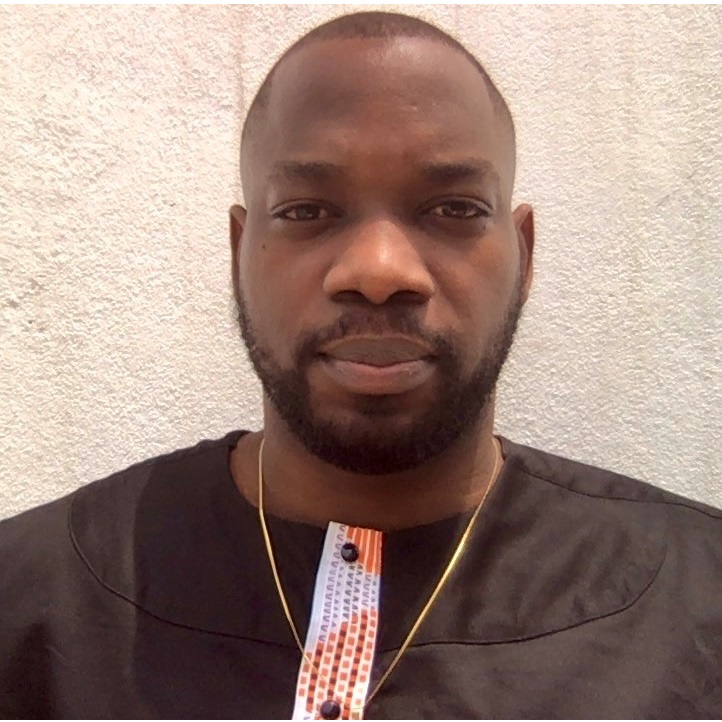
Dr. Stephane Atangana
Stephane holds a PhD in Economics from the Protestant University of Central Africa (PUCA), in partnership with the Foundation for Studies and Research on International Development (FERDI). He specializes in regional integration, game theory, theoretical and empirical modeling, quantitative and qualitative techniques, matching methods, and econometrics.
His research interests include the provision of regional public goods, economic resilience, and sustainable development.

Larissa Ntoubia
Ntoubia Ngapmen Larissa, holds a Bachelor’s degree in Banking and Finance and a Master’s degree in Economics and Financial Engineering from the University of Yaoundé II Soa. She is currently a Research Associate at the Nkafu Policy Institute of Denis and Lenora Foretia Foundation under the Economic Affairs Division.

Leave A Comment