
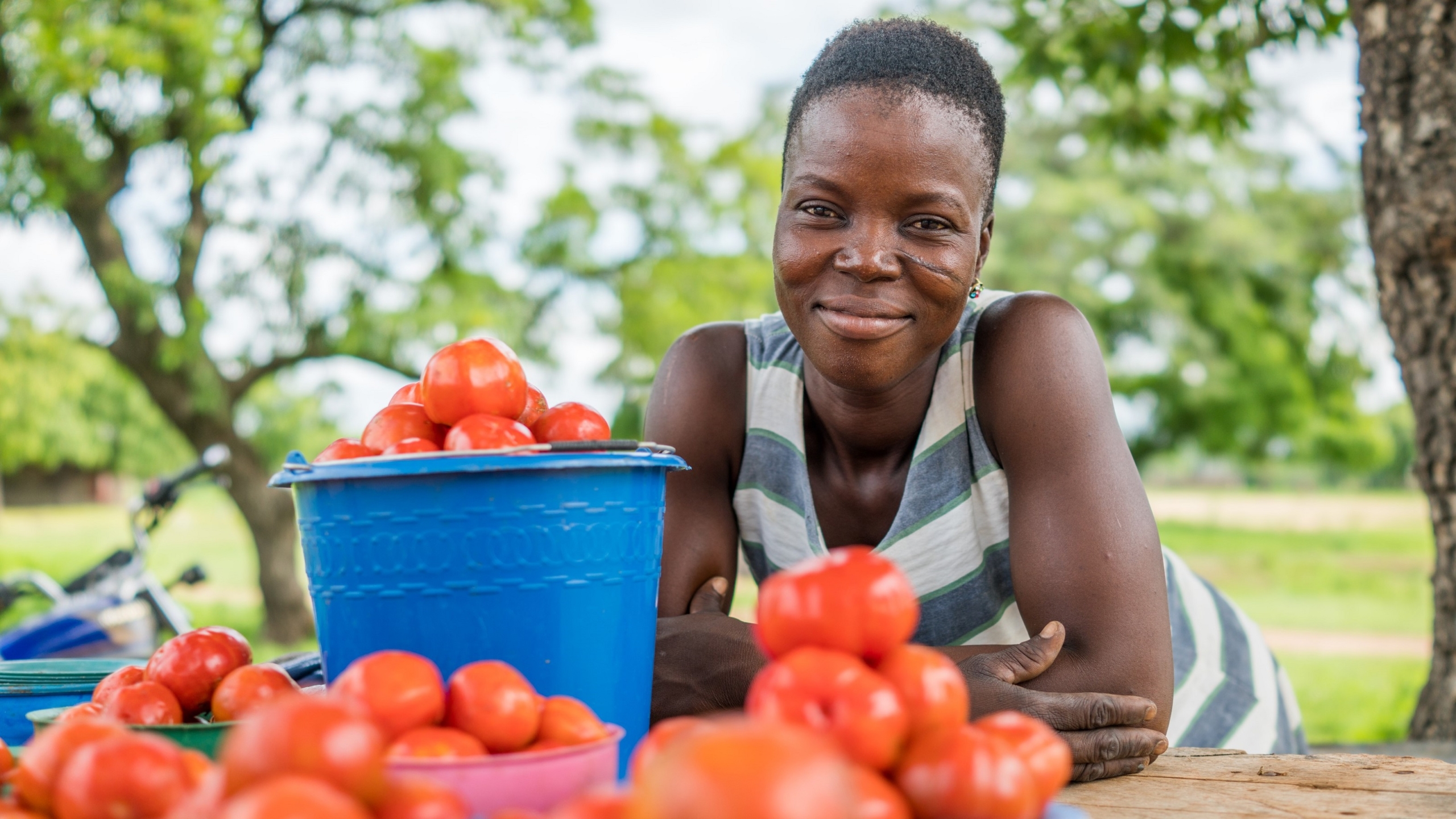
By Salim Ahmed Vessah & Larissa Ngapmen Ntoubia
Executive Summary
Climate change threatens economic stability, food security, and livelihoods across the Economic Community of Central African States (ECCAS). Women are disproportionately affected because they play a central role in agriculture while facing persistent barriers to land, finance, technology, and decision-making. In several ECCAS countries, recurrent floods, droughts, and environmental degradation have diminished agricultural productivity, increased displacement, and deepened poverty among rural women. Nevertheless, women remain vital contributors to food systems and community resilience. This policy brief argues that strengthening women’s economic empowerment is essential for building climate resilience and achieving inclusive development in Central Africa. It highlights the structural challenges that limit women’s adaptive capacity and proposes actionable recommendations focused on climate finance, land reforms, green skills, infrastructure, financial inclusion, and gender-responsive climate governance.
Key messages
- Climate change worsens poverty, food insecurity, and displacement in ECCAS countries, especially for women.
- Women lead agricultural production in Central Africa but are excluded from land ownership, finance, and climate resources.
- Expanding women’s economic opportunities is vital for climate resilience and inclusive growth.
- Investments in climate-smart agriculture, renewable energy, and digital finance can enhance women’s productivity and livelihoods.
- Gender-responsive climate policies and regional cooperation are essential for sustainable resilience in Central Africa.
Introduction
Climate change presents a significant economic, social, and environmental challenge for the Economic Community of Central African States (ECCAS). The Intergovernmental Panel on Climate Change (IPCC) reports that Africa’s average temperature has risen by about 1.1°C since the pre-industrial era, with projections of a 2°C to 3°C increase by 2050 if global emissions remain unchanged. In Central Africa, this temperature rise has led to irregular rainfall patterns, disrupted agricultural seasons, and more extreme weather events. ECCAS countries have recently seen a sharp increase in natural disasters. The region’s heavy reliance on climate-sensitive sectors, particularly agriculture, fisheries, and natural resource exploitation, makes it particularly vulnerable. Over 60% of the population in several countries depends on rain-fed agriculture for their livelihoods. Climate disruptions reduce agricultural productivity, increase post-harvest losses, and undermine rural incomes.
In this context, women’s economic empowerment is crucial for climate resilience and sustainable development. It involves women’s access to economic opportunities as finance, employment, land ownership, and technology enabling them to participate in economic life and make decisions about their livelihoods. This is not just about social equality; it is a key driver of economic growth, food security, and community resilience. Women play a central role in rural economies and food systems. The Food and Agriculture Organization (FAO) indicates that women represent 50% to 70% of the agricultural labor force in Sub-Saharan Africa, significantly contributing to food production, processing, and local trade. However, they often lack secure land rights and face barriers to accessing credit, modern technology, and climate finance mechanisms.
Recent climate crises have worsened these vulnerabilities. In the Democratic Republic of the Congo, over 27 million people faced acute food insecurity in 2025, primarily due to conflict and climate-related shocks. Flooding in Cameroon, Chad, and the Republic of the Congo destroyed thousands of hectares of farmland and displaced many people. This policy brief analyzes the relationship between women’s economic empowerment and climate resilience in ECCAS countries, highlighting structural challenges that limit women’s adaptive capacity and proposing recommendations to enhance their economic inclusion and participation in climate governance.
Climate Vulnerability in ECCAS Countries
Countries in the Economic Community of Central African States (ECCAS) are highly vulnerable to climate change despite contributing little to global greenhouse gas emissions. This vulnerability results from dependence on natural resources, limited economic diversification, and weak institutional capacity to manage climate risks. In countries such as Chad, the Central African Republic, and the Democratic Republic of the Congo, climate shocks directly affect agriculture, livestock, fisheries, and forestry, which sustain millions of rural households. Agriculture remains the main source of employment in ECCAS economies but depends heavily on rainfall, making it highly exposed to climate variability. Prolonged droughts in Chad, recurrent flooding in Cameroon and the Republic of the Congo, and irregular rainfall patterns continue to disrupt agricultural production. In northern Cameroon, repeated droughts have caused major cereal crop losses, worsening food insecurity and rural poverty. In the Democratic Republic of the Congo, severe floods have devastated farmland, particularly affecting smallholder farmers.
The economic consequences extend beyond agriculture. Climate shocks reduce household incomes, increase food prices, and intensify macroeconomic pressures. Governments must devote substantial resources to emergency response and humanitarian assistance, reducing investment in infrastructure, healthcare, education, and industrial development. Recent floods in Chad and Cameroon have damaged transport infrastructure, homes, and productive assets, slowing economic activity in vulnerable regions. Climate change also intensifies social and security vulnerabilities. In the Lake Chad Basin, declining water resources and land degradation have increased tensions among farmers, pastoralists, and fishing communities, contributing to local conflicts and weakened social cohesion. In fragile regions already affected by poverty and political instability, climate shocks further undermine livelihoods and disproportionately affect women and children.
Women and Climate Change in ECCAS
Women are disproportionately affected by climate change in ECCAS countries because structural inequalities limit their access to economic and productive resources. In many Central African countries, women account for 50% to 70% of the agricultural labour force and play a central role in food production and local trade. Despite this contribution, they often lack the financial resources, institutional support, and productive assets required to respond effectively to climate-related shocks. In rural areas, women are heavily involved in subsistence farming, small-scale trade, fishing, and the collection of water and firewood. These activities are highly vulnerable to droughts, floods, and land degradation. When agricultural production declines or resources become scarce, women experience immediate reductions in income and food security. In Chad and northern Cameroon, recurrent droughts have forced women to travel longer distances to access water and fuel, increasing their workload and limiting opportunities for education and income-generating activities.
Despite their economic contribution, women remain largely excluded from productive assets and decision-making structures. Customary norms and discriminatory legal systems continue to restrict women’s access to land ownership, inheritance rights, agricultural credit, and modern farming technologies. This exclusion limits their ability to adopt climate-resilient practices such as irrigation, improved seeds, and climate-smart agriculture. Climate change further exacerbates gender inequalities by increasing unpaid domestic responsibilities. In areas affected by environmental degradation and resource scarcity, women spend more time collecting water, firewood, and food under difficult conditions. This reduces their participation in economic activities and community initiatives, reinforcing poverty and vulnerability.
Women’s Role in Climate Resilience and Key Challenges
Despite these challenges, women play a crucial role in strengthening climate resilience across Central Africa. Women-led agricultural cooperatives, reforestation programmes, and renewable energy initiatives have contributed to improved food security, diversified household incomes, and stronger local resilience. In countries such as Rwanda and Kenya, women engaged in climate-smart agriculture and solar energy projects have helped communities reduce vulnerability while creating economic opportunities. These examples demonstrate that women are not only victims of climate change but also essential actors in adaptation and sustainable development. However, major structural barriers continue to limit their adaptive capacity. The first challenge concerns access to finance and productive resources. Women farmers and entrepreneurs often struggle to obtain formal financial services because of limited land ownership, lack of collateral, and institutional discrimination. Limited access to agricultural credit, insurance, and climate finance reduces their ability to invest in resilient technologies, irrigation systems, and diversified economic activities.
A second challenge relates to educational, technological, and digital inequalities. In many rural areas of ECCAS countries, female literacy rates remain low, while access to vocational training and digital technologies is limited. Consequently, women face difficulties adopting innovative agricultural practices or accessing opportunities in renewable energy, sustainable agribusiness, and climate services. Weak access to climate information and early warning systems further undermines their capacity to respond to environmental shocks. Infrastructure deficits also constrain women’s economic resilience. Limited access to electricity, roads, irrigation systems, storage facilities, and internet connectivity reduces the productivity of women-led activities. In many rural communities, poor transport infrastructure restricts access to urban markets, resulting in high post-harvest losses and lower incomes.
Finally, conflicts and insecurity significantly aggravate climate vulnerability across several ECCAS countries. Armed conflicts and political instability in the Lake Chad Basin, the Central African Republic, and eastern Democratic Republic of the Congo continue to disrupt agricultural production, destroy infrastructure, and displace populations. Women in these fragile environments remain particularly exposed to poverty, food insecurity, gender-based violence, and economic marginalization.
Policy Opportunities and Best Practices
Despite challenges in ECCAS countries, several African experiences show that women’s economic empowerment and climate resilience can be strengthened through inclusive policies. In Rwanda, land reforms have improved women’s access to property rights and agricultural finance, enabling greater investment in productive activities. The country has integrated gender considerations into its Green Growth and Climate Resilience Strategy, allowing women’s cooperatives to adopt climate-smart agricultural practices and increase household incomes. Kenya provides another example. Investments in renewable energy and mobile financial services have expanded economic opportunities for rural women. Digital platforms like M-Pesa have enhanced women’s financial inclusion by facilitating savings, access to credit, and mobile transactions in underserved rural communities. Additionally, solar mini-grid programs have supported women-led businesses and improved access to electricity for productive activities.
Morocco illustrates the employment potential of the green transition. Large-scale investments in solar infrastructure, notably the Noor Ouarzazate complex, combined with vocational training programs, have developed female skills and employment opportunities in renewable energy and green industries. At the regional level, ECCAS cooperation presents an opportunity to promote resilient infrastructure, inclusive climate finance, and cross-border programs that support women’s economic participation. Strengthening regional collaboration in sustainable agriculture, renewable energy, and digital technologies could enhance women’s resilience and development across Central Africa.
Policy Recommendations
Short-Term Priorities (1-2 Years)
- Expand climate finance for rural women and women’s cooperatives : Establish dedicated climate adaptation funds, provide subsidized credit and grants, and simplify access to financing for women-led cooperatives and enterprises.
- Strengthen gender-responsive climate information and support women-led green enterprises : Disseminate climate information via mobile and community platforms, and provide business development services, technical assistance, and targeted support for women-led enterprises in climate-smart agriculture, renewable energy, and local trade.
Medium-Term Priorities (3-5 Years)
- Reform land tenure systems and promote women’s financial inclusion : Strengthen women’s property and inheritance rights, simplify land registration, develop gender-sensitive financial products, and expand access to microcredit and climate insurance.
- Invest in green skills development and rural infrastructure : Establish vocational training programs in green jobs and digital technologies, and expand rural electrification, irrigation systems, roads, storage facilities, and internet connectivity.
Long-Term Priorities (5-10 Years)
- Institutionalize gender-responsive climate governance and women’s leadership: Integrate gender considerations into climate and development policies, adopt gender-responsive budgeting, and promote women’s representation in climate, economic, and political decision-making bodies.
- Establish regional financing and cooperation mechanisms for climate resilience: Create a regional fund for women-led climate adaptation initiatives and strengthen cross-border cooperation in sustainable agriculture, renewable energy, and resilient infrastructure development.
Conclusion
Women’s economic empowerment is crucial for enhancing climate resilience and fostering sustainable development in ECCAS countries. By improving women’s access to land, finance, technologies, and decision-making processes, governments can mitigate the vulnerabilities associated with climate change. An inclusive and gender-sensitive approach will enhance food security and livelihoods while strengthening the economic and social stability of Central Africa. The transition toward resilient and sustainable economies cannot be realized without the active participation of women.

Larissa Ntoubia
Ntoubia Ngapmen Larissa, holds a Bachelor’s degree in Banking and Finance and a Master’s degree in Economics and Financial Engineering from the University of Yaoundé II Soa. She is currently a Research Associate at the Nkafu Policy Institute of Denis and Lenora Foretia Foundation under the Economic Affairs Division.



Leave A Comment