
By Dr. Metolo Foyet and Dr. Nsah Mala
Download the Strategic Insight
Key Insights
- Central African think tanks are not merely surviving shrinking civic space, they are innovating.
- “Endogenous futurism” redefines foresight by grounding future-oriented policy in Indigenous knowledge, community agency, and cultural memory.
- Resilience in fragile contexts is shifting from crisis management to locally driven, long-term governance imagination.
- Digital adaptation, gender inclusion, and rights holderparticipation are emerging as core pillars of institutional resilience.
- Central Africa offers globally relevant lessons on how foresight and democratic renewal can emerge from within constraint.
Summary
Central Africa’s shrinking civic space coincides with rising global concern over democratic backsliding, governance fragility, and the need for anticipatory policymaking. At a moment when policymakers and donors are seeking new models of institutional resilience, this strategic insight demonstrates that Central African think tanks are already pioneering innovative responses under constraint. Far from merely surviving, these institutions are developing adaptive practices that combine digital innovation, community-rooted knowledge, and regional collaboration to sustain policy engagement in restrictive environments.
This strategic insight introduces endogenous futurism, the integration of Indigenous knowledge systems, cultural temporalities, and participatory foresight methodologies, as a new framework for institutional resilience that shifts policy thinking from crisis management toward long-term, locally-grounded transformation. By centering human rights, gender inclusion, and community agency, endogenous futurism advances current debates by showing how foresight can emerge from within fragile contexts rather than being externally imposed.
It calls on policymakers, regional organizations, donors, and think tank networks to move beyond transactional aid toward collaborative frameworks that strengthen legal protections, digital sovereignty, and inclusive foresight capacities. Key lessons emphasize local ownership, regional cooperation, adaptive learning, and governance models that align resilience with democratic renewal and intergenerational justice.
I. Introduction: Policy Opportunity
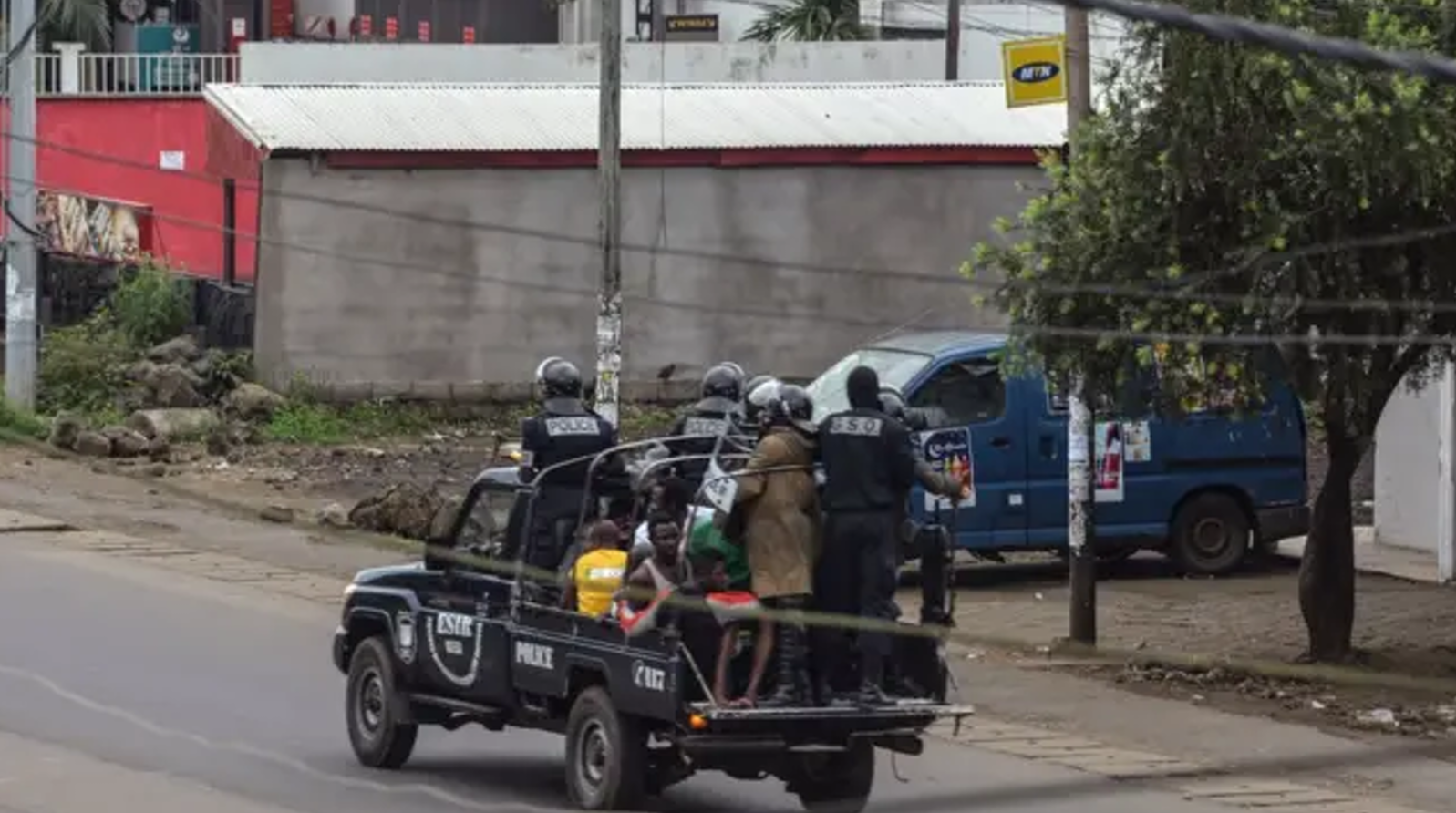
This paper argues that, rather than merely surviving authoritarian constraints, Central African think tanks are transitioning toward foresight-driven institutional transformation, developing adaptive governance practices that can inform scalable policy innovation across fragile states. Central Africa represents one of the most fragile governance ecosystems globally. All member states of the Economic Community of Central African States (ECCAS), Cameroon, Chad, Gabon, Congo, the Central African Republic, Equatorial Guinea, DRC, Rwanda, Burundi, Angola, and Sao Tome & Principe, remain under authoritarian or semi-authoritarian regimes. The region is marked by democratic backsliding, gender exclusion, digital repression, and inefficient or constraining legal frameworks. In this restrictive context, think tanks, academic institutions, and civil society organizations (CSOs) struggle to survive amidst censorship, funding scarcity, and limited civic space.
Despite these challenges, Central African think tanks have not disappeared. Instead, they have evolved, becoming more agile, multidisciplinary, and community-rooted: adapting through creativity, foresight, and grounded engagement with Indigenous and local knowledge systems. Their survival strategies, navigating autocratic contexts, leveraging digital tools, and fostering cross-sectoral collaborations, hold replicable insights for other regions facing democratic erosion. Furthermore, they are experimenting with what we call “endogenous futurism” and related foresight methodologies that blend traditional wisdom with technological innovation. These creative adaptations offer a policy opportunity to transform think tank resilience strategies into scalable frameworks for institutional foresight across fragile states.
II. Endogenous Futurism
Endogenous futurism refers to a foresight approach in which future-oriented policy design emerges from locally-embedded knowledge systems, cultural practices, and community governance structures, rather than externally imposed predictive models. Unlike conventional foresight methodologies, often driven by technocratic forecasting, quantitative modeling, collective vision-making, participatory and speculative approaches, scenario planning, horizon scanning, and donor-led planning, endogenous futurism grounds anticipation in Indigenous ecological knowledge, collective memory, and participatory decision-making processes. In fragile governance contexts, this approach enables institutions to generate legitimate and adaptive visions of the future rooted in lived realities.
In the DRC, Strong Roots plays a de facto think-tank role by translating community forest mapping and Indigenous ecological knowledge into legal instruments for Local Community Forest Concessions. This case demonstrates how grassroots ecological knowledge can be institutionalized into formal governance mechanisms, allowing civil society actors to shape long-term policy even within constrained political environments. Meanwhile, mining-area initiatives like “Powering Resilience” use participatory workshops with women and Indigenous communities to anticipate climate and conflict risks in the critical-minerals frontier. In this case, foresight emerges not from elite policy forecasting but from participatory risk anticipation, illustrating how resilience is built through inclusive knowledge production.
In Angola, EITI Angola and its National Coordination Committee provide a concrete platform where government, extractive companies, and civil-society research/advocacy groups jointly analyze data on oil, gas, and mining revenues, publish a national Extractive Industry Transparency Report, and debate governance reforms. Unlike the community-driven examples above, this case shows how endogenous futurism can also operate within formal multi-stakeholder governance arenas, embedding transparency and long-term accountability into extractive sector policymaking, and thus effectively operating as a multi-stakeholder policy-analysis hub on extractives.
Taken together, these examples illustrate forms of endogenous futurism in which long-term governance scenarios are co-designed with Indigenous People and Local Communities while simultaneously engaging state and market institutions. Across these cases, the core pattern remains consistent: institutions survive and remain relevant by hybridizing local knowledge, regional peer networks, and secure digital practices into an emerging and scalable framework for institutional foresight amidst democratic erosion.
In other words, think tanks and civil society actors here are turning to storytelling, local governance rituals, and digital collaboration as foresight tools. Their work shows that survival alone is insufficient, endurance must evolve into visionary adaptation. At the heart of this shift lies what we dare call “endogenous futurism”: the art of drawing tomorrow from the moral and ecological intelligence of ancestral worlds and storytelling. This echoes Thomas Sankara’s conviction that “We must dare to invent the future.”
In the Congo Basin, foresight begins not in spreadsheets or simulations but in the cyclical time of rivers, seasons, poems, and proverbs. To imagine the future is to remember the responsibilities inherited from the past while charting new paths forward. Such temporalities resist the short-termism of donor cycles and the extractive logic of crisis management, inspiring culturally grounded, intergenerational, and restorative forms of policy imagination.
Examples include recent community foresight projects on #CongoBasinFutures and #RoyalAnimalsFutures led by co-author Dr Nsah Mala, involving indigenous kings (fons), civil society actors and other stakeholders, and participatory foresight on Indigenous Baka led by co-author Dr Nsah Mala (with Dr Blake Ewing) and Fotouni futures led by co-author Dr Metolo Foyet. The latter also coordinates the participatory project “Voices of Heritage: A Contemporary Anthology of Royal Perspectives on Africa’s Endogenous Wisdom”, which exclusively features contributions from kings across Sub-Saharan Africa.
Meanwhile, Central African think tanks that embrace this future-oriented ethos act as cultural custodians of possibility, bridging traditional foresight with modern analytical tools. They map local knowledge as strategic intelligence, translate community visions into policy dialogue, and reframe resilience as justice. In doing so, they demonstrate that foresight is not a technocratic privilege but a civic right: the right of every community to imagine and shape its own future. Accordingly, the world can learn a lot from the region.
III. Lessons in Resilience from Central Africa
3.1. Institutional Innovation and Adaptive Governance
-
- Adaptation through multidisciplinary integration: In Cameroon, the Nkafu Policy Institute convenes the Central Africa Think Tank Forumand runs country partnership programs that help peer organizations across CEMAC to diversify funding, mentor young researchers, and share strategies for promoting governance, policy innovation, and resilience, turning a hostile environment into a lab for institutional foresight. This forum facilitates knowledge exchange, showcases best practices, and advocates for more inclusive policy processes within fragile contexts. Participants are redefining policy research by merging art, storytelling, and Indigenous governance models, sometimes showcased internationally. This integration helps institutions remain relevant even when traditional policy spaces shrink.
- Embedding gender into foresight:Rather than treating gender perspectives as a separate add-on, think tanks integrate them into scenario planning and leadership, in ways that resonate with feminist futures and the dismantling of oppressive systems. Several Central African think tanks, such as Institut Concorde in Gabon, work to address women’s underrepresentation in leadership positions. Dr. Charlene Ongotha’s leadership exemplifies how female-led think tanks are more likely to advocate policies addressing gender-based violence and care-related social needs, adding diversity and new perspectives to public policy debates.
3.2.Digital Adaptations and Decentralized Knowledge Production
In autocratic contexts where physical convening is risky, repression and survival have been transformed into innovation. Central African think tanks increasingly rely on virtual networks and informal knowledge communities. Digital platforms have become both shield and sword. Broader analyses of civil society in Africa note that organizations operating under shrinking civic space increasingly use secure messaging apps, remote convenings, and digital storytelling to share policy analysis, document abuses, and feed country‑level insights into international advocacy, transforming repression into push factors for innovation in how knowledge is produced, validated, and circulated beyond capital cities.
3.3.Knowledge Systems, Participation, and Endogenous Foresight
- Glocalization, participatory solutions and endogenous foresight: By drawing on Indigenous temporalities and long-term stewardship values, some think tanks promote foresight approaches that contrast sharply with the short-termism of donor cycles or electoral politics. These perspectives enable anticipatory governance, which prioritizes sustainability, intergenerational equity, and cultural continuity, especially as required by the 2024 UN Pact for the Future and Declaration on Future Generations. For example, the West and Central African Council for Agricultural Research and Development (CORAF) pioneers participatory policy models that actively involve farmers, women, and local communities in designing, implementing, and scaling resilience programs, strengthening local economies and food security.
Furthermore, resilience is strengthened when think tanks embrace local knowledge systems, valuing locally-grounded perspectives on risks, vulnerabilities, and development pathways. Efforts by Central African think tanks to integrate indigenous knowledge with foresight and creativity exemplify how resilience-building is context-sensitive and forward-looking, enhancing communities’ ability to anticipate and adapt to shocks.
- Rightsholder-centered institutional culture: The most resilient think tanks recognize communities not as “beneficiaries” but as “co-creators” of knowledge. By valuing Indigenous, women-led, and youth-led epistemologies, they reframe resilience as collective empowerment rather than bureaucratic endurance. This helps to prevent extractivist research and other forms of unbalanced collaboration. Operationally, this shift requires institutional changes in how research is designed, validated, and governed. Increasingly, think tanks embed rightsholder participation through co-design workshops that allow communities to define research priorities at the outset, community validation processes that review findings before publication, and ethical research frameworks grounded in principles of consent, reciprocity, and shared ownership of knowledge. Participatory foresight work with Cameroon’s Indigenous Baka communities illustrates this approach in practice. Men, women, and young people used foresight tools to co‑design undesirable and preferred futures for land, education, and culture, demonstrating how research can be structured so that communities define questions, scenarios, and outcomes themselves rather than serving merely as data sources for externally driven agendas. Similarly, eBASE Africaapplies participatory methodologies combining arts, storytelling, and science to address education, conflict and health challenges in communities, ensuring that community narratives actively shape both analysis and policy recommendations. Through similar mechanisms, rightsholder-centered approaches could transform think tanks from knowledge producers into knowledge conveners and facilitators, strengthening legitimacy, trust, and long-term policy relevance in fragile governance contexts.
Therefore, Central Africa provides concrete examples of actions that have boosted the resilience of think tanks, drawing from local creativity, indigenous knowledge, and regional collaboration. Leadership and ownership by local and regional actors, as seen in forums and policy dialogues, foster sustained resilience and amplify impact. In view of the above, we formulate the following suggestions for policymaking to enhance resilience.
IV. Policy Recommendations
4.1. Legal Recognition and Institutional Protection
Many think tanks in Central Africa operate without clear legal status, exposing them to arbitrary state action and political interference. Strengthening legal protection is essential for safeguarding independent policy research.
Priority actions:
- Establish a regional Think Tank Charter under ECCAS or CEMAC guaranteeing research independence and institutional recognition.
- Promote national legal reforms ensuring transparency, financial autonomy, and intellectual freedom for policy institutions.
- Partner with international human rights mechanisms to monitor compliance and provide safe advocacy channels.
- Develop regional monitoring frameworks protecting civic research actors from legal harassment.
4.2. Capacity Building through Foresight and Futures Literacy
Existing donor programs often prioritize short-term project delivery over long-term anticipation and adaptability. Building foresight capability will enable think tanks to guide democratic and governance transitions.
Priority actions:
- Invest in foresight and futures literacy training of a new generation of analysts capable of envisioning and steering long-term democratic transitions.
- Integrate foresight labswithin regional think tank networks to train analysts in:
- futures literacy
- horizon scanning and scenario planning
- participatory visioning
- intergenerational fairness assessment and promotion
- AI-assisted research and systems thinking
- Promote South–South exchanges linking Central African think tanks with peers in Southeast Asia and Latin America facing similar civic constraints.
- Encourage long-term philanthropy models through partnerships with global foundations and multilateral platforms supporting anticipatory governance, especially as currently championed by the World Economic Forumand foundations such as Rockefeller Philanthropy Advisors, Philanthropy Europe Association, and Fondation de France.
4.3. Institutionalization of Gender-Inclusive and Rightsholder-Centered Foresight
Women and minority researchers remain marginalized in leadership and agenda-setting. Inclusive institutions are more adaptive and better equipped to address systemic inequalities in policy design, implementation and think tank resilience.
Priority actions:
- Ensure gender-balanced representation across governance structures and research consortia.
- Establish women’s foresight circles integrating intersectional and feminist futures perspectives into policy planning.
- Allocate targeted funding for gender-responsive innovation and community engagement.
- Institutionalize participatory approaches that position communities as co-creators of knowledge rather than beneficiaries.
4.4. Digital Sovereignty and Secure Civic Innovation
Surveillance, disinformation, and dependency on external data infrastructures threaten civic innovation and policy independence. This would help in achieving digitally-resilient think tanks able to operate securely, communicate effectively, and shape online policy discourse.
Priority actions:
- Develop regional digital diplomacy and data sovereignty frameworksfor civic actors.
- Strengthen cybersecurity, digital advocacy, and local content creation capacities through regional open-access research infrastructures and ethical AI collaborations.
- Build regional open-access research infrastructures and shared data repositories to ensure knowledge sovereignty.
- Fund collaborations between think tanks, tech startups, and Indigenous innovators to pilot ethical AI and digital governance solutions.
4.5. Adaptive Diplomacy and Donor Reform
Current donor funding models and reporting systems rarely reward long-term adaptation or policy influence. Funding frameworks must evolve to support institutional learning and foresight, and embed adaptive diplomacy mechanisms in donor frameworks. A culture of learning and influence is needed, where think tanks continuously evolve while maintaining credibility and civic trust.
Priority actions:
- Shift from compliance-based monitoring toward learning-oriented evaluation frameworks that capture adaptive practices and reward adaptation, influence, and impact storytelling.
- Encourage adaptive diplomacy roles where think tanks act as policy mediators and foresight advisors between and to both state and community institutions.
- Utilize impact storytelling, documenting success narratives that illustrate how resilience translates into social change.
- Incentivize long-term partnerships rather than short funding cycles.
V. Conclusion: More Foresight Needed
Resilience in fragile states cannot be reduced to institutional endurance. It must be reframed as foresight-driven transformation: the ability to anticipate uncertainty and disruption, reimagine futures, and co-create solutions with affected communities. Central African think tanks exemplify this transformation through creativity, narrative innovation, and rootedness in endogenous epistemologies. By learning from Central Africa’s creative resistance, the global community can move from fragility to foresight, building ecosystems of knowledge that are not only resilient but visionary, grounded, and just.
Ultimately, Central Africa’s thinkers, storytellers, and communities remind us that foresight is not about predicting tomorrow; it is about preparing to care for it. Resilience is not survival, but the courage to design one’s own tomorrow. Their work illuminates a truth the world can no longer ignore. The future is not imported: it is cultivated locally, in the shared imagination of those who refuse to disappear. And this explains why we need more professional futurists and foresight practitioners to nurture and spread strategic foresight, futures literacy, and long-term governance in the region!


Leave A Comment