
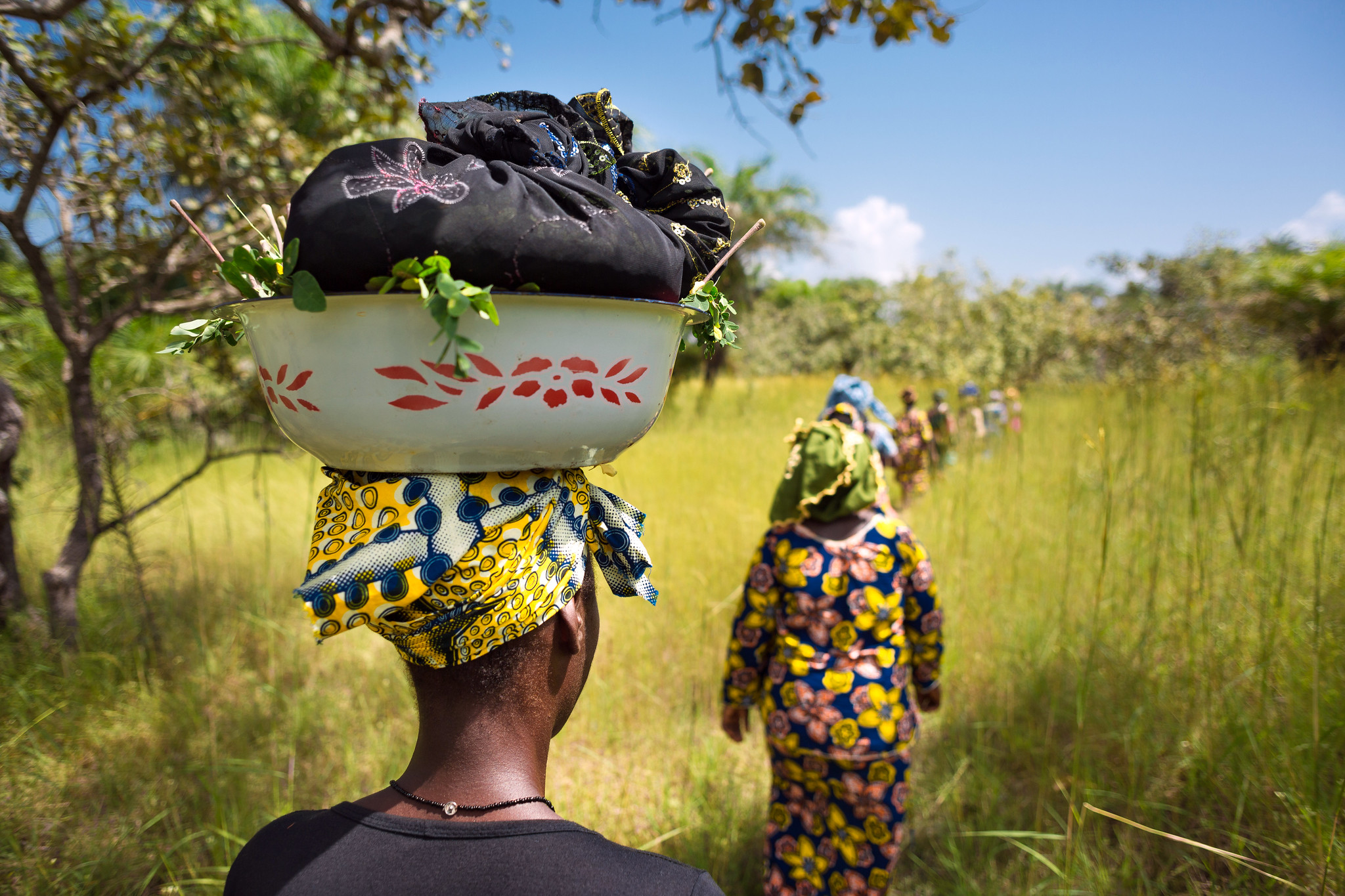
By Larissa Ntoubia
Executive Summary
Unpaid care work is a critical yet largely invisible pillar of Central African economies, performed predominantly by women and girls through childcare, eldercare, household maintenance, and the collection of water and fuel. Globally, women undertake 76% of unpaid care work more than three times the contribution of men and this labor is estimated to generate about US$10.8 trillion annually, equivalent to about 9% of global GDP. Despite its enormous economic value, unpaid care work remains excluded from national accounts and policy frameworks, limiting women’s participation in paid employment, widening gender inequalities, and contributing to under investment in essential care infrastructure. To boost inclusive growth and improve human development outcomes, Central African governments should adopt a strategy that recognizes, reduces, redistributes, and rewards unpaid care work through improved measurement, targeted infrastructure investments, supportive workplace policies, and stronger social protection systems.
Key Messages
- Women perform an estimated 76% of unpaid care work globally, generating economic value equivalent to approximately US$10.8 trillion annually. Yet this contribution remains largely invisible in official economic statistics and national planning.
- When unpaid care work is excluded from national accounts, governments underestimate economic activity, misdiagnose barriers to women’s employment, and fail to allocate adequate resources to care-related services and infrastructure.
- Investments in water, sanitation, electricity, healthcare, childcare, and transport reduce women’s time poverty, increase labor force participation, and generate significant economic returns.
- Reducing the burden of unpaid care work requires action from governments, employers, communities, and households through family-friendly workplace policies, paternity leave, childcare services, and greater male participation in caregiving.
- Central African countries should measure unpaid care work through time-use surveys, integrate it into national statistics, expand social protection for caregivers, and progressively formalize care work within economic and labor policy frameworks.
Introduction
Every day across Central Africa, millions of women and girls wake up before other household members to prepare meals, clean homes, fetch water, care for children, support persons with disabilities, and look after elderly relatives. These activities sustain households, communities, and economies. Yet they remain largely invisible within the systems that shape public policy and economic decision-making. The United Nations estimates that women perform 76% of unpaid care work globally, spending more than three times as many hours as men on caregiving responsibilities. Research further estimates that unpaid care work generates approximately 12.5 billion hours of labor daily and contributes an equivalent of US$10.8 trillion annually to the global economy. Across Central Africa, unpaid care responsibilities remain one of the primary reasons women of working age remain outside the labor force. In Cameroon women bear a disproportionate share of unpaid care and domestic work, spending substantially more time than men on these activities.
The consequences of this invisibility are significant. Governments relying exclusively on conventional GDP measures underestimate the true size of their economies, fail to identify barriers to women’s economic participation, and under invest in services that could reduce care burdens. Evidence from Kenya demonstrates that unpaid domestic and care work contributes approximately 23.1% of GDP, while studies show that women in African countries spend between 210 and 222 minutes daily on unpaid care work compared with only 35 to 108 minutes for men. As Central African countries pursue economic transformation, demographic change, inclusive growth, and progress toward the Sustainable Development Goals and Agenda 2063, addressing unpaid care work has become increasingly urgent. Recognizing and supporting the care economy can unlock women’s productive potential, strengthen household resilience, and could boost GDP by about 6–10% contributing to more inclusive and sustainable growth. This policy brief examines the economic and social implications of unpaid care work in Central Africa and proposes policy measures to recognize, reduce, redistribute, and reward care work in order to advance gender equality, labor market participation, and inclusive development.
- Recognizing the Economic Value of Unpaid Care Work
Women in Central Africa face challenges due to the systematic under-recognition of unpaid care work within economic measurement systems. Given that the GDP captures primarily market based production, essential household activities remain excluded from official statistics. As a result, governments operate with an incomplete understanding of economic activity and productivity. A woman who spends six hours caring for a child or elderly relative creates substantial economic value; however, unlike similar services provided through childcare centers or nursing facilities, her contribution is not recorded in national accounts. This omission produces three major policy distortions;
Firstly there is the underestimation of economic activity as governments fail to capture the full extent of productive work occurring within society. Consequently, women’s economic contributions remain undervalued and invisible in economic planning.
Secondly, there is a misdiagnosis of women’s employment constraints. Generally low female labor force participation is often attributed to insufficient education, skills, or entrepreneurship. Yet evidence suggests that the burden of unpaid care responsibilities constitutes one of the most significant barriers preventing women from entering formal employment. For instance, World Bank data indicate that 77% of unemployed mothers of children with disabilities who sought employment were unable to work because of care giving responsibilities. Mothers providing intensive care were 1.9 times more likely to lose employment and 2.1 times more likely to leave jobs altogether.
Finally, exclusion of household activities from official statistics leads to the misallocation of public resources. When care work remains invisible, governments fail to invest adequately in childcare services, elder-care facilities, healthcare systems, and social protection programs. Consequently, public spending does not address one of the most significant constraints on productivity and labor market participation.
- Reducing Care Burdens Through Strategic Infrastructure Investments
Given fiscal constraints across Central Africa, governments should prioritize investments that reduce time poverty and generate the greatest economic returns. Care infrastructure should be viewed not as social spending but as productive economic infrastructure.
Investing in water, energy, and health Infrastructure is very important. Women and girls in many rural communities spend several hours daily fetching water and collecting fuelwood. Expanding access to safe water, clean energy, rural electrification, and primary healthcare can dramatically reduce unpaid care burdens. Evidence from South Africa demonstrates that rural electrification reduced the time women spent on household work and increased female labor force participation by approximately 9%.
Also, expanding affordable childcare services represents one of the most effective mechanisms for increasing women’s participation in paid employment. Accessible childcare; increases female labor force participation, improves productivity among working mothers, creates additional employment opportunities, and supports early childhood development.
Furthermore, improve transport infrastructure, reduce travel time, improve market access, and increase economic mobility, particularly for women engaged in agriculture and informal enterprises.
Finally, as populations age, governments must begin developing long-term elder-care systems. Experiences from Nordic countries demonstrate that comprehensive care systems contribute not only to social welfare but also to higher levels of human development.
- Redistributing and Rewarding Care Work
Reducing care burdens alone is insufficient. Sustainable reform requires redistributing responsibilities across households, employers, communities, and governments while creating mechanisms that reward caregiving.
Transform Social Norms: Deeply rooted cultural norms continue to define caregiving as women’s work. Community dialogues, public awareness campaigns, and parenting programs that actively engage men can help shift attitudes. Experiences from Rwanda and Uganda demonstrate that involving men in caregiving campaigns increases male participation in household responsibilities and promotes more equitable care arrangements.
Promote Family-Friendly Workplace Policies: Employers play a critical role in redistributing care responsibilities. Key measures include: paid paternity leave, shared parental leave, flexible work arrangements, workplace childcare facilities, and lactation support programs. A tea plantation in Kericho, Kenya, for instance provides breastfeeding support, flexible schedules, childcare services, and nursing breaks for mothers returning to work. The initiative has improved worker retention, employee satisfaction, and breastfeeding outcomes.
Strengthen Social Protection Systems: Caregivers particularly those in informal sectors should be included within social protection frameworks. Simplified registration systems and support programs can ensure broader access to benefits and services.
Formalize and Reward Care Work: Governments should progressively formalize caregiving activities by recognizing care work within labor and economic frameworks. Time-use surveys and replacement-cost methodologies can help estimate its economic value and support future compensation mechanisms. A phased approach could begin with recognition and measurement, followed by support programs and eventually partial remuneration for intensive caregiving activities.
Policy Recommendations
To ensure that unpaid care work in Central Africa is recognized, reduced, redistributed, and rewarded, governments, national statistics offices, and employers should:
- Strengthen the measurement and valuation of unpaid care work through improved data collection systems, time-use surveys, and integration into national statistics. This will help policymakers better understand the economic contribution of care work and design evidence-based interventions.
- Invest in care-supportive infrastructure, including access to clean water, reliable energy, transportation networks, and clean cooking technologies. Such investments can significantly reduce the time burden associated with unpaid care activities and improve caregivers’ productivity and well-being.
- Expand public and community-based care services for children, older persons, and persons with disabilities. Accessible and affordable care services can reduce pressure on households while improving the quality of care provided to vulnerable populations.
- Promote education and awareness campaigns that challenge traditional gender norms and encourage the equitable sharing of care responsibilities between women and men. Caregiving should be recognized as a shared societal responsibility rather than a burden borne primarily by women.
- Strengthen social protection and labour market policies that support caregivers, including flexible work arrangements, paid family leave, and other caregiver-friendly workplace practices that enable individuals to balance work and care responsibilities.
- Promote regional dialogue and policy harmonization on the care economy across Central Africa to promote common standards, share best practices, and accelerate the recognition, reduction, and rewarding of unpaid care work.
Conclusion
Unpaid care work constitutes the hidden foundation upon which households, labor markets, and economies function. Yet despite its immense economic value, it remains largely invisible in national statistics, budgets, and policy frameworks across Central Africa. Failure to recognize care work perpetuates gender inequality, constrains labor force participation, weakens economic productivity, and undermines inclusive development. Conversely, recognizing, reducing, redistributing, and rewarding care work can unlock significant economic gains while improving social welfare and human development outcomes. For Central African countries seeking sustainable and inclusive growth, the challenge is no longer whether unpaid care work matters. The challenge is how quickly governments can move from acknowledging its importance to implementing policies that recognize its value and support those who perform it.

Larissa Ntoubia
Ntoubia Ngapmen Larissa, holds a Bachelor’s degree in Banking and Finance and a Master’s degree in Economics and Financial Engineering from the University of Yaoundé II Soa. She is currently a Research Associate at the Nkafu Policy Institute of Denis and Lenora Foretia Foundation under the Economic Affairs Division.




Leave A Comment