
By Enowbachem Agbortanyi
Executive summary
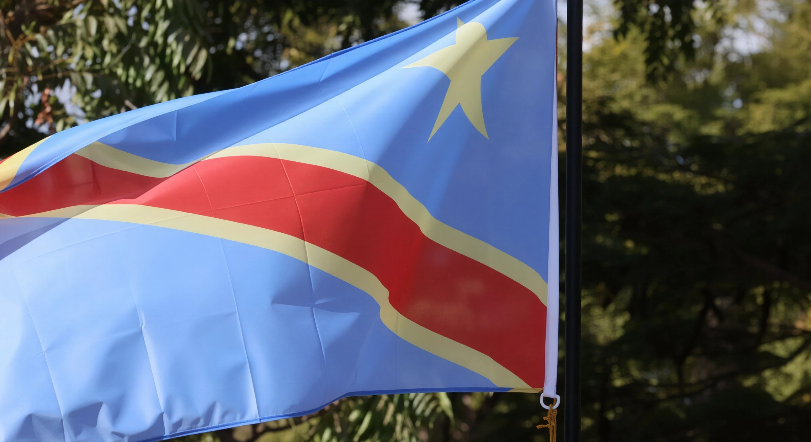
The conflict in the eastern Democratic Republic of the Congo (DRC) has remained among the most enduring crises on the African continent. Despite peace efforts being made by various peace initiatives at the regional as well as the international levels, conflicts among the March 23 Movement, other armed groups, and regional actors have escalated since 2021, leading to mass displacements and instability. This policy brief is structured into three core parts: (I) background and conflict dynamics; (II) analysis of recent peace efforts and agreements; and (III) policy recommendations. It argues that peace initiatives have faltered due to fragmented mediation, insufficient political solutions, and limited attention to governance and civilian protection. A more coherent, inclusive, and accountable approach is urgently required.
I. Background and conflict dynamics
The conflict in eastern DRC is driven by a complex array of historical, political, and regional factors, which have their roots in the mid-1990s. The aftermath of the Rwandan genocide in 1994 has had a major impact on the security situation in the region, as various armed groups, including remnants of the former Rwandan Armed Forces and the Interahamwe militia, moved to eastern Zaire, which is now the DRC. The state’s weakness, issues of citizenship and land ownership, and underdevelopment have all created fertile ground for the emergence of armed groups. Indeed, eastern DRC is currently inhabited by over 120 armed groups, including local Mai-Mai groups and foreign-backed groups. The state’s inability to ensure security and justice has all contributed to the conflict situation in the region.
The resurgence of the March 23rd (M23 Rebel) Movement in late 2021 is a key factor in the escalation of the conflict. Between 2022 and 2024, M23 took control of large tracts of land in the province of North Kivu, including Rutshuru and parts of Masisi, resulting in the displacement of hundreds of thousands of people and posing a potential threat to the province’s capital, Goma. The Government of the DRC has accused Rwanda of providing military, logistical, and political support to M23 rebels, allegations supported by UN and other international organisations’ reports, as well as media reports that claim M23 is backed by Rwanda. Claims which Rwanda has consistently denied, arguing that its security concerns stem from the continued presence of the Democratic Forces for the Liberation of Rwanda (FDLR) in Eastern DRC. This mutual recrimination has transformed a domestic insurgency into a regional security crisis.
The Eastern part of DRC is experiencing one of the largest and most complex humanitarian crises in the world. According to the UNHCR, there are about 5.6 million internally displaced persons (IDPs) around the country, with North and South Kivu being the most affected provinces. The civilian population is subject to various human rights violations, including indiscriminate attacks, sexual and gender-based violence, child recruitment as child soldiers, and restrictions on humanitarian access. The IDP camps around Goma and other urban centers have become militarized, posing a major risk to the affected populations. In July 2022, there were mass protests demanding the withdrawal of UN peacekeepers, which led to the deaths of at least ten people. This adversely affected the public’s confidence in, the UN peacekeeping mission, MONUSCO.
II. Analysis of recent peace efforts and agreements
The various peace agreements and efforts to protect civilians and resolve the conflict in Eastern DRC failed based on several aspects, including a lack of clarity, enforcement, inclusivity, and civilian protection.
The Nairobi process (East African Community): The Nairobi Process, launched in April 2022 under the East African Community (EAC) to bring an end to violence in Eastern DRC, was negotiated between the government of the DRC, armed groups, civil society, and international partners for peace, security deployment, and inclusive dialogue. However, clarity on the mandate was weak: the dual political and military tracks lacked clarity regarding enforcement and strong monitoring; the role of the EAC Regional Force was contested. There was inconsistent engagement with the armed groups, and the perception by the Congolese that the EACRF allowed M23 to control the territory, leading to mass protests by Congolese that led to the withdrawal of the EACRF in late 2023. Enforcement mechanisms were largely voluntary, under-resourced, and could not restrain armed groups like M23, undermining security and civilian protection.
Inclusivity was lacking with key armed actors like the M23, as well as civil society and women’s groups, being left at the margins or poorly represented, which has reduced legitimacy and relevance to the ground reality. Finally, civilian protection was undermined due to resurgent violence and reduced peacekeeping capacity after EACRF’s exit, and little accountability for rights violations.
The Luanda process (Angola-mediated): Meanwhile, the Luanda Process has sought to de-escalate the conflict between the DRC and Rwanda through high-level talks under Angolan mediation, with the outcomes being summarized by the African Union Peace and Security Council. Under the mediation of Angola, the process has yielded various ceasefire agreements, blueprints, and promises, including the withdrawal of M23 forces and the demobilization of the Forces Démocratiques de Libération du Rwanda (FDLR). Rwanda perceives the FDLR as a force formed by some former perpetrators of the Rwandan genocide of 1994, and thus sees it as an existential threat because of its continued deployment in Eastern DRC. Rwanda uses this as justification for continuous military deployment across the borders. Although the process has a great diplomatic important, it has not yielded desired results, with various ceasefires being violated, deadlines not being met, and verification processes being ineffective. Nonetheless, the Luanda process is one of the few processes that have kept the DRC and Rwanda talking, thus remaining strategically important.
The Southern African Development Community (SADC) Mission: After the departure of the EACRF forces, a new mission of the Southern African Development Community (SADC), namely SAMIDRC, comprising troops from South Africa, Tanzania, and Malawi, arrived in December 2023. Unlike the previous mission, however, this new mission has assumed a stronger and more combat-ready stance in support of DRC’s national armed forces. This mission came with an approach of using force, which aligns so well with the DRC government’s approach to eliminating the M23 rebels. The mission was unable to guarantee the return to peace in DRC due to several reasons, including the mission, the M23’s territorial gains, rising civilian suffering, and persistent instability.
Qatar mediation: Qatar has positioned itself as a significant diplomatic player on the global stage of conflict resolution, leveraging its wealth, strategic neutrality, and soft power. Qatar’s initial entry into the DRC peace process began in early 2024 with quiet diplomatic gestures towards Kinshasa and Kigali. Senior-level negotiations took place in Doha, focusing on measures to build confidence, ceasefire proposals, and humanitarian access. While focusing on one of the main driver of the conflict which is the natural resources, Qatar’s motives for interventing in the DRC conflict as a mediator are multifaceted: constructing its global diplomatic stature, diversifying global policy from the Middle East, obtaining influence in international institutions, and expanding its economic might beyond oil and gas to mineral treasures in the Great Lakes. Further, Qatar also views African peace processes as opportunities to consolidate and demonstrate leadership in global security issues.
Despite its experience in conflict mediation, Qatar faced daunting tasks in mediating the DRC conflict, which had many obstacles. One of them is political fragmentation in the DRC. The central government has limited control over the eastern regions, where local militias, foreign rebel groups, and even rogue military units operate independently. This eroded Kinshasa’s bargaining power and was a hindrance to the effective implementation of the agreement. Another problem is the lack of enforcement mechanisms. Past agreements, including the 2013 Addis Ababa Framework, partially failed because there was no practical way to track and enforce compliance. The deal depended solely on the political will of both parties for implementation, which clearly failed to restore peace in the region.
Washington Peace Agreement: The Washington Peace Agreement, signed between the DRC and Rwanda in June 2025, which was brokered by the United States with assistance from other partners and countries like Qatar, has been instrumental in finding a solution to the DRC crisis through diplomatic pressure and other measures like accountability and incentives. The framework is based on US diplomatic efforts in the Great Lakes region. The agreement came after escalated tensions between the two nations, largely fuelled by accusations of supporting each other’s armed rebel groups and endless conflicts in the mineral-rich eastern DRC. While others received the peace deal as a breakthrough in one of Africa’s most enduring conflicts, the agreement has also drawn criticism on its enforceability, inclusivity, and intentions.
The agreement contained several provisions aimed at reducing tensions and guaranteeing long-term cooperation. The Washington Peace agreement has been effective in raising awareness and putting diplomatic pressure on the actors in the DRC crisis; however, its effectiveness has been hampered by geopolitical interests and the lack of alignment between international actors on the matter. Also, the flagrant non-inclusion of the M23 rebels in the Washington peace deal contributed to the failure of the agreement. The exclusion of a principal belligerent, M23, tends to enhance its noncompliance to the agreement and thus exacerbates the violence It has also been argued that the DRC crisis cannot be resolved through diplomatic pressure alone and that Congolese civil society is not adequately integrated into this diplomatic process.
III. Recommendations
A sustainable solution will therefore require a more inclusive political approach; thus, the following recommendations:
- To the government of DRC
- An immediate action to establish a national stabilization strategy that brings together military action, political dialogue, governance, and economic recovery efforts.
- Enhance security sector reform to increase discipline, command, control, and responsibility among FARDC troops.
- Organise community dialogues to resolve the causes of conflict at the local level, including land issues, citizenship, and reconciliation efforts.
- To Regional organisations (EAC, SADC)
- Harmonize all mediation and security initiatives led by a committee, to prevent fragmentation and competition.
- Ensure that regional forces have civilian protection mandates, adequate oversight, and full compliance with international humanitarian law.
- Foster long-term confidence-building measures between the DRC and Rwanda, beyond crisis management.
- Put in place severe sanctions against all regional forces that act against their mandate to protect civilians and restore peace.
- For international partners
- Increase funding for humanitarian assistance and early recovery initiatives in conflict-affected areas to reduce incentives for armed group recruitment.
- Enhance accountability measures, such as targeted sanctions against individuals and groups driving conflict and illegal exploitation of resources.
- Prioritise civilian protection in all funding, especially for projects implemented in the eastern provinces.

Enowbachem Agbortanyi
Enowbachem Agbortanyi is a human rights, peace and political advocate with extensive experience in peacebuilding, democratic governance, and conflict resolution, particularly within the context of Cameroon. He is a Swedish Institute Alumnus and holds a Master’s degree in Political Science from Gothenburg University, Sweden.


Leave A Comment