
By Stéphane Nguea Mbiankeu
Executive Summary
Faced with the worsening climate crisis, the most vulnerable communities in Sub-Saharan Africa are suffering disproportionate impacts while having limited resources to adapt. The Locally Led Climate Fund (LLCF) of the ACT Alliance embodies a concrete alternative to traditional climate finance mechanisms, often perceived as slow, bureaucratic, and disconnected from local realities. Since 2023, the LLCF has channelled approximately USD 200,000 per year directly to national forums in Kenya, Uganda, Zimbabwe, Ethiopia, and Liberia. This modest but targeted funding has trained 124 climate champions, developed 4 local climate action plans, improved access to clean water for more than 676 households, and supported 300 smallholder farmers in transitioning to drought-resistant crops. This policy brief analyses the institutional features that enabled these results, examines the model’s limitations and conditions for replication, and formulates recommendations for donors and governments seeking to institutionalise locally led climate finance.
Key Messages
- The LLCF experience suggests that modest investments (approximately USD 50,000 per country) can generate tangible impacts when managed by local actors, with direct funding, shared governance, and capacity strengthening as key enabling factors.
- The LLCF’s governance structure, which includes African national forums on the steering committee, ensures that decisions reflect local priorities and enables rapid adaptation to changing conditions.
- The Fund’s interventions touch on key areas: water security, food sovereignty, clean energy, climate governance, and policy advocacy.
- The LLCF approach offers a replicable model for other climate finance initiatives, provided that certain institutional conditions—including flexible funding, inclusive governance, and sustained capacity investment—are met.
Introduction
The climate crisis is a brutal reality for millions of people across Africa. In the arid counties of Kenya, the districts of Buhera and Gokwe South in Zimbabwe, or the Salayea District in Liberia, climate change translates into dried-up rivers, failed harvests, and difficult choices between migrating and staying on lands that have become hostile. Despite the urgency, international climate finance mechanisms struggle to meet immediate needs. Only 10% of global climate funds are estimated to reach local communities. This deficit represents a systemic failure to recognise and fund solutions led by those on the front lines. To bridge this gap, the ACT Alliance, in partnership with its Canadian and American members, launched the Locally Led Climate Fund (LLCF) in 2023. Unlike large multilateral funds, the LLCF is based on a simple principle: the people closest to the crisis are best placed to respond to it. With a modest annual budget of approximately USD 200,000, distributed among four ACT national forums, the Fund has demonstrated in three years that targeted and agile funding can produce significant results, ranging from ecosystem rehabilitation to the creation of school climate clubs. This policy brief analyses the successes of the LLCF over its first three years, examines its limitations and conditions for replication, and draws lessons for public policies and donor practices.
Section 1: The LLCF Model – Financing and Governance for Localised Action
The LLCF stands out for its governance structure and financing approach, which place communities and their representatives at the heart of the decision-making process.
1.1. A Direct and Agile Channel for Financing
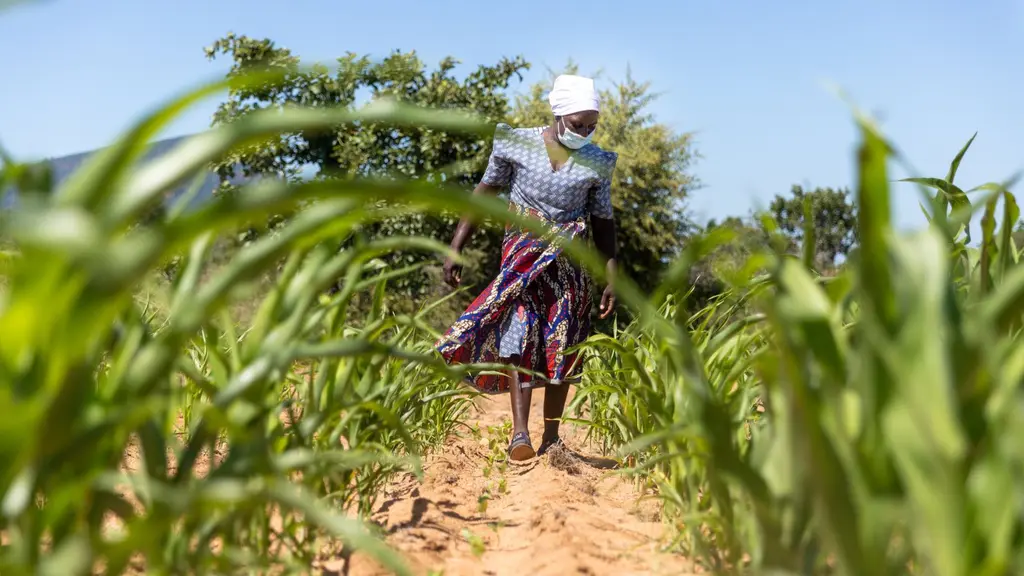
The LLCF operates in rupture with the bureaucratic heaviness of large multilateral funds. Instead of going through complex implementation chains involving multiple intermediaries, the Fund channels resources directly to the ACT national forums in the target countries. Each national forum receives an average of USD 50,000 per year. This decentralised approach allows for exceptional responsiveness. For example, in the event of an imminent drought in Turkana County (Kenya), funds can be quickly reallocated to support emergency water distributions or purchases of animal feed, without waiting months for approval. This agility is essential in a context where climate shocks are increasingly frequent and unpredictable. The 300 smallholder farmers trained in the transition to drought-resistant crops in Kenya’s arid regions illustrate this. Direct funding made it possible to provide adapted seeds and technical training in time for the planting season. Likewise, the 676 households now having better access to clean water testify to the Fund’s ability to respond to vital basic needs.
1.2. Shared and Inclusive Governance
The success of the LLCF relies on its inclusive governance. ACT national forums in Africa are not mere beneficiaries; they are full partners in decision-making. They sit on the Fund’s Steering Committee, alongside their Canadian and American partners and the ACT Secretariat. This collegial structure ensures that programming priorities and intervention countries are subject to collective consensus. This governance model is fundamental to ensuring local ownership of projects. Communities are not implementers of decisions made elsewhere; they are co-designers of their own future. This is reflected in the development of 4 local climate action plans developed with county governments in Kenya. These plans are locally negotiated roadmaps, integrating traditional knowledge and sociocultural realities. Furthermore, training 124 climate champions strengthens communities’ capacity to make their voices heard in decision-making bodies.
1.3. A Multidimensional Impact
The LLCF addresses the climate crisis in all its complexity, recognising interconnections among issues. The documented results are varied:
- Water security: More than 676 households benefit from improved access to water, reducing conflicts and the time spent collecting it, often by women and children.
- Food security and livelihoods: The transition of more than 300 smallholder farmers to drought-resistant crops and the establishment of 30 Village Savings and Loan Associations (VSLAs) secure incomes and food resources.
- Ecosystem restoration: The planting of thousands of seedlings and the rehabilitation of three hectares of natural forest contribute to ecosystem resilience and carbon sequestration.
- Civic engagement and education: The mobilisation of 502 people in advocacy campaigns and the creation of 8 school climate clubs are forming a new generation of change-makers equipped to influence public policies.
Section 2: Lessons for Climate Finance and Development
The experience of the LLCF offers valuable lessons for rethinking the modalities of international climate finance and development approaches.
2.1. Institutional Features That Enable Success
Several institutional features explain the LLCF‘s effectiveness. First, the direct funding channel eliminates multiple layers of intermediation, reducing transaction costs and enabling rapid disbursement. Second, the governance structure—with local actors on the steering committee—ensures that funding priorities reflect community needs. Third, flexible programming allows funds to be reallocated in response to emerging crises. Fourth, investment in capacity strengthening—training climate champions, supporting local action plans, and establishing VSLAs—builds lasting capabilities within communities. These features collectively create an environment where local actors can exercise genuine agency over climate responses.
2.2. The Failure of the Top-Down Model and the Need for Agility
The current climate finance system fails to reach the most vulnerable populations. Complex mechanisms, prohibitive co-financing requirements, and lengthy accreditation procedures de facto exclude local organisations. The LLCF shows that an alternative is possible: smaller but direct financial flows can be remarkably effective. The cost-effectiveness ratio is impressive: approximately USD 200,000 per year made it possible to reach thousands of direct beneficiaries across five countries. This efficiency also stems from operational agility. While large projects often take years between conception and implementation, the LLCF can adapt to changing field realities, which is crucial in fragile areas where conditions evolve rapidly.
2.3. Governance and Strengthening Local Capacities
Investment in capacity strengthening is a pillar of the LLCF’s success. The training of 124 climate champions and support for local action plans ensure the sustainability of interventions by embedding skills within communities. The 30 VSLAs enable communities to mobilise their own resources to invest in climate-resilient activities. Shared governance is another key lesson. The co-presence of African forums on the Steering Committee suggests that when trust is given and accountability mechanisms are adapted, local actors can be competent and responsible managers.
2.4. Challenges, Limitations, and Conditions for Replication
Despite its successes, the LLCF model faces several challenges. Sustainability after external funding ends remains an open question: while VSLAs and trained champions create lasting capabilities, ongoing support is likely needed to maintain momentum. Accountability requirements for scaling local financing—including transparent reporting, independent evaluation, and grievance mechanisms—must be strengthened. The model’s reliance on existing ACT national forums raises questions about replicability in contexts where such networks do not exist. Furthermore, the modest scale of funding (USD 200,000 annually across five countries) limits the LLCF’s ability to address large-scale infrastructure needs or systemic policy changes. For the model to be replicated successfully, several conditions are necessary: the presence of capable local organisations, flexible donor funding, inclusive governance structures, and sustained investment in capacity strengthening.
Policy Recommendations
Based on the lessons learned from three years of LLCF implementation, the following recommendations are formulated.
For donors
- Simplify access procedures for local organisations by reducing co-financing requirements and streamlining accreditation processes, following the LLCF’s direct funding
- Consider allocating a significant percentage of adaptation and resilience funding directly to local actors, with appropriate accountability frameworks. Evidence from the LLCF suggests that such allocation can enhance effectiveness and sustainability.
- Invest in strengthening the capacities of local organisations (financial management, monitoring and evaluation, advocacy) as an essential component of climate finance programming.
For national governments
- Establish official mechanisms so that local climate action plans (such as those developed in Kenyan counties) inform national adaptation strategies and NDCs.
- Transfer a portion of national climate budgets to local governments and communities, with clear and transparent accountability mechanisms.
- Value the role of climate champions and school clubs by integrating them into educational programs and national campaigns.
For civil society organisations and national forums
- Strengthen advocacy for local finance using evidence of impact from the LLCF to advocate for systemic change in climate finance distribution.
- Maintain robust accountability mechanisms towards beneficiary communities, ensuring that local voices continue to guide priorities.
Conclusion
The ACT Alliance’s Locally Led Climate Fund offers a promising demonstration of the potential of local action in addressing climate impacts. In three years, with relatively modest resources, it has generated significant results in five African countries. The experience suggests that direct funding, shared governance, and investment in local capacities are operational strategies that can work effectively. However, the model is not without limitations: sustainability after external funding, accountability at scale, and replicability in diverse contexts require further attention. The LLCF points toward a reform path for the climate finance system, demonstrating that those who bear the heaviest burden can and should lead the response. For this model to have impact at a larger scale, donors and governments must incorporate its guiding principles into their policies while adapting them to local conditions and addressing identified challenges. The LLCF offers a call to action for climate finance to become a more effective tool for climate justice.




Leave A Comment