
By Musa Nji and Anthony Antem
Executive Summary
Mali’s prolonged crisis reflects the dangerous intersection of conflict, political fragility, and worsening health vulnerabilities, all of which threaten both national stability and regional security in the Sahel. Years of insurgency, intercommunal violence, military coups, and weak governance have severely weakened healthcare systems, particularly in conflict-affected regions such as Gao, Kidal, Mopti, and Timbuktu. Attacks on health facilities, displacement of medical personnel, and limited state presence have reduced access to essential healthcare services, including maternal care, vaccinations, mental health support, and disease prevention.
This policy brief argues that health insecurity in Mali is not only a humanitarian concern but also a major governance and security challenge. Weak healthcare delivery undermines state legitimacy, deepens public distrust, and creates conditions that armed and extremist groups exploit to expand influence in marginalized communities. Health crises, displacement, malnutrition, and disease outbreaks also generate cross-border risks affecting neighbouring countries including Burkina Faso and Niger. The brief calls for integrated responses that combine peacebuilding, health system strengthening, and inclusive governance. It recommends rebuilding health infrastructure, protecting healthcare workers, expanding community-based services, and strengthening regional cooperation through institutions such as the African Union and Economic Community of West African States.
Key Messages
- The escalation of conflict in Mali, including clashes involving armed groups, has contributed to significant pressure on civilian populations and public systems.
- Health facilities face severe operational strain due to rising demand, resource limitations, and disruptions linked to ongoing insecurity.
- Strengthening the protection of civilians and healthcare systems remains critical to mitigating the humanitarian and public health impacts of the conflict.
- Weak health service delivery in conflict-affected regions undermines state legitimacy, deepens vulnerabilities, and creates conditions that may be exploited by armed groups.
- Integrating health system strengthening into peacebuilding and stabilization strategies is essential to support long-term national recovery and regional stability.
Security Dynamics in Mali: The Conflict–Health Nexus
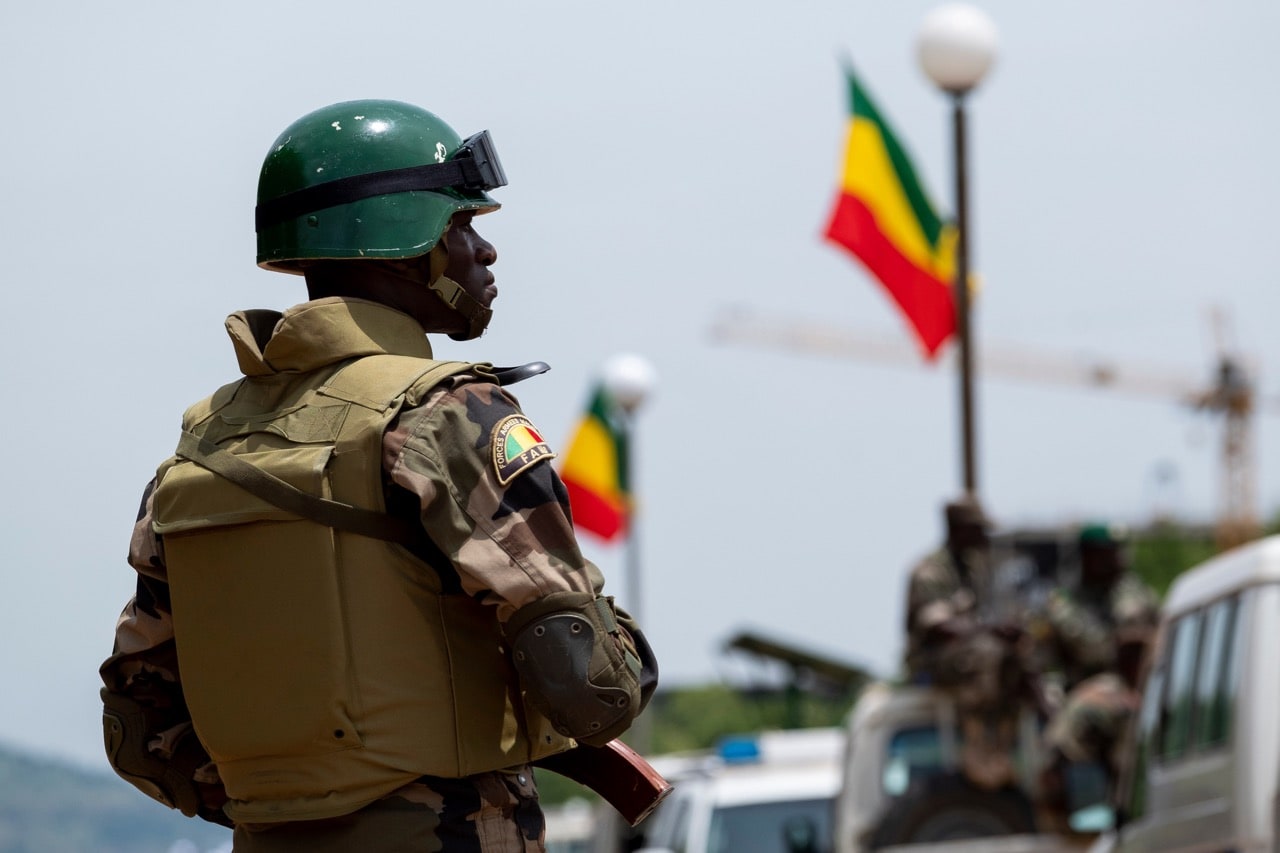
Mali is currently experiencing a protracted and intensifying security crisis driven by the convergence of jihadist insurgencies, intercommunal violence, and recurrent political instability. Since the 2012 rebellion and subsequent military coups, the state has struggled to reassert authority, particularly in the northern and central regions where armed groups affiliated with transnational extremist networks have consolidated territorial influence. Recent escalations in April 2026 suggest a geographic expansion of violence toward southern regions, including areas closer to Bamako, signalling a shift from localized insurgency to a broader national and regional security threat across the Sahel.
This evolving security landscape has produced a multidimensional crisis marked by large-scale displacement, economic disruption, and declining access to basic services. Over 400,000 people are internally displaced, and millions require humanitarian assistance, placing significant strain on already fragile public systems. Within this context, persistent insecurity is systematically eroding Mali’s public health system, severely limiting access to essential services while worsening population health outcomes. At the same time, insecurity disrupts medical supply chains, with blockades, transport constraints, and fuel shortages impeding the delivery of medicines, vaccines, and essential equipment, thereby weakening both routine and emergency services. In addition, 88% of people living in at-risk regions did not receive adequate health services among them 414,071 pregnant women and 1,022,706 children under five. Population displacement further compounds these challenges, concentrating vulnerable groups in overcrowded and underserved settings with inadequate water, sanitation, and healthcare access, increasing exposure to communicable diseases, malnutrition, and poor maternal and child health outcomes. Refugees and IDPs face increased risks of measles, dengue fever and other diseases with epidemic potential, increasing health vulnerabilities in affected regions. Prolonged instability also weakens governance and institutional capacity, limiting the state’s ability to finance, coordinate, and sustain health service delivery, and increasing reliance on fragmented humanitarian intervention.
Importantly, the relationship between conflict and health in Mali is bidirectional. While insecurity drives the deterioration of health systems and outcomes, worsening health conditions themselves act as threat multipliers, exacerbating grievances, undermining state legitimacy, and sustaining cycles of fragility. As such, health is not merely a humanitarian concern but a strategic component of national and regional security, requiring integrated policy responses that bridge peacebuilding, stabilization, and health system strengthening.
Consequences for the Public Health System
The ongoing crisis has translated into severe operational strain on Mali’s public health system, with direct implications for service delivery, infrastructure functionality, workforce capacity, and financial sustainability.
Healthcare access and service delivery have been significantly constrained, particularly in high-risk regions. A growing number of health facilities are operating at reduced capacity or have ceased operations altogether due to insecurity, resource shortages, and limited staffing. This has led to reduced availability of essential services, including maternal and child healthcare, immunization, and emergency care. Outreach services and referral systems have also been disrupted, limiting the continuity of care and delaying treatment for acute respiratory infections, acute malnutrition and associated complications, diarrhoeal diseases, malaria, dermatitis and chronic diseases such as high blood pressure.
Health infrastructure and supply systems are under sustained pressure. In 2025, damage to facilities affected 67 out of 75 health districts. Combined with logistical constraints, this has undermined the consistent delivery of essential medicines, vaccines, and medical supplies. Disruptions in transport and fuel availability have affected cold chain systems, laboratory services, and the distribution of medical commodities, resulting in frequent stockouts and interruptions in routine health programs. These structural challenges are reflected in suboptimal availability of essential medicines, estimated at 73% overall below the WHO benchmark of 80% with lower availability in the public sector (69%) compared to the private sector (80%). At the same time, medicine prices remain significantly above international reference levels, limiting affordability and access, particularly for vulnerable populations. As a result, many households increasingly rely on the informal pharmaceutical sector, which raises concerns about quality, regulation, and patient safety.
The health workforce is facing critical shortages and uneven distribution. Insecurity has contributed to the displacement of health personnel and reluctance to serve in high-risk areas, leading to staffing gaps in already underserved regions. Remaining personnel are often overburdened, affecting the quality and scope of care. While task-shifting and the deployment of community health workers have been used as coping mechanisms, these measures remain insufficient to address systemic workforce deficits.
Financial constraints further undermine system performance and sustainability. Mali’s health sector remains heavily reliant on external donor and humanitarian funding, which is insufficient to meet rising needs. Persistent funding gaps have limited the scale of service delivery and the ability to maintain essential programs. At the same time, domestic health financing is constrained by broader fiscal pressures, including increased security spending and reduced economic activity.
Collectively, these factors have resulted in a progressive degradation of health system functionality, characterized by reduced service coverage, weakened system resilience, and limited capacity to respond to population health needs. Without targeted investment and sustained operational support, these system-level challenges are likely to persist, further constraining health outcomes and recovery efforts.
Implications for National and Regional Stability
The intersection of conflict, fragility, and health insecurity in Mali carries serious implications for both national cohesion and wider regional stability across the Sahel. Weak healthcare systems and limited state presence in conflict-affected regions undermine public trust in government institutions, deepen grievances among marginalized populations, and weaken the legitimacy of the Malian state. In areas where citizens lack access to basic services such as healthcare, water, and humanitarian support, extremist and armed groups often exploit these governance gaps to gain local influence, recruit vulnerable populations, and position themselves as alternative providers of protection and social assistance.
At the national level, deteriorating health conditions contribute to rising poverty, displacement, food insecurity, and social fragmentation. Disease epidemics, untreated trauma, and inadequate maternal and child healthcare further strain already fragile communities and reduce economic productivity. Persistent instability also weakens Mali’s capacity to implement long-term development and peacebuilding initiatives.
Regionally, Mali’s instability has significant spillover effects across the Sahel, particularly for neighboring countries such as Burkina Faso, Niger, and Mauritania. Cross-border armed group movements, refugee flows, trafficking networks, and infectious disease transmission increase pressure on already fragile regional systems. The crisis also threatens regional trade, humanitarian coordination, and collective security efforts led by organizations such as the Economic Community of West African States and the African Union.
Without integrated responses that address both security and human development challenges, Mali risks prolonged instability capable of further destabilizing the wider West African and Sahel regions.
Policy Pathways
Integrate Health into Peacebuilding and Stabilization Strategies: The Government of Mali and international partners should ensure that all national stabilization and peacebuilding frameworks adopted after 2026 include measurable health resilience indicators, including healthcare access, disease surveillance, and psychosocial support services.
Strengthen Medical Supply Systems: Mali and its partners should strengthen pharmaceutical supply chains by securing humanitarian supply routes, decentralizing storage and distribution systems, and improving the availability and affordability of essential medicines. Greater regulation of the informal pharmaceutical sector and monitoring of medicine use are also needed to reduce stockouts, unsafe medicines, and irrational prescribing.
Reinforce the Health Workforce: Targeted measures are needed to retain and protect health workers in conflict-affected areas through incentives, improved security, and psychosocial support. Expanding community health worker programs and emergency staffing mechanisms will be critical to sustaining healthcare delivery in underserved regions.
Rehabilitate Health Infrastructure in Conflict-Affected Regions: The Government of Mali, in partnership with humanitarian and development actors, should rehabilitate at least 60% of damaged or non-functional health facilities in Gao, Mopti, Timbuktu, and Kidal by 2028 through targeted reconstruction funding, deployment of mobile clinics, and improved supply chains for essential medicines.
Strengthen Regional Disease Surveillance and Emergency Response: The Economic Community of West African States and the African Union should establish a coordinated Sahel regional health security platform by 2027 to improve cross-border disease surveillance, epidemic preparedness, and humanitarian information-sharing among Mali and neighbouring states.

Musa Nji
Musa Nji is an emerging Cameroonian neuropharmacologist and global health researcher whose work bridges neuroscience, pharmacology, climate and health research. Musa has built a strong academic and professional profile rooted in scientific inquiry, interdisciplinary collaboration, and community-centered research.

Antem Anthony
Anthony is a Head of Conflict Prevention, and Analysis Unit at the Foretia Foundation. Prior to joining the Foundation, he served as conflict, policy and security assistant at the International Crisis Group, Kenya.

Leave A Comment