
By Antem Anthony, Enowbachem Agbortanyi and Muriel Mesette Kinkoh
Context
Central African countries such as the Central African Republic, Democratic Republic of the Congo, Chad, Cameroon, Republic of the Congo, Gabon, and Equatorial Guinea, despite being resource-rich and strategically placed countries, are facing a persistent governance crisis characterized by low institutional capacity, instability, high corruption, limited fiscal space, and enormous regional spill-overs. The 2024 Mo Ibrahim Foundation Index of African Governance (IIAG) reports that governance progress in Africa halted in 2022 after years of stagnation. According to the data set, over the period 2014–2023, while some countries improved, the majority deteriorated, especially in categories such as Security & Rule of Law and Participation, Rights & Inclusion.
In these Central African countries, the combination of elite capture of public resources, non-state armed groups that control territory or economic flows, low taxation and revenue mobilisation, and shrinking civic space cumulatively works to destabilise the social contract. Elite networks tend to capture rents from the extractive industry and redirect procurement towards patronage rather than public service delivery. Meanwhile, armed groups and criminal economies (minerals, timber, cattle, smuggling) thrive where state control is weak. Fiscal fragility and over-indebtedness, driven by dependence on volatile commodities (oil, minerals) and poor domestic revenue mobilization, also constrain governments’ ability to invest in institutions and services. Regional dynamics compound these problems: porous borders enable the movement of armed groups, illicit flows, and refugee/displacement pressures. Civic exclusion (limited voice, repression of opposition or civil society) also challenges the state’s legitimacy.
The cumulative effect is a governance system where the state is perceived less as a provider of security and services and more as extractive and self-centered. This undermines legitimacy, dissuades private investment, increases humanitarian needs, and reduces resilience to shocks. This brief diagnoses governance constraints in Central Africa and proposes actionable policy pathways for renewal.
Diagnosis of structural constraints: a review of some ECCAS states
Amongst all the five states reviewed in this brief including Cameroon, Gabon, DRC, CAR, and Equatorial Guinea, there is evidence that they all face similar constraints like elite capture, weak decentralization, fiscal fragility, and civic exclusion.
Cameroon
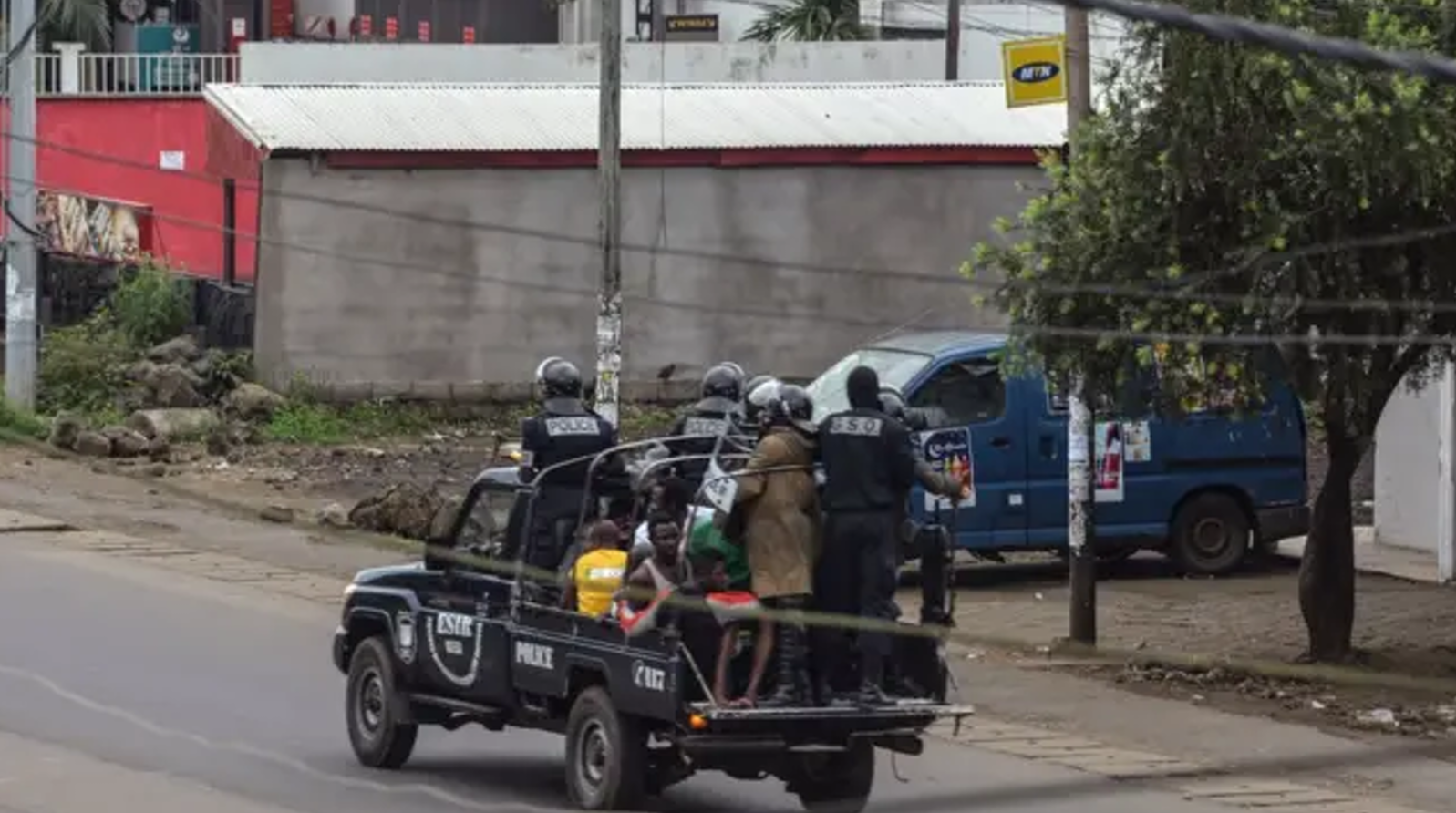
Cameroon represents a hybrid regime with profound elite dominance, weak decentralization, and enduring violent conflict. The continuous Anglophone crisis now stretches into its 9th year and has severely tested state legitimacy, with humanitarian displacement and economic disruptions in the Northwest and Southwest regions. Although the constitution provides for decentralization, less than 10% of national revenues have been allocated to subnational entities, showing marginal effective transfer of fiscal and administrative power to local authorities. Cameroon ranked 140th out of 180 countries on Transparency International’s 2024 Corruption Perceptions Index, reflecting persistent opacity in governance and rent capture in key sectors, including oil, timber, and infrastructure. With a generally restrictive civic space and constraints to political competition, accountability is curtailed, and fiscal pressures emanating from debt and security spending restrict social investment.
Gabon
Gabon’s 2023 political crisis, which reached its apex with a military intervention after contested elections, exposed the fragile nature of its governance institutions. Power has been concentrated for decades in elite networks tied to the oil sector; consequently, it has witnessed widespread rent-seeking with limited diversification. The IMF Article IV Consultation of 2024 indicates persistent areas of weakness in public financial management, particularly on state-owned enterprises’ transparency and the oil sector. A handful of small political elites have dominated this country’s wealth, which has hindered Gabon’s potential to turn resource revenues into broadly shared development; meanwhile, the 2023 transition underlined the risks stemming from over-centralized governance.
The Democratic Republic of Congo
DRC is one of Africa’s most complex governance environments. With its abundance of minerals, the country still faces high-level instability in the eastern provinces, widespread corruption, and limited institutional reach, which keeps the country in a state of fragility. The control of resource-rich territories by armed groups persists, hence weakening fiscal sovereignty and public trust. According to the 2024 Mo Ibrahim Index of African Governance, the DRC belongs to the lowest rankings within the continent for rule of law and accountability. Insecurity and corruption are further nurtured by weak border control, revenue leakages from mining, and limited state presence; similarly, environmental degradation serves as a driver for local conflicts. Institutional fragmentation, including overlapping mandates across security agencies, further undermines reform efforts.
Central African Republic
Though with a projected growth rate of 2.1% in 2025, CAR is one of the world’s most fragile countries, with its government controlling less than one-third of the country’s territory, amidst a territorial control problem and persistent conflict. A greater portion of the territory is controlled by armed groups and foreign mercenaries who exploit gold and diamond resources and impose a system of informal taxation. Fiscal capacity remains extremely weak, with domestic revenues at merely 8% of GDP-one of the lowest ratios in the world. Extreme dependence on external aid, plus general insecurity and weak judicial institutions, has created a cycle of dependency that risks perpetuating state fragility. Disarmament and reintegration processes are handicapped` by resource scarcity and political fragmentation.
Equatorial Guinea
The country represents a paradox of high income and low human development. Despite being among the largest oil producers in Africa, growth benefits remain strongly concentrated in political elites, especially the president’s family, which controls most of the oil wealth and political power. According to the World Bank in 2024, more than 70% of the population lives below the poverty line, while per capita incomes are at levels comparable to upper-middle-income countries. Fiscal opacity, restrictions on civil liberties, and poor public financial management contribute to persistent exclusion. Reforms remain essentially cosmetic, and long-term stability and diversification are being strongly undermined by dependence on hydrocarbons.
What broader implications on the governance ecosystem in the Central African region?
A synopsis of highlighted diagnosis above reveals recurrent and cross-cutting systematic constraints such as elitism, corruption, insecurity, administrative centralization, political repression and restriction of civic spaces. In terms of broader implications for the region, recurrent tenets have led to erosion of trust from the public, civic disobedience, targeted media propaganda, voluntary and involuntary migration and a wave of repeated public demonstrations from desperate citizens demanding for improvement in living conditions.
In the case of Cameroon for example, where administrative decentralization has been a topic of heated debate over the years, many of the actual governance challenges plaguing the country can be traced to the lack of meaningful and effective decentralization. This has fueled calls for separation and triggered violence and instability from a faction of the English speaking minority and by large, rendered governance in certain regions difficult. The civil war resulting from this has in turn, provoked massive displacements of persons from the country thereby creating a humanitarian and refugee crisis for neighbouring countries.
For countries like Gabon battling with corruption and growing public debt resulting from uncontrolled public expenses, resource monopoly by elites and lack of accountability, Gabon’s debt is destabilizing the CFA Franc Zone and posing a direct threat to the IMF’s programmes with Chad and the Central African Republic.
In the case of Central Africa Republic, where armed groups and foreign mercenaries have taken over a majority of strategic oil sites, insecurity has triggered regional spillover effects amounting from porous borders and weak state presence thereby overwhelming their security sectors. Armed groups, poachers, and traffickers move freely across borders (e.g., CAR–Chad–Sudan triangle). Refugee flows increasingly strain public services and budgets regionally while security governance has become transnational, forcing states to depend on regional and international missions rather than national capacity.
Across many other countries of the sub-region such as DRC, Chad and Equatorial Guinea, governance priorities are increasingly being shaped by donor and external actor dependence. Narrow revenue bases and limited administrative capacity have prompted international donors and NGOs to heavily influence development priorities. Regional organizations such as (ECCAS, CEMAC) have limited enforcement power capacity over sovereign states, leaving external actors to fill gaps. Governance becomes hybrid and externally mediated owing to state reliance on outside actors to perform core functions.
Conclusion and Policy Pathways
ECCAS states must prioritize decentralization, fiscal transparency, and regional security cooperation to restore governance legitimacy and resilience. As countries have distinct governance problems, they also require tailored policy options to address them – reforms must be context-specific and locally owned.
Fiscal transparency:
- There is a need to strengthen fiscal foundations and transparency. To enhance fiscal foundations in the ECCAS states, there is a need for states to implement reforms that improve revenue generation and expenditures. The governments of these countries must emulate international best practices like publicizingbudget and audit reports. In addition, independent oversight bodies should be empowered to scrutinize government finances, especially when it comes to the management of mineral revenues.
Effective decentralisation:
- States must effectively decentralizeand build local capacity. Countries like Cameroon have denationalization laws that face a great challenge at the level of implementation. These laws need to be reformulated to empower local authorities and grant them autonomy in decision-making, local budget management, and the ability to carry out developmental projects without interference by the central government.
Regional Cooperation:
- ECCAS should enhance its institutional capacity to foster regional collaboration, especially in sectors like trade, infrastructure development, and security cooperation. It is crucial to operationalize regional early warning systems for conflict prevention and management and harmonize trade policies to promote intra-regional trade.
Justice and civic space:
- ECCAS states should place a high priority on judicial independence, keeping judges and prosecutors from political interference and allocating sufficient funds for their operations. There is also a need to enhance access to justice for everyone, particularly vulnerable groups. Moreover, states should protect and promote freedom of assembly, association, and expression to encourage civic participation in governance processes.
To International Partners (USA, UK, EU, China)
- Align international support and apply targeted deterrence: Foreign partners are essential to Central Africa’s recovery, but their support needs to be coordinated in partnership with the AU and ECCAS to ensure that good governance policies are prioritized. Such support should promote national ownership and local empowerment. In addition, targeted sanctions such as travel bans and freezing of assets should be imposed on individuals or entities undermining democracy and violating human rights in the region.

Leave A Comment