
By Enowbachem Agbortanyi
Executive Summary
This policy brief on civil-military relations in Cameroon discusses a paradox whereby executive dominance over the security sector has resulted in a stable regime but has compromised democracy. The colonial and governance legacies have resulted in a military closely linked to the presidency with limited civilian oversight. The crises in Cameroon, particularly the Anglophone conflict and the Boko Haram insurgency, have led to an expanded role of the military in governance processes. There have been concerns regarding human rights in Cameroon, with reported cases of violations attributed to security forces, which have eroded public trust in the military. It is therefore necessary to institutionalize civilian oversight, professionalism in the security sector, democracy, and accountability in civil-military relations in Cameroon without adversely affecting democratic governance.
Key Messages
- There are reported concerns of accountability gaps in civil–military relations, particularly regarding the protection of civilians during security operations.
- Executive dominance over the security sector limits effective civilian oversight and institutional accountability mechanisms.
- Strengthening cooperation and trust between the military and civilian populations is essential for improving security outcomes and governance legitimacy.
- Professionalization of the military, supported by clear oversight frameworks and institutional reforms, is critical for balancing security imperatives with democratic governance.
- Background of civil-military relations in Cameroon
Historically, civil-military relations in Cameroon have been conditioned by colonial heritage, consolidation of regimes, and centralization of power. Since independence in 1960, the military has been instrumental in the unity of the state, but it has remained firmly under the control of the executive, particularly the presidency. Unlike other African countries, which have had military interventions, Cameroon has had a seemingly stable civilian government since Paul Biya assumed the presidency in 1982, except for the failed coup attempt in 1984. However, this has been at the cost of highly centralized civilian institutions. The Cameroon’s armed forces are organised in a way that prevents military coups and promotes loyalty to the government. The military can only be mobilized on a large scale with the direct instruction from the President of the Republic, who is the commander-in-chief of the armed forces.
Colonial history has similarly influenced the development of civil-military relations. For instance, during the transition from French and British colonial rule, security agencies were established to maintain law and order and contain nationalist movements. Hence, the military that took over at independence had been indoctrinated to focus on internal security and stability
However, over time, the military’s mandate increased due to the rising security challenges in Cameroon. The rise of the Boko Haram insurgency in the Far North region in early 2013, which escalated significantly in 2014, increased the visibility and legitimacy of the military forces in Cameroon, which built a new social contract with the civilians. The people saw the military as a true guarantor of national security and stability. It is important to acknowledge that the military, on several occasions, has ensured the safety of people and property in Bakassi and on the border with the Central African Republic, as well as protected the population against separatist attacks through rescue missions. Also, in times of peace, the army has acted in the interest of the people through military engineering, its interventions during natural disasters, health campaigns, and its support to schools, where they provide didactic materials and build some school infrastructure.
The rising public legitimacy has not necessarily translated into robust forms of democratic governance. This reflects the concentration of power in the executive, especially for the office of the president, who doubles as commander-in-chief of the armed forces. The concentration of power in the presidency could mean that civil-military relations are mediated through loyalty networks and not institutional frameworks. This model of governance has significant implications. While Cameroon avoids military coups that have plagued many African nations, it risks politicizing the military and undermining oversight mechanisms.
This paper aims to explore the civil-military relationship in Cameroon and how it has evolved with the escalation of different conflicts in the country, where the relationship has shifted from relatively cordial to more strained, with growing concerns about public trust and the role of the military in governance dynamics. The paper goes further to propose feasible pathways for more democratic civil-military relations in Cameroon.
2. Civil–military relations in the context of contemporary security crises
The crisis in the Northwest and Southwest regions that erupted in 2017, following protests by English-speaking lawyers and teachers against political marginalization, was subjected to government use of force as a response to the uprisings. The crisis later escalated into a full-blown separatist crisis demanding independence and attempting to form a new independent state called Ambazonia. The crisis has led to the deaths of over 6500 people, with 493402 civilians displaced. In response, the government has carried out various counter-insurgency operations, such as “Operation Bamenda Clean”, which sought to eliminate the separatist movements and consolidate government control in major urban centers. This shows the increasing militarization of governance, where military actions have become the primary response to governance issues.
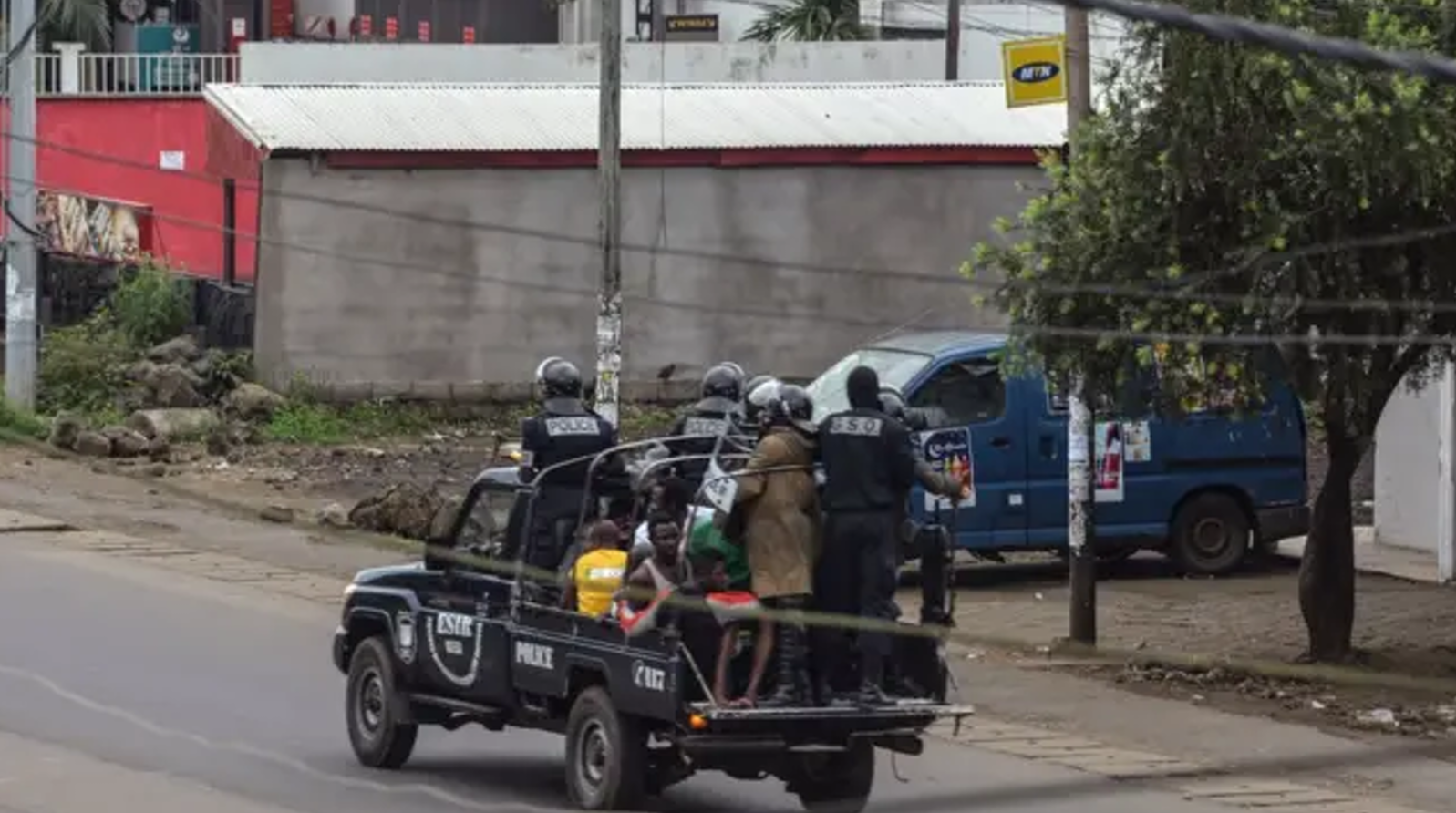
The militarization of civilian areas has been associated with reported cases of human rights violations, including incidents such as the 2020 Ngarbuh killings, which drew national and international attention. These developments have contributed to declining public trust in security institutions and raised concerns about accountability mechanisms within the military. These patterns highlight the need to strengthen institutional oversight, clarify operational mandates, and reinforce accountability frameworks within the security sector.
- Policy options for strengthening democratic civil–military relations
Improvement of civil-military relations in Cameroon calls for a wide-ranging reform agenda that balances security imperatives with democratic accountability.
Short term:
- The Ministry of Defence should strengthen internal accountability mechanisms by ensuring timely investigation of reported violations and establishing clear procedures for victim redress.
- Civil society organizations, in collaboration with relevant ministries, should support public awareness initiatives to improve access to reporting and grievance mechanisms.
Mid-term:
- Parliament should strengthen its oversight role through an active defence and security committee with clear mandates to review defence spending and monitor compliance with legal frameworks.
- The government should reinforce professional standards in the armed forces by integrating international humanitarian law and human rights training into military education systems.
Long term:
- The government should address the underlying causes of insecurity through inclusive policy dialogue and governance reforms, ensuring that responses to crises are not solely security-driven.
- Strengthening judicial independence and institutional checks and balances will be essential to ensuring accountability and long-term stability in civil–military relations.
Conclusion
Civil–military relations in Cameroon is a product of regime stability, security challenges, and democratic governance. The country has not experienced military coups, which have affected many African nations, due to executive control over the military and security forces. This type of governance, however, has not encouraged checks and balances in the security sector.
The militarization of dealing with insurgency, separatist movements, and political tensions in Cameroon has made civil–military relations complex. The situation is compounded by cases of civilian casualties and the politicization of military actions. The improvement of civil–military relations in Cameroon depends on reforms that address civilian oversight and the political causes of insecurity in the country.

Enowbachem Agbortanyi
Enowbachem Agbortanyi is a human rights, peace and political advocate with extensive experience in peacebuilding, democratic governance, and conflict resolution, particularly within the context of Cameroon. He is a Swedish Institute Alumnus and holds a Master’s degree in Political Science from Gothenburg University, Sweden.

Leave A Comment