
By Enowbachem Agbortanyi
Executive Summary
This policy brief examines the limited effects of the anti-corruption crusade dubbed “Operation Sparrowhawk” in fighting corruption in Cameroon. The country has witnessed many high-profile convictions and the creation of anti-corruption agencies and institutions, yet corruption persists due to structural limitations in the country’s governance structure. Among other issues, the dominance of the executive, lack of coordination among agencies, and inefficiencies in the judicial system have contributed to the failure of anti-corruption efforts. The politicization of anti-corruption measures has raised concerns about their effectiveness in addressing corruption. The brief concludes that unless there is a shift towards more preventive and transparent governance, anti-corruption measures will only be symbolic.
Key Messages:
- Operation Sparrowhawk has been associated with more symbolic than systemic outcomes, indicating the need for a more comprehensive anti-corruption approach.
- Concerns regarding the potential influence of political considerations may affect the effectiveness and credibility of anti-corruption policies.
- Strengthening the separation of powers, particularly judicial independence, is important for improving accountability in the anti-corruption system.
- A more effective approach to combating corruption requires preventive strategies, including digital governance, institutional coordination, and strengthened civic engagement.
Introduction and context
Corruption is one of the main problems affecting governance in Cameroon. In the year 2000, the country ranked 84 out of 90 countries according to Transparency International’s Corruption Perception Index, with a score of 2/10, making Cameroon one of the most corrupt countries in the world. Among the most important government initiatives in the fight against corruption in Cameroon was the introduction of “Operation Sparrowhawk” in 2004. This operation led to the arrest, trial, and detention of scores of senior government officials guilty of embezzlement. So far, Operation Sparrowhawk has yet to deliver the desired results in the fight against corruption. In fact, it is often perceived as a selective and limited campaign to deal with the menace of corruption. In 2025, Cameroon was amongst the most corrupt countries in the world, with a score of 26/100 and ranking 142/182.
This policy brief seeks to analyze the factors that may explain the limited effectiveness of Operation Sparrowhawk to deliver desired results in the fight against corruption in Cameroon. It will argue that the limited effectiveness of Operation Sparrowhawk may be partly explained by the politicization of the campaign against corruption in Cameroon.
Institutional architecture of Cameroon’s anti-corruption framework
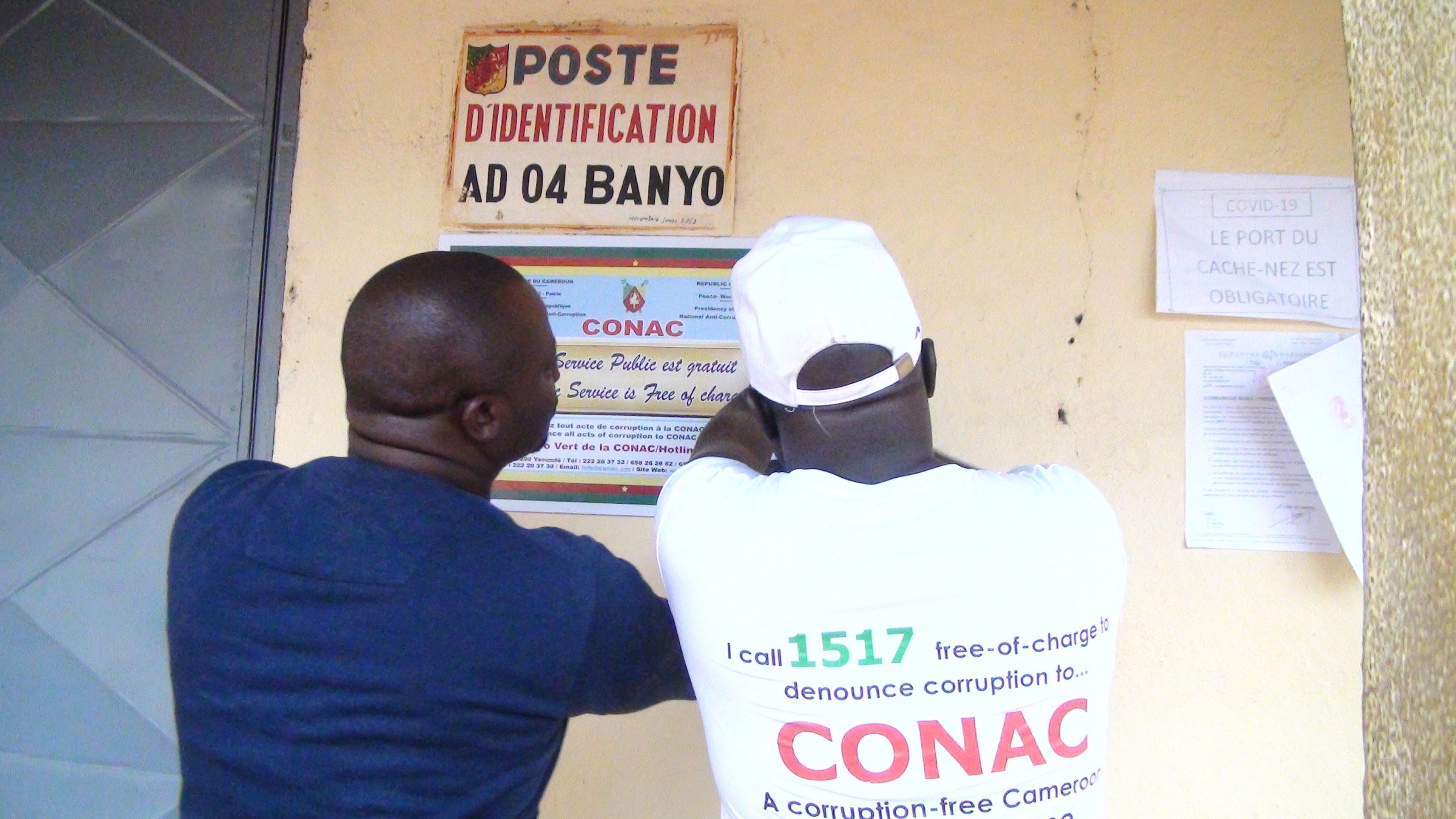
One of the most prominent institutions is the National Anti-Corruption Commission (CONAC), created by Presidential decree No. 2006/088 of March 11, 2006, to replace the earlier National Anti-Corruption Observatory. The institution is not empowered to prosecute cases independently and has to depend on legal actions to be initiated by the courts or the Budget and Financial Disciplinary Council, a specialised body under the Ministry of the Supreme State Audit.
Another prominent institution is the Special Criminal Court, which was created in 2011 to deal with cases of embezzlement of public funds exceeding 50 million CFA francs. The institution aims to speed up trials and bring about accountability in the public sector. The supporting institutions are the National Agency for Financial Investigation (ANIF), which is responsible for financial crimes and money laundering cases, and the Supreme State Audit Office, which audits the accounts and reports cases of irregularities in public spending. However, reports suggest that corruption persists in the country, and there is more to effectiveness than just the existence of these bodies.
Several factors account for this paradox:
- The structural dependency that most anti-corruption bodies have on the executive. For example, most oversight bodies are answerable to the presidency.
- The level of coordination between these institutions is low. Investigations by CONAC or audit entities do not always result in prosecutions. Some of the identified cases of corruption by these oversight entities have not resulted in any legal action.
- Moreover, the anti-corruption institutions lack the necessary administrative capacity. Consequently, anti-corruption cases usually take a very long time to resolve.
These weaknesses in the system have resulted in a general lack of trust in the Operation Sparrowhawk and the anti-corruption system in Cameroon.
Politicization and selective enforcement of Operation Sparrowhawk
There has been a pattern of criticisms about the operation, perceived in some cases as being influenced by political considerations, rather than an anti-corruption drive. The arrest of some former ministers has been cited as an example of the operation being used as a “political tool”, analysts suggest that enforcement patterns may be influenced by political dynamics. The 2021 Anti-Corruption Status Report cited the ministries of Public Health, Education, Justice, Decentralisation and Local Development, amongst others, as those with severe corruption cases, but none of the officials were prosecuted. This pattern may undermine perceptions of credibility of the anti-corruption campaign. This further prevents whistle-blowers and civil society organizations from reporting corruption, as they know that investigations into these reports may not be conducted, or if done, the investigations may not be impartial.
Structural governance deficits and the persistence of corruption
Aside from the institutional problems, there are structural governance problems that act as a hindrance to the effectiveness of Operation Sparrowhawk. Corruption in Cameroon is rooted in its administrative and economic systems. Surveys have revealed that there is a high incidence of bribery in Cameroon’s business sector.
Although Cameroon’s constitution, in its Article 66, requires state officials to declare their properties, an implementing legislation has not been passed. The Financial Transparency Coalition notes that it is difficult to trace cases of illicit enrichment among Cameroon’s political class without effective asset declarations. There are mechanisms established by the state to fight corruption, but they are faced with weak enforcement.
Anti-corruption efforts in the country have been focused on repression rather than prevention. While Operation Sparrowhawk focuses on prosecuting corruption once it has happened, it does not address the structural issues, such as procurement processes, financial management, and budgetary transparency. Corruption continues to impose significant economic and social costs. It erodes public trust in government institutions, discourages investment, and diverts resources from development.
The prolonged stay in office by some state officials also accounts for the prevalence of corruption cases because longer tenures in public office may increase the risk of entrenched corrupt practices. For instance, in 2021, the Ministry of Justice and Public Health were cited by CONAC amongst the most corrupt institutions in Cameroon. Yet, the heads of these institutions still hold their positions without being subjected to any investigation or replacement. This could cause some administrators to think that there is impunity for corruption cases.
Policy Recommendations
For the anti-corruption drive in Cameroon to be effective, several changes must be made.
- The government should strengthen safeguards to reduce potential executive influence on judicial decisions related to corruption cases.
- CONAC could be further empowered to prosecute cases of corruption. This will curb the delay process in investigating and prosecuting corruption cases, which sometimes go unpunished.
- Civil society and the media could play a stronger role in monitoring public expenditure and expose the scandals of corruption. To realise this, there is a need to promote access to information.
- There is a need for the government to adopt a digital governance model. This has proven to be useful in countries like Moldova and Zambia, where different GovTech solutions are used to address various causes and types of corruption.
- There is also the need for institutional review processes and administrative accountability measures to ensure that officials do not stay so long in power.
Operation Sparrowhawk is arguably the most ambitious anti-corruption drive in the history of Cameroon. It has resulted in the arrest and prosecution of many high-ranking officials and has shown the government’s resolve in the fight against corruption in principle. However, the anti-corruption drive has faced challenges related to politicization, institutional weaknesses, and governance constraints.

Enowbachem Agbortanyi
Enowbachem Agbortanyi is a human rights, peace and political advocate with extensive experience in peacebuilding, democratic governance, and conflict resolution, particularly within the context of Cameroon. He is a Swedish Institute Alumnus and holds a Master’s degree in Political Science from Gothenburg University, Sweden.




Leave A Comment