
By Dr. Pippie Hugues
Executive Summary
The 2025 presidential elections in Cameroon highlight persistent challenges to achieving democracy through the ballot box. Allegations of fraud, manipulation, and irregularities undermine public trust in electoral outcomes. Genuine democracy requires more than voting: independent institutions, rule of law, accountability, and civic engagement are essential. Strengthening the independence of ELECAM, ensuring transparency, and promoting civic education are key steps toward restoring credibility. Without reforms, elections risk becoming rituals that fail to reflect the will of the people.
Introduction
Across Africa, elections are often contested, raising questions about whether the ballot box truly reflects the will of the people. Cameroon’s 2025 presidential elections provide a case study of these challenges. The ballot box has been considered by many as the beacon of democracy, where citizens freely exercise their civic rights to choose their leaders and representatives. What has been common across Africa is the legitimacy of the ballot box. Does the ballot box represent the true will of the people? This is an important question because according to Interlude by Francesca Crachilova, there has been a feeling that what comes out of the ballot box often does not reflect the will of the people. This feeling is further justified by the plethora of post-elections protest. The 2025 presidential elections in Cameroon is a reflection of what is common in some parts of the continent. It is not always enough to cast votes on elections day; election outcomes are determined by administrators who transform the results. When multiple stakeholders manage elections, the will of the people manifested through the ballot box is most often manipulated. In this paper, we shall examine whether democracy can be achieved from the ballot box, demonstrate how genuine democracy can be secured from the ballot box through independent and non-partisan elections management bodies and advocate for the respect of the will of the people. Our focus shall be on the 2025 Cameroon presidential elections of October 12th.
Can Democracy be achieved from the ballot box? A Cameroonian Perspective.
Democracy is more than voting; it requires free and fair elections, rule of law, separation of powers, civil liberties, accountability, and civic engagement. Empowering citizens to vote on significant national issues and enhancing the role of direct democracy at state and local levels would enable the populace to steer government policies towards a more people centered approach.
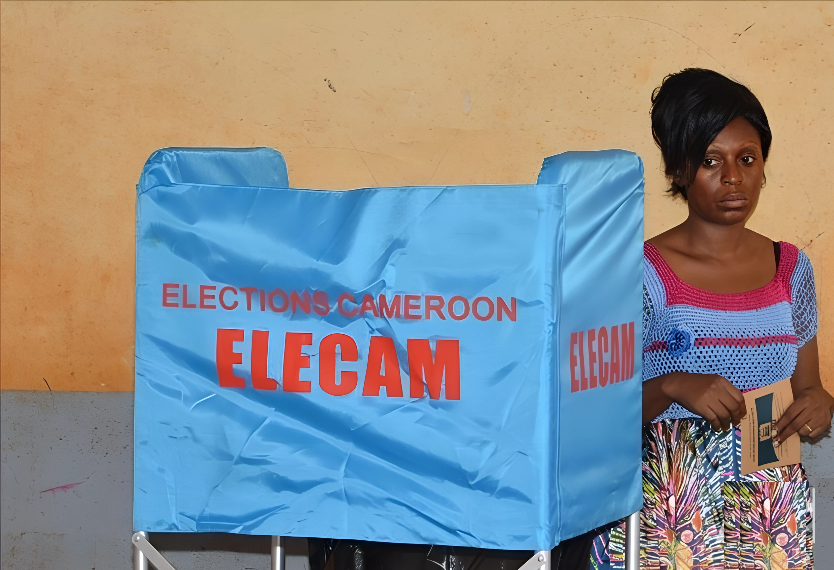
Since the wave of independence that swept through Africa, particularly in Cameroon during the 1960s, the promise of democracy has largely remained unfulfilled across much of the continent, Cameroon inclusive. The aspiration for democratic governance—where leaders are held accountable by the populace, human rights are upheld, and institutions exist to serve the citizens—has frequently been compromised in Cameroon since the failed coup in 1984. This is evident in the existence of political turmoil, corruption, and military dominance. Achieving democracy in Cameroon through the ballot box is almost impossible due to numerous issues such as ballot stuffing, voter intimidation, corruption, and the lack of institutional separation between the three arms of government. The organization of regular elections since after the advert of multipartyism in 1990 is often viewed as the sole indicator of democracy. The ongoing struggle in Africa between ballots and bullets continues to shape the political environment, prompting essential inquiries about the future of democracy on the continent. What has caused democracy to struggle within many African countries? and why do countless African citizens still find themselves torn between the ballot and the bullet as they seek to secure their future? This has dominantly been as a result of the non-separation between elections management bodies and the state. This is evident in Cameroon where ELECAM, which is the organ responsible for elections, is directly under the state through the Ministry of Territorial Administration (MINAT).
Democracy is frequently linked to the idea of free and fair elections, yet it encompasses much more than merely casting votes. Although the ballot box plays a vital role, realizing true democracy demands a comprehensive approach. There are several essential elements that foster democratic governance, some of which include;
- Free and fair elections. Consistent, transparent, and competitive elections guarantee that the voices of citizens are acknowledged.
- Rule of law: A judiciary that operates independently, laws applied equally, and the safeguarding of individual rights.
- Separation of powers: A system of checks and balances among the executive, legislative, and judicial branches.
- Civil liberties: The rights to free speech, assembly, and association.
- Accountability: Systems in place to hold leaders responsible, including an independent press and a strong opposition.
- Civic engagement: Involvement in public affairs, such as voting, protesting, and participating in community activities.
- Institutional strength: Efficient and unbiased institutions that prioritize the public good.
While the ballot box is undeniably important, it does not alone ensure democracy. Other critical elements, like those outlined above, must also be established to maintain a functioning democracy. Unfortunately, the factors mentioned supra are lacking in Cameroon. As it stands now, it would be difficult to achieve democracy through the ballot box in the Cameroon because the institutions responsible for elections are under the control of the government.
Cameroon 2025 Presidential Elections Review
The October 12, 2025 elections resulted in the re election of President Paul Biya with 53.66% of the vote. The election was marred by allegations of irregularities, manipulation, and electoral fraud. Some of the issues reported include;
- Discrepancies in Vote Counting: Opposition parties like FNSC of Issa Tchiroma, UDC of Tomaino Hermine Patricia claimed that the official results did not match the vote counts at polling stations.
- Voter Roll Issues: Names of deceased persons were found on the voter rolls. In some areas across the national territory, names of deceased persons were seen on the electoral register, an act considered by many as fraudulent, justifying the fact that ELECAM did not do its job properly.
- Unequal Distribution of Ballot Papers: Ruling party strongholds reportedly received more ballot papers than opposition areas. It was reported that in some areas of the North West and South West Regions of Cameroon, considered strong holds of the CPDM, like in Ndian, voters experience shortage of opposition parties ballot papers.
- Attempted Ballot Box Stuffing: Witnesses reported attempts to stuff ballot boxes in some areas. On elections day, during and after voting, images where floating on several social media platforms, where persons were caught attempting to stuff ballot boxes. In some areas, the total number of vote cast as per the electoral register did not match the total number of ballots envelopes that came out of the ballot box.
The opposition strongly contested the results, with Issa Tchiroma Bakary declaring himself the winner and calling on President Biya to concede. Other opposition figures, including Akere Muna, condemned the process as “fraudulent” and “a stolen mandate”. The international community has equally reacted cautiously, with some countries like Canada, the United States of America and France expressing concerns over the election’s legitimacy and the respect of fundamental human rights during post-election protest, while organizations like The African Union, the United Nations and European Union called for dialogue and transparency.
Protests erupted across the country, with security forces responding with force, resulting in killings, mass arrests, and detentions of opposition leaders and supporters. The main opposition has vowed to challenge the results, and the situation remains tense. The government’s response to the protests and the opposition’s next moves remains crucial in determining the country’s stability.
Conclusion and Recommendation
Calm has return to the nation Cameroon after close to two weeks of intense post-election protest, which saw record deaths, destruction of public and private property, arrest and detentions, which came after the Constitutional Council declared the incumbent winner. The swearing in of incumbent President Paul Biya on November 6th 2025 is considered by many as the beginning of an end. It is considered as the beginning of a new era and an end to the opposition claims. However, the opposition leader has spontaneously made outings on social media trying to hold on to his claims. The president has called for the nation to regroup, claiming elections have come and gone and the time to move forward is now. He has further dispatched the Minister of territorial administration and the Prime Minister head of government on an assessment and reconciliation mission across the nation respectively.
What remains in the minds of many Cameroonians is that the elections were stolen, the voice of the people has been silenced, democracy has been betrayed and the civic space continues to shrink. From the above analysis, it is without doubt that the conduct of regular elections and the active involvement in elections, especially from women and young people, is crucial for a thriving democracy. The independence of elections management bodies (ELECAM) is paramount for achieving democracy in Cameroon from the ballot box. Furthermore, the objectivity, transparency and accountability of elections observers, civil society actors and international partners is needed for democracy to be achieved from the ballot box. These recommendations are further developed as follows;
Enhancing Credibility of Elections Management Body (ELECAM)
This can be done through the Independence, inclusivity and capacity building of ELECAM. Ensure ELECAM’s autonomy in decision-making, funding, and operations is guaranteed, appoint commissioners through a transparent, consensus-driven process involving diverse stakeholders and train ELECAM staff on modern electoral management, tech use, and conflict resolution.
Strengthening Accountability
To strengthen accountability, Transparency, complaints mechanisms and sanctions must be well defined and established. This can be attained through publishing election results at each polling station level while allowing party observers to follow the process, establishing an independent body to swiftly address electoral disputes and enforce penalties for electoral offenses such as vote-buying, intimidations.
Building Trust in Institutions
This can be realized through stakeholder engagement where civil societies, opposition, and citizens are all involved in electoral reforms. Voter Education through Launching campaigns on voting processes, rights, and importance of participation.
Specific challenges where equally identified throughout the process such as Biometric Voter Registration which requires expansion to enhance accuracy and reduce fraud risks; security challenges which need guarantee safe voting environments, and the lack of equal access to media for all candidates as this will regulate misinformation.

Dr. Pippie Hugues
Dr. Pippie Hugues is a Policy Analyst at the Governance and Democracy Division of the Nkafu Policy Institute. He holds a Ph.D. in International Law with specialty in Human Rights, Conflict and Peace building.



Leave A Comment