

By Asahngwa Constantine
Introduction
Despite recent health financing reforms, quality healthcare services remain largely inaccessible to many Cameroonians with financial barriers being one of the primary reasons. The Universal Health Coverage (UHC) program was introduced as a way of enhancing equitable access to quality services, without heavy financial spending for patients. However, rolling out the program in Cameroon has raised some conceptual ambiguity as there is no clear understanding of what UHC is all about, including its implementation. Drawing from desk review of policy documents and research papers, we argue that UHC has been glocalized in Cameroon and the process has implication for good governance, equity and inclusiveness, which are the core values in measuring and assessing its performance. We begin with a presentation of the conceptualization of UHC from a global perspective, followed by the glocalization of UHC in Cameroon, its implication for good governance, access and inclusiveness, and some recommendations for action.
The conceptualization of UHC from a global perspective
Although the concept of UHC now features in several health policy and health financing debates, one of the main advocates for this policy reform across countries has been the World Health Organization (WHO). According to WHO, UHC is the ability of a health system to enable citizens to access curative, preventive, promotional, rehabilitative and palliative health care services without experiencing financial hardship . The health system also has the responsibility to ensure that the services provided are of good quality. For a UHC program to be effective and sustainable, it is critical to raise sufficient funds, maintain financial risk protection; ensure efficiency, equity, transparency and accountability. All countries of the WHO member state, have embraced the concept and fundamental principles of UHC and are operationalising it in different ways, based on the various contextual realities. However, most African countries are facing numerous challenges in building up the enabling environment required for UHC to bring in the desired impact on health outcomes.
Looking at the definition of UHC, it can be inferred that any program or initiative developed by a country which aims at reducing or eliminating the cost of care for all patients contributes in one way or the other in advancing a country towards the path to achieving UHC for its citizens.
The glocalization of UHC in Cameroon
Glocalization is a concept derived from two words: globalization and localization. It simply means the ability to contextualize global values, goods and services to suit local realities. Although it has its origin amongst Japanese businessmen in the 80s, Roland Robertson pioneered the exportation of this concept to the social sciences, in the early 90s. A close examination of the scope, organizational set up and operational logic of the implementation of UHC, juxtaposed with its global conceptualization suggests that the concept has been glocalized in Cameroon. A brief overview of the health financing architecture in Cameroon will set the stage for a better understanding of the glocalization process of UHC in Cameroon.
Looking at the health financing landscape and reforms undertaken in Cameroon, we recognize that there are a couple of health cost reduction or elimination projects and programs currently going on with some as old as 10 years. These include among others the performance-based financing program (PBF), community-based health insurance schemes like Mutual Health Organizations (MHOs), Private Health Insurance (PHI) companies, the voucher program and recently, the UHC program.
Talking about the UHC program, the initiative began in 2015 and was officially launched in 2023, in the locality of Manjou, East Region by the Minister of Public Health. According to this program, it is a stand-alone cost reduction program for a few categories of patients. These include patients suffering from HIV/AIDS, children below 5 years, pregnant women, those undergoing dialysis and those diagnosed with tuberculosis. These are the only categories of patients included in this benefit package offering a range of health services with cost reduction upon enrolment. In 2023, when the program was officially launched, over 7000 (seven thousand) Cameroonians had registered in the program.
According to the Minister of Public Health, the UHC program is in its first phase of implementation. Currently, it remains unclear when the first phase of the program will end, when the second phase will begin and what will be the comprehensive package for beneficiaries who subscribe into the program. In terms of the geographical coverage, it is also unclear how many regions will be included during the next phases of the program. What remain very preoccupying is the fact that there are many questions requiring answers with respect to the manner in which the program has been rolled out.
With the current organizational setup of UHC in Cameroon, it is very unclear which model is informing the operational logic and the implementation process of this program. By model, reference is made to the various pathways, initiatives and organizational frameworks that have been developed to achieve UHC in Cameroon. In other African countries, it is easy to understand the various pathways to UHC. In Rwanda, for example, the model developed to achieve UHC is the creation of both a National Health Insurance (NHI) program alongside Community-Based Health Insurance (CBHIs) schemes commonly known as MHOs. . In Ghana, it is through its NHI, in Kenya, it is the Social Health Insurance Fund (SHIF), in Nigeria, it is the NHI scheme and in Mali. It is MHOs.
Cameroon has a National Insurance Fund (NHIF), which does not have a health insurance component. The recently launched UHC program in Cameroon is currently the lone government-led social health protection initiative which runs parallel to the other existing cost reduction or elimination initiatives earlier mentioned notably the MHOs, PHIs, PBF programs and the health voucher program. There is need for much greater attention to be given to the existing programs in terms of ensuring efficiency, performance, impact and sustainability. Within the context of a fragmented health financing landscape efficient oversight is a must if we are to rise to the challenge of ensuring good governance, equity and inclusiveness when it comes to providing effective social health protection in Cameroon.
Implications of the glocalization of UHC for good governance, equity and inclusiveness
The current rollout of UHC in Cameroon raises concerns relating to issues of good governance, equity and inclusiveness with respect to social health protection in Cameroon. Good governance involves the respect of core values transparency, accountability, efficiency and effectiveness of the program. The Current UHC program needs credible mechanisms and institutions that can guarantee transparency and accountability in the management of financial resources sourced from development partners and contributions from the population. The challenge of poor management of resources, corruption and embezzlement of pooled funds were among the factors that led to the collapse of many mutual health organizations Furthermore, subscribers of private health insurance complain of lack of transparency in the treatment of benefit packages and non-reimbursement of subscribers after upfront payment for genuine medical expenditures by insurance companies. These kinds of problems are supposed to be resolved by a government that has the necessary resources and capacity to call insurance companies to order, but significant gaps exist in this regard. Existing critical governance lapses risk being reproduced within the context of UHC due to paucity and lack of credible institutions to play the role of a watch dog that guarantees transparency and accountability. The existing fragmentation between the UHC program and other cost reduction or elimination initiatives poses a challenge of efficiency and effectiveness of the UHC program due to the absence of an effective coordination mechanism to provide an oversight of all its activities.
Within the framework of social protection initiatives, there are several programs running with the same objective of offering coverage and protection to the Cameroonian population. However, there are no clear guidelines and information provided to the population regarding how these services are to be requested. For example, which health coverage initiative should people subscribe to? There is likely to be concerns about duplication given that those who belong to a particular scheme may likely be unaware if they should or should not subscribe to other schemes. If people belong to more than one scheme, it will be some sought of waste and at the same time expensive. For example, a lady who subscribed to the voucher program and has also been subscribed to an insurance company by her employer and is being encouraged to join the UHC program is likely to consider this as a waste of financial resources as it leads to duplication of services and waste of resources. This multiple subscription outlet may lead to spending more than a hundred thousand France (about USD250 annually for these three parallel social health protection schemes.
The current fragmented social health protection architecture has serious implications for inclusion and equity. The fact that government has failed to play its regulatory and catalytic role over social protection initiatives, schemes like private health insurance companies remain largely inaccessible to a very huge segment of the Cameroonian population due to the expensive benefit packages offered to the public. Not all employers of the private sector have subscribed their workers with private health insurance companies. This situation is further compounded by the fact that the informal sector, which constitute majority of the population are excluded from private health insurance services due to its high cost. If government was playing its role, it could have stepped in to ensure that the profit motives of private health insurance companies do not lead to exclusion and inequality in access to and utilization of health insurance services regardless of the type of insurance scheme and the services they offer to the public.
Recommendations
In order to progress towards UHC decision-makers in the Ministry of Public Health must not lose sight of the need to take the following actions:
- There is need to clearly unveil the content of the UHC programs for all Cameroonians to be able to make well informed choices on the most promising cost reduction or elimination scheme available to them.
- Information campaigns on UHCshould be multiplied on traditional media and social media outlets to raise community awareness at all levels.
- The government needs to fully engage its leadership responsibility as the overall guarantor of UHC. A close monitoring of the performance and growth of Mutual Health Organizations, private health insurance companies and other micro-health insurance initiatives operating in Cameroon is of the essence.
- The government need to regulate the provision and create an observatory of health insurance service providers in Cameroon.
Conclusion
UHC has been glocalized in Cameroon as a stand-alone program that runs parallel with other cost reduction and elimination initiatives, instead of having a well-coordinated health coverage initiative. The glocalized version of UHC raises concerns about good governance, equity and inclusiveness. There is need for a clear road map of the initiative that connects with other similar initiatives to position Cameroon on its way towards achieving UHC. Cameroon’s path to UHC depends on transforming glocalization from fragmented adaptation into coherent integration

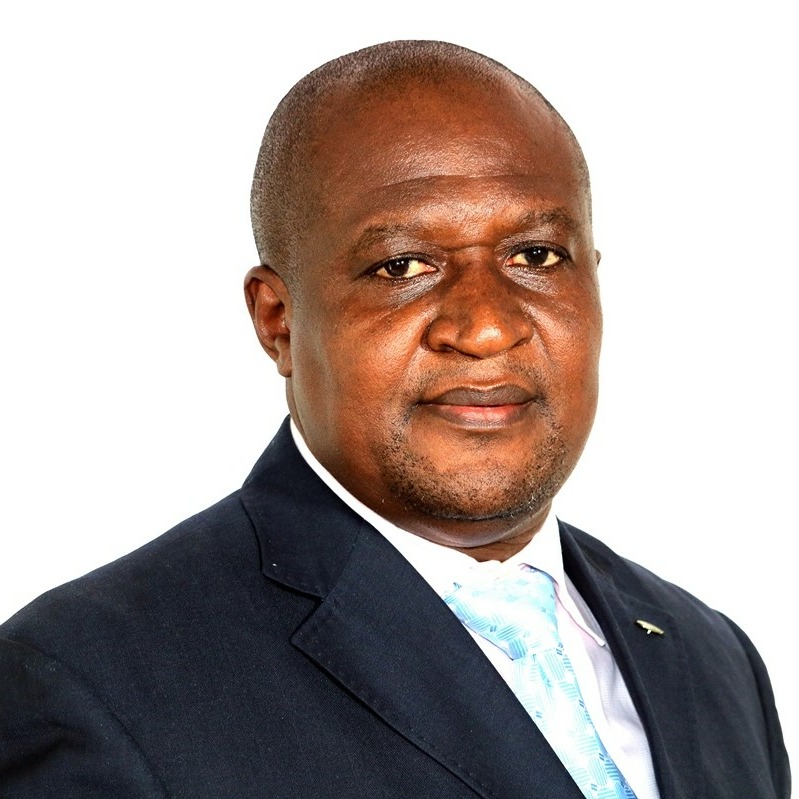
Constantine Asahngwa, Ph.D
Dr. Asahngwa Constantine holds a PhD in Medical Anthropology from the University of Yaounde 1, Yaounde, Cameroon. He obtained his Master’s Degree in Medical Anthropology and Bachelor’s Degree in Anthropology both from the University of Yaounde 1, Cameroon. He has served as Director for the Cameroon Center for Evidence Based Health Care for 10 years as an evidence synthesis, translation and utilization expert.



Leave A Comment