
By, Dr Ahmed Salim Vessah
Introduction
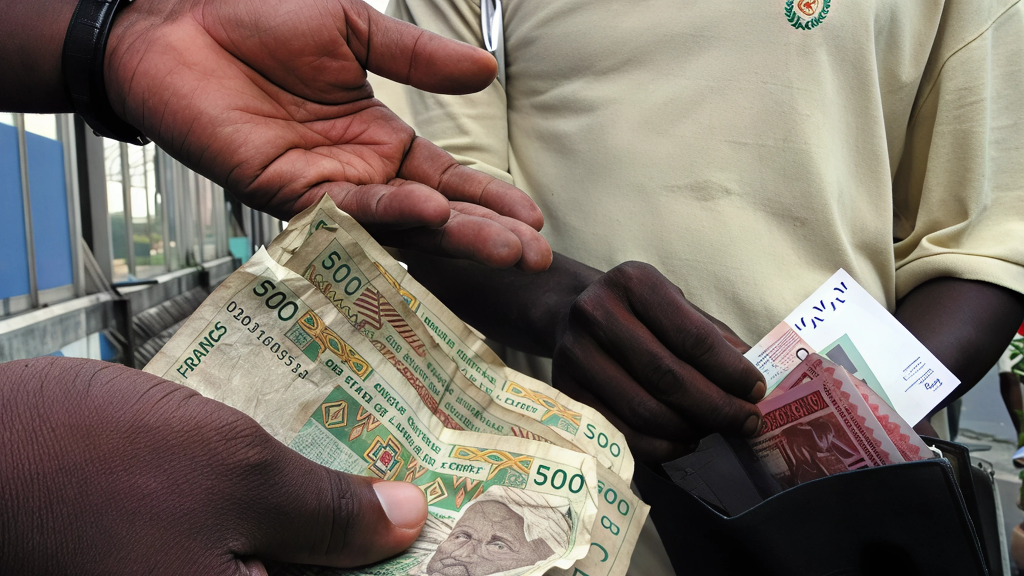
Remittances are increasingly becoming a strategic yet underutilized lever for economic transformation in the Economic Community of Central African States (ECCAS). Across Sub-Saharan Africa, remittance inflows reached a record USD 54 billion in 2023. Within ECCAS, the Democratic Republic of Congo (approximately USD 1.4 billion) and Cameroon (about USD 375 million) were the main recipients, while other member states received comparatively modest amounts. Although these flows do not collectively reach USD 5 billion at the regional level, they already surpass foreign direct investment or official development assistance in specific countries and play a stabilizing role in household welfare. However, their developmental potential remains largely untapped due to limited financial inclusion, high transfer costs, and the absence of effective institutional mechanisms to channel remittances toward productive investment and economic structural transformation.
At the same time, ECCAS economies continue to grapple with persistent challenges: low industrial productivity, weak competitiveness, fragile regulatory systems, insufficient infrastructure, and poor governance quality. These weaknesses are compounded by high levels of financial exclusion, limited access to affordable credit, and rising unemployment especially among young people and vulnerable populations. Combined, these constraints hinder progress toward the Sustainable Development Goals (SDGs) and the aspirations of the African Union’s Agenda 2063. In this context, better mobilization and strategic use of remittances constitute a viable and largely untapped alternative to support economic transformation and resilience.
This policy brief therefore seeks to achieve four (4) objectives:
- Diagnose the current dynamics, distribution, and uses of remittances in ECCAS;
- Identify the structural challenges limiting their developmental impact;
- Highlight the opportunities that remittances offer for inclusive governance, entrepreneurship, and industrial development;
- Recommend practical and actionable measures to channel greater shares of remittances toward productive investments through reforms in public policy, financial inclusion, and strengthened diaspora engagement.
Ultimately, the brief argues for the systematic integration of the diaspora and remittances into national and regional development strategies, transforming these flows from household safety nets into catalysts for inclusive and sustainable economic transformation across ECCAS.
The Landscape of Remittances and Economic Transformation in ECCAS
Remittances are an important financing source for some ECCAS countries. Across Sub-Saharan Africa, remittance inflows reached an estimated USD 54 billion in 2023, driven mainly by large recipient economies. Within ECCAS, the Democratic Republic of Congo (about USD 1.4 billion) and Cameroon (around USD 375 million) account for the overwhelming share of inflows. This concentration reflects the large size of their diasporas, significant historical migration to Europe and North America, and more developed formal transfer channels. In contrast, countries such as Gabon, Equatorial Guinea, and Congo-Brazzaville have small diasporas and are net migrant-receiving economies, while Chad, CAR, and others face weak financial infrastructure and heavy reliance on informal transfer systems, which leads to under-reported inflows. Despite their scale, remittances in the region remain underutilized due to limited financial inclusion and the absence of mechanisms to channel these funds toward productive investment.
These structural weaknesses mirror broader economic-transformation challenges in ECCAS. With average growth around 2% in 2022-2023, rising debt, and persistent vulnerability to commodity price shocks, the region has struggled to diversify its economies. Manufacturing still contributes less than 10% of GDP, informal employment affects nearly 80% of the workforce, and intra-regional trade remains below 6%, far below the continental average. The inadequate quality of transport, energy, and digital infrastructure further restricts industrialization and private-sector development. In this context, remittances represent a missed opportunity: rather than supporting enterprise creation, value-addition, or regional value chains, they are mostly used for consumption. Better leveraging these flows through financial-sector reforms, diaspora engagement, and investment-oriented instruments could help address key transformation gaps and strengthen the foundations for inclusive, sustainable growth in ECCAS.
Migrant remittances in ECCAS: what’s the problem?
As a stable source of income supporting consumption, education, and poverty reduction, remittances in the ECCAS region continue to face multiple structural barriers that constrain their development impact. First, high cost of remittances remain excessively high, with the average cost of sending USD 200 to Central Africa reaching 7.9% in 2023, far above the SDG target of 3%. These constraints reflect governments’ slow adoption of interoperability frameworks, weak regulation of transfer fees, and limited investment in digital financial ecosystems compared to regions such as ECOWAS, where mobile-money platforms have expanded rapidly.
Key drivers: limited competition among money transfer operators, low penetration of digital financial services, heavy reliance on cash, and restrictive regulatory environments.
Second, financial inclusion is very limited. the IMF (2024) data shows that many remittance recipients still lack bank accounts or mobile wallets, pushing them toward informal, unregulated channels. This restricts governments’ ability to capture remittances within formal development strategies and limits recipients’ capacity to save or invest.
Key drivers: low banking density, limited trust in formal institutions, burdensome KYC procedures, and weak consumer protection frameworks.
Third, macroeconomic instability erodes the real value of transfers. , inflation reached 14.8% in the DRC and 8% in Cameroon in 2023, well above the African average of 7.3%, reducing households’ purchasing power and discouraging migrants from directing funds toward productive uses. Security crises such as the 4.7 million internally displaced people in DRC and conflict in Cameroon’s Anglophone regions further undermine business confidence and investments financed by remittances.
Key drivers: commodity-dependent economies, conflict-related disruptions, weak monetary coordination, and persistent exchange-rate volatility.
Finally, the region lacks structured diaspora engagement policies and has low financial literacy, reducing the transformative potential of remittances. Unlike ECOWAS countries such as Ghana or Nigeria both of which have dedicated diaspora investment units ECCAS has no equivalent, which partly explains why remittances represent only 1.1% of regional GDP, far below other African blocs. Moreover, with only 27% of adults exhibiting basic financial knowledge (World Bank), recipients often use remittances primarily for basic consumption rather than enterprise creation or savings.
Key drivers: absence of national diaspora strategies, weak coordination between consulates and domestic institutions, lack of incentives for diaspora investment, and insufficient financial education programmes.
Remittances: An Opportunity for Economic Transformation in ECCAS countries
As an important source of non-debt financing, remittances can play a pivotal role in accelerating the economic transformation of ECCAS countries—provided they are strategically channelled toward productive sectors.
First, remittances can stimulate entrepreneurship and SMEs, which are central to structural transformation. Studies by IFAD show that up to 30% of remittance-receiving households invest in microenterprises, particularly in agriculture, retail, crafts, and basic services. In Nigeria and Senegal, for example, remittance-financed family businesses account for over 20% of household enterprises, demonstrating scalable potential for ECCAS. By serving as start-up capital, these transfers help diversify economic activity, create employment, and strengthen domestic value chains which are all key components of a dynamic private sector.
Second, remittances enhance financial inclusion, a critical enabler of transformation. International Fund for Agricultural Development (IFAD) estimates that 25% of global remittances are saved or invested, and receiving remittances increases the likelihood of opening a bank or mobile-money account by 5-15 percentage points. This broadens the deposit base of financial institutions and mobilizes domestic savings that can be reinvested into productive sectors, reducing long-term dependence on external debt and natural resource rents.
Third, remittances can support infrastructure development when effectively pooled. African examples demonstrate the potential: Ethiopia’s diaspora bond helped finance the Grand Renaissance Dam; Cape Verde mobilized diaspora savings for roads and energy projects; and Kenya’s community-based remittance pools finance local schools and water systems. Similar instruments in ECCAS such as diaspora bonds, community investment funds, or co-financing platforms could help address the region’s infrastructure deficits in transport, water, and energy, lowering production costs and boosting competitiveness.
Finally, remittances contribute directly to human capital accumulation, which is fundamental to economic transformation. World Bank data indicates that up to 35% of remittances in low-income African countries are spent on education and health. These investments improve school attendance, reduce health-related productivity losses, and increase labour-force quality. By raising educational attainment and expanding access to healthcare, remittances strengthen the human capital base needed for innovation, productivity gains, and long-term competitiveness in ECCAS. As an important source of non-debt financing, remittances can contribute to the economic transformation of ECCAS countries in several ways. To achieve this, it is essential to channel these flows toward the productive sectors of the economy.
Policy Recommendations
A coordinated response at the national, regional, and institutional levels is essential to unlock the developmental potential of remittances. Actions should be sequenced into short-, medium-, and long-term priorities to ensure feasibility and sustained impact.
- Short Term (1-2 years): Maximize Remittance Impact at the National Level
Governments must convert remittances into productive investment and increase the volume flowing through formal channels.
What to do:
- Launch diaspora investment instruments (diaspora bonds, diaspora mutual funds, digital investment platforms) with tax incentives and simplified subscription procedures.
- Expand digital financial services (mobile money interoperability, e-KYC, fintech support) to reduce transfer costs and boost financial inclusion.
- Adopt National Diaspora Engagement Strategies with project marketplaces linking diaspora investors to bankable domestic opportunities.
Quantifiable targets:
- Reduce average remittance transfer costs from 7.9% → 5% by 2027.
- Increase the share of remittances flowing through formal channels by 20% within two years.
Expected results: Higher productive investment, improved financial inclusion, and expanded domestic capital formation.
- Medium Term (2-4 years): Harmonize Policies and Pool Resources at the Regional Level
ECCAS needs policy coherence and pooled resources to lower costs and scale opportunities—though political alignment remains a challenge due to differing regulatory priorities and institutional capacities across member states.
What to do:
- Harmonize digital-payment frameworks, AML/CFT rules, and remittance regulations across ECCAS (in collaboration with BEAC and national regulators).
- Create a Regional Remittance Observatory to improve data quality, promote transparency, and guide evidence-based reforms.
- Establish a Regional Diaspora Investment Fund targeting infrastructure, agro-industrial value chains, and renewable energy.
Quantifiable targets:
- Reduce cross-border transfer delays by 30% by 2028.
- Mobilize USD 150–200 million in the first regional diaspora investment fund.
Expected results: Lower transaction costs, stronger regional capital flows, and larger financing pools for strategic sectors.
- Long Term (4-7 years): Strengthen Institutional Capacity and Foster Innovation
Transformational use of remittances requires robust institutions capable of regulation, supervision, and innovation.
What to do:
- Train public administrations, central banks, and financial institutions on remittance analytics, digital-finance regulation, and compliance.
- Develop public–private partnerships with banks, fintechs, and telecoms to create innovative savings, credit, and insurance products for diaspora and households.
- Establish impact-monitoring systems to track how remittances support SMEs, infrastructure, and human capital.
Quantifiable targets:
- Achieve regional compliance standards for digital-finance regulation by 2030.
- Ensure that at least 25% of remittance flows contribute to savings, investment, or insurance products by 2031.
Expected results: Stronger governance, transparent systems, and lasting mechanisms to channel remittances toward long-term development.
Conclusion
Remittances represent a strategic yet underexploited lever for ECCAS countries. When effectively mobilized, they can finance productive investments, strengthen SMEs, and reduce structural vulnerabilities. To unlock this potential, governments must adopt coordinated policies that prioritize diaspora engagement, reduce transfer costs, and expand digital financial inclusion. A clear objective should be to increase the productive use of remittances to at least 30% by 2030 and boost formal-channel flows by 20% within five years. By embedding remittances in national and regional development strategies, ECCAS can transform these private transfers into a sustained engine of inclusive and resilient economic transformation.

Dr Vessah Mbouombouo Salim Ahmed
Mr Vessah Mbouombouo Salim Ahmed currently holds a PhD in Development Economics from the University of Yaoundé II-SOA. He holds a research Master II in Monetary and Banking Macroeconomics, and his research interests focus mainly on development economics.



Leave A Comment