
By Dr Salim Ahmed Vessah
Introduction
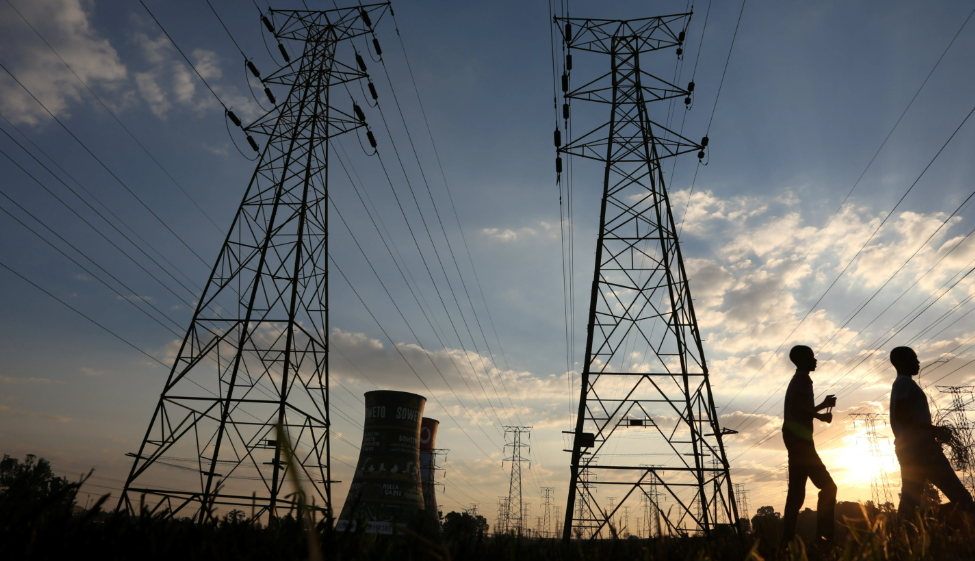
ECCAS’s growth is constrained by a deep electrification deficit that undermines energy justice, human development, and inclusive structural transformation. Despite its immense energy potential, the Economic Community of Central African States (ECCAS) remains one of the least electrified sub-regions in Africa. In 2023, access to electricity was estimated at just 56.7%, far below the sub-Saharan African average of 72%. This persistent energy deficit fuels domestic energy insecurity, as millions of poor and vulnerable households still rely on traditional and polluting fuels for cooking and heating. The consequences are profound: weakened social services, health risks, reduced productivity, and slowed economic diversification. The impacts span multiple sectors. In rural areas, health centers lack reliable power for vaccine refrigeration, emergency care, or essential equipment. Households using biomass-based fuels face heightened risks of respiratory diseases, disproportionately affecting women and children. In education, limited lighting and inadequate digital infrastructure reduce study hours and widen the learning gap. More broadly, unreliable electricity remains a major constraint on industrialization, agro-processing, and private-sector development, weakening the region’s competitiveness and slowing progress toward the Sustainable Development Goals.
The challenge for ECCAS is no longer simply to increase connections, but to build energy justice as a model in which every citizen, regardless of location, income level, or gender, has access to reliable, affordable, and sustainable electricity. Energy justice must therefore become the backbone of regional policies aimed at strengthening social inclusion, reducing inequalities, and enabling inclusive structural transformation. This policy brief provides:
- A diagnostic of the current electrification landscape, with updated statistics and regional comparisons;
- An analysis of the main structural barriers and their socio-economic consequences;
- Actionable recommendations to promote universal, sustainable, and inclusive access to electricity rooted in energy justice.
State of Access to Electricity in ECCAS
Access to electricity in the Economic Community of Central African States (ECCAS) remains largely ineffective and lags behind all other African sub-regions. In 2023, the average electrification rate stood at 56.7%, with deep rural–urban disparities: around 65% of urban residents had access to power, compared to barely 20-30% in rural areas. The situation is particularly alarming in Chad, the Central African Republic (CAR), and the Democratic Republic of Congo (DRC), where access rates remain below 20%, placing them among the least electrified countries on the continent. By contrast, Gabon has achieved coverage exceeding 90%, while countries like the Republic of Congo hover around 47% (World Bank, 2023).
Comparative regional data highlight ECCAS’s structural disadvantage. In West Africa, average access is around 64%, supported by initiatives such as the West African Power Pool (WAPP). Even Nigeria with persistent power sector challenges registers around 55% access nationwide, with more than 80% in urban areas (World Bank, 2023). In East Africa, Kenya has become a continental model, raising its rate from 27% in 2013 to nearly 80% in 2023, thanks to strong grid expansion and large-scale deployment of off-grid renewable solutions. North Africa, meanwhile, is now almost universally electrified, with coverage close to 100%. In addition to limited access, ECCAS residents face some of the highest electricity costs in Africa. Households typically pay 15-25 US cents/kWh, far above the <10 cents common in North Africa (IAE, 2023). Reliance on diesel generators in unconnected zones further inflates costs for households and SMEs. By contrast, countries such as Kenya and Ghana have reduced costs through large-scale integration of decentralized solar and mini-grid systems.
Technical and commercial losses are another critical bottleneck. Countries like DRC and CAR record losses above 30%, compared to an African average of roughly 18% (AfDB, 2023). These high losses reflect aging infrastructure, insufficient maintenance, and weak regulatory oversight, all of which undermine service quality and investor confidence. Although alternative off-grid solutions such as solar home systems are emerging, they remain insufficient to meet the growing demand for lighting, refrigeration, irrigation, and digital connectivity. As a result, a large share of households continues to rely on firewood and charcoal, contributing to deforestation and exposing families to severe health risks related to indoor air pollution.
Despite having considerable hydropower, solar, and biomass potential similar to that of other African regions, ECCAS continues to lag behind primarily due to governance weaknesses, chronic underinvestment, limited regional power-pool integration, and low private-sector participation. These structural constraints help explain why the energy transition observed in other regions has yet to materialize in Central Africa.
Structural challenges of electrification
Improving access to electricity in ECCAS is hindered by a set of deeply interconnected challenges such as infrastructural, financial, regulatory, institutional, and regional that collectively limit progress toward universal access.
Electricity systems across ECCAS suffer from chronic under-investment, leading to ageing transmission equipment, insufficient generation capacity, and poor maintenance. These weaknesses result in frequent outages, unreliable supply, and limited geographic coverage. In countries such as Chad and the Central African Republic, network density remains extremely low. For example, less than 5 km of transmission and distribution lines per 1,000 inhabitants, far below international benchmarks. Key drivers: ageing infrastructure, insufficient maintenance budgets, limited rural electrification planning.
Impacts: reduced productivity for firms, unreliable power for hospitals, limited digital connectivity, and weaker ability to support industrialization.
The energy sector remains overly dependent on public funding and external assistance, while private investment is minimal. According to the African Development Bank (AfDB), ECCAS must invest USD 15-20 billion annually until 2030 to close the energy infrastructure gap and meet SDG7 targets. However, high perceived risks such as weak governance, institutional fragility, political instability, and low profitability deter investors.
Key drivers: high country risk, low cost-recovery tariffs, inadequate guarantees, limited access to long-term capital.
Impacts: slow grid expansion, delays in power generation projects, and persistent reliance on diesel generators.
Regulatory frameworks in many ECCAS countries remain inadequate or outdated. The absence of strong, independent regulatory authorities, complex administrative procedures, and opaque management of public utilities undermine investor confidence. Tariff structures often fail to balance affordability with cost recovery, reducing incentives to curb technical losses and improve service.
Key drivers: non-independent regulators, opaque utility governance, inconsistent tariff policies.
Impacts: inefficient utilities, high consumer prices, and limited uptake of renewable energy solutions.
The Central Africa Power Pool (CAPP) which was intended to facilitate cross-border electricity trade remains underutilized. Weak coordination among member states, slow implementation of interconnection projects, and political divergences limit regional energy flows. High connection fees, inadequate interconnections, and poor dissemination of information further restrict access, especially in rural areas.
Key drivers: slow regional project execution, lack of harmonized standards, political and financial constraints.
Impacts: missed economies of scale, higher production costs, and persistent energy insecurity across borders.
Altogether, these constraints deepen existing social and economic inequalities. Limited access to electricity reduces school performance (lack of lighting, ICT tools), weakens health systems (inadequate vaccine storage, unreliable equipment), and restricts women’s economic participation (heavy reliance on traditional biomass fuels). These structural barriers ultimately impede the inclusive growth and economic transformation that ECCAS countries urgently need.
Policy recommendations
To ensure that all citizens in ECCAS (regardless of geography, income, or gender) gain reliable, affordable, and sustainable access to electricity, governments and partners must adopt coordinated national and regional actions. The following five priority areas, structured across short-, medium-, and long-term horizons, provide a coherent roadmap toward energy justice.
- Mobilize Financing and Attract Private Investment (Short to Medium Term)
What to do:
- Introduce risk-sharing guarantees, targeted tax incentives, and innovative financing tools (green bonds, blended finance, pay-as-you-go models).
- Establish renewable-energy investment funds, including venture capital windows for clean-energy start-ups.
Quantifiable targets:
- Increase private-sector participation by 30% in 5 years.
- Mobilize at least USD 3–5 billion in new clean-energy investments across ECCAS by 2030.
Expected results: More bankable projects, increased investor confidence, and faster deployment of locally adapted renewable-energy solutions.
- Scale Up Decentralized Renewable Energy Solutions (Short Term Priority)
What to do:
- Support solar mini-grids and home solar systems through fiscal incentives, targeted subsidies for vulnerable households, and technical training for local installers.
Quantifiable targets:
- Raise rural electrification rates by 15% within 5 years.
- Deploy 5,000–7,000 mini-grids by 2030.
Expected results: Rapid expansion of electricity access in underserved areas, reduced dependence on costly grid extensions, and improved resilience in remote communities.
- Strengthen Energy Governance and Regional Integration (Medium to Long Term)
What to do:
- Relaunch the Central Africa Power Pool (CAPP) and harmonize standards, tariffs, and regulations to enable meaningful cross-border electricity trade.
- Create independent national energy regulators and digitalize services (smart meters, mobile payments) to enhance transparency and reduce losses.
Quantifiable targets:
- Reduce technical and commercial losses from 30% to 20% within 3 years.
- Achieve a 20% increase in cross-border electricity flows by 2030.
Expected results: A more competitive and transparent energy market, improved financial performance of utilities, and enhanced reliability of electricity supply.
- Integrate Social and Gender Equity into Energy Policy (Short to Medium Term)
What to do:
- Provide lifeline tariffs and targeted subsidies for low-income households.
- Prioritize clean-cooking programmes and support women’s entrepreneurship in renewable-energy value chains.
Quantifiable targets:
- Cut reliance on biomass for cooking by 25% by 2030.
- Ensure women constitute at least 35% of new jobs created in the energy sector.
Expected results: Reduced energy poverty, improved health outcomes, lower household burdens for women, and greater inclusion in economic opportunities.
- Strengthen Cross-Sectoral and Regional Coordination (Medium to Long Term)
What to do:
- Improve coordination between ministries of energy, environment, finance, social affairs, and planning.
- Establish a Regional Observatory for Energy Justice to track reforms, monitor equity impacts, and share best practices.
Quantifiable targets:
- Adopt harmonized national electrification strategies in all ECCAS countries by 2028.
- Publish annual regional energy-justice scorecards starting in 2026.
Expected results: More coherent policies, efficient resource allocation, and accelerated progress toward universal, equitable access to energy.
Conclusion: ECCAS faces a challenge in achieving universal electricity access despite its energy potential. Inequalities in energy access hinder development and economic growth. However, progress in some countries shows that scalable solutions exist. A successful energy transition requires an integrated approach emphasizing social justice, economic efficiency, and environmental sustainability. This demands strong political commitment, substantial financial resources, transparent governance, and a focus on vulnerable populations. ECCAS aims for 70% electrification by 2030 and to halve the rural-urban gap. Energy justice must guide ECCAS reforms.

Dr Vessah Mbouombouo Salim Ahmed
Mr Vessah Mbouombouo Salim Ahmed currently holds a PhD in Development Economics from the University of Yaoundé II-SOA. He holds a research Master II in Monetary and Banking Macroeconomics, and his research interests focus mainly on development economics.

Leave A Comment