
By Pr. Ngo Tong Chantal Marie, Pr. Théophile Nguimfack and Guy Beaudry Jengu Jengu
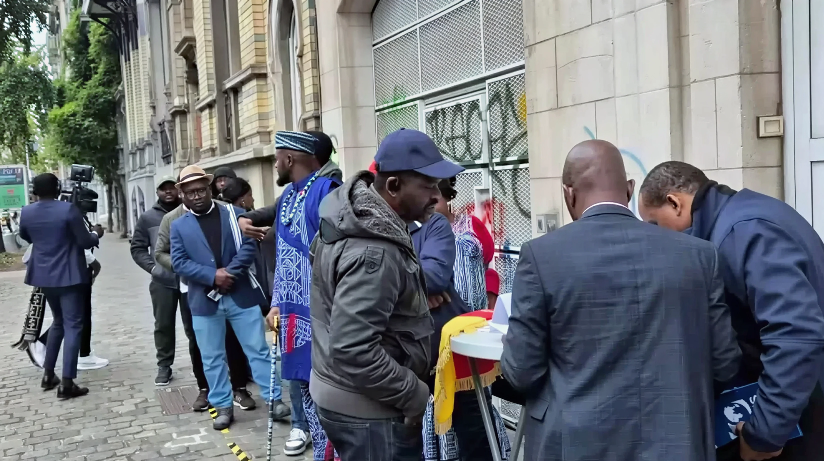
The results of the presidential election as proclaimed the 27th October 2025 by the Constitutional Council, gave Paul Biya victory with 53,66% of votes cast including diaspora. The diaspora according to the Electoral Code, designates “Cameroonian citizens settled or residing abroad”. Under Article 271 of the Electoral Code, “Cameroonian citizens settled or residing abroad shall exercise their right to vote by participating in the election of the President of the Republic and in the referendums” . Thus, Cameroonians abroad are only entitled to participate in two elections: the presidential election and the referendums. Since 2011, they participated to three presidential elections: 2011, 2018 and 2025. Compared to the 2018 presidential election where there was 6 667 754 voters registered and 3 537 965 voters cast, and Paul Biya won in diaspora with largest scores, in 2025, the candidate of the opposition Issa Tchiroma won in every zone of election in diaspora, a victory reflecting diaspora dissatisfaction with the incumbent government. The highest scores of Issa Tchiroma in diaspora reflected the mind of voters which claim for a political change and the rise of a new generation of leaders. But despite this sanction of diaspora, Paul Biya was reelected and it is really difficult to expected a substantial change in the governance of the country. Nevertheless, the diaspora’s call for change was clear, yet within Cameroon many voices still supported continuity. With Biya’s reelection, which expectations for diaspora? Which perspectives for the next presidential election in 2032? Given their limited electoral weight, the diaspora must reorganize its struggle through lobbying, civil society, and think tanks to influence decision-making process and achieve meaningful policy change.
- The low electoral weight of the diaspora
There are barely 34,411 voters from the diaspora who participated in the 2025 presidential election. These votes were divided among 12 candidates in the presidential election. What impact can they have in a single-round electoral system where the winner can win by a simple majority? In 2025, the diaspora’s participation in the presidential election is giving rise to various reflections and analyses. Compared to the presidential elections of 2011 and 2018, diaspora participation remained very low: 24,372 registered in 2011 (less than 1% of the diaspora), 19,420 in 2018 (0.29%) and 34,411 (0,42% of the 8,082,000 registered voters).These figures reveal that the electoral participation of the Cameroonian diaspora remains marginal and its capacity to overturn the political majority is currently limited. Despite this, it is important to enlighten the dysfunctions of the electoral process which do not allowed a better participation of diaspora.
- The dysfunctions of the electoral process
The number is extremely low: 34,411 registered out of nearly 8,082,000 voters, or 0.42%. Given malfunctions and allegations of marginalization in voter registration, it is often assumed that most registrants support the regime. However, the results show that it is difficult to measure voter opinion in the context of widespread demand for change. But this will not be led us to minimize all the problems registered in the electoral process relative to the participation of the diaspora. The right to vote of Cameroonians abroad is only recognized to Cameroonians who have kept exclusively Cameroonian nationality and have not acquired another nationality. Therefore, Cameroonians with dual nationality are not allowed to register on the electoral rolls. It should be noted that this restriction also applies to Cameroonian within the country. Another restriction concerns the possession of a consular card to register on the electoral rolls. In addition to these two restrictions, the conditions for participation in the electoral process are marred by numerous challenges, the process continues to face persistent structural challenges and operational inconsistencies. In this regard, the diaspora, since 2011, continuously denounce the dysfunctions linked to the electoral process that limit the participation of the diaspora electorate in elections: selective registration, restrictive conditionalities, maneuvers to exclude opponents of the regime from the electoral process, insufficient voter registration infrastructure abroad, with uneven coverage of diplomatic missions and persistent opacity in the establishment of local electoral commissions. No improvement has been observed or recorded since the 2011 presidential election. The number of voters abroad is still abnormally low, even for this presidential election of 2025, 14 years later.
- Divided society between continuity and alternation
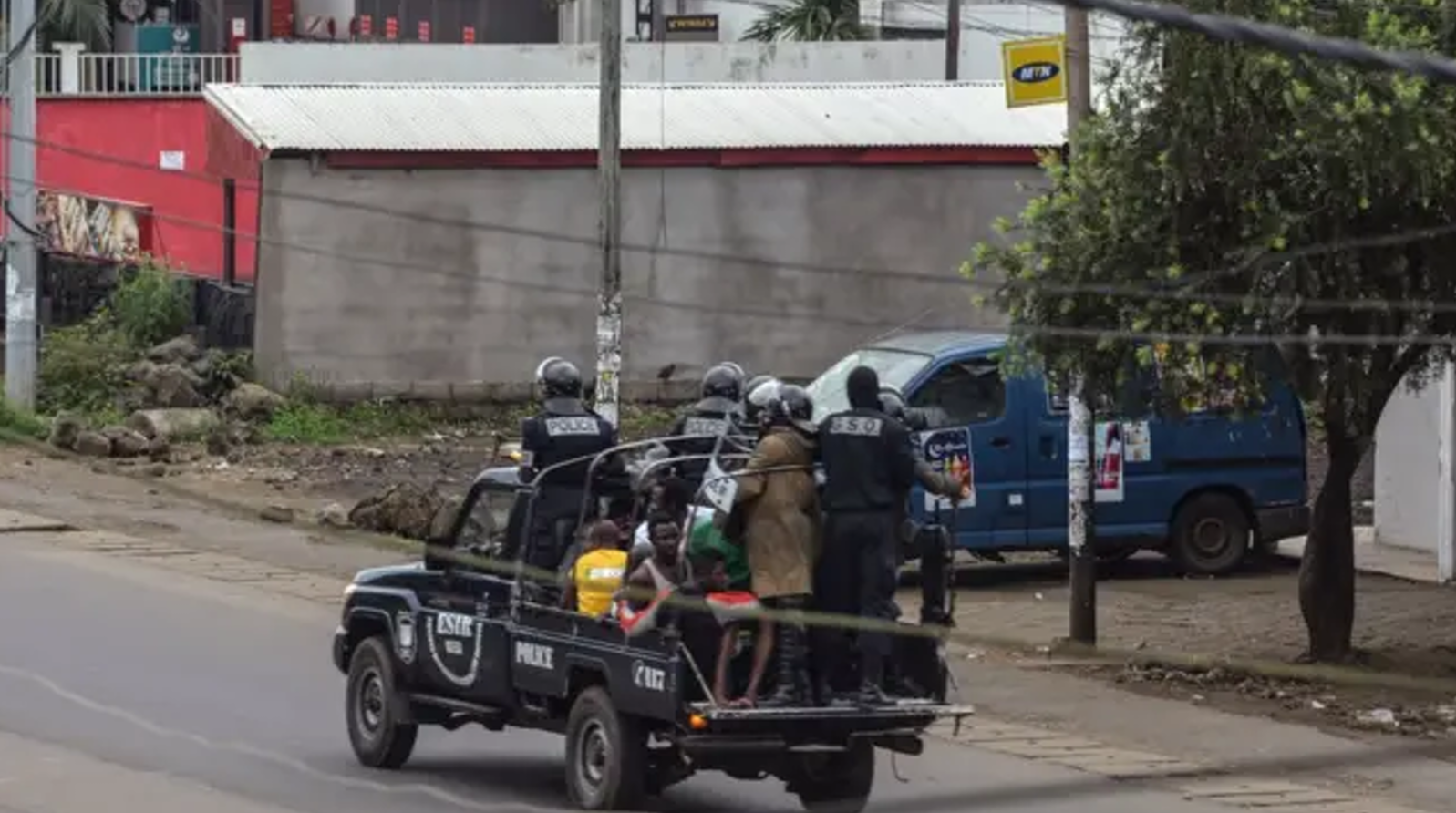
While Cameroonian in diaspora acted for change, Cameroonian inside the country largely supported continuity. Given the larger domestic electorate, the regime was maintained despite diaspora preferences. This choice may seem surprising in light of socio-economic conditions. But according to rational choice approach, there is a significant dilemma between the legitimate democratic aspirations for change, and the political pragmatism led to continuity. Political pragmatism here, in the sense used by Nicholas Machiavelli, is based on realism: no opposition leader enjoys unanimous support among the other leaders, and no relevant strategy for change. Nonetheless, Issa Tchiroma, 35,19% signaled a strong demand for change within Cameroon. It is important to underline that Ni John Fru Ndi’s 35.97% in 1992, no opposition candidate had reached such a level. The results thus reveal a society torn between those seeking transformation and those fearing instability, preferring continuity. This division was evident in post-electoral tensions: some are for the manifestations and other against; then strike calls met uneven responses. Unlike 2018, when the BAS mobilized vigorously abroad, the 2025 crisis was more pronounced domestically than in the diaspora.
- The necessity of reorganization the struggle for political change
The Cameroonian diaspora, estimated at over two million people spread mainly across Europe, North America and Central Africa, is an important socio-economic actor for Cameroon. Politically, however, its role remains relatively weak, mainly due limited coordination among diaspora opinion leaders. If the results of diaspora even though they cannot impact the final results look like a barometer of contestation of the regime in place and the need of alternation. But change the leaders is not the only way to obtain significant changes in governance. Diaspora opinion leaders, civil society actors, and think tanks can develop new strategies to influence policymaking in Cameroon more effectively.
- The need of new strategies
In the aftermath of the 2018 presidential election, a socio-political movement for change and alternation in Cameroon called the Brigade Anti-Sardinards (BAS) “the association that brings together Paul Biya’s most implacable opponents“ was formed. The BAS deployed strategies of resistance to government of Yaounde that Azirilou Ndam Nsangou describes as the “diasporalization” of the revolt . The BAS led “a protest mobilization against the exactions of the Biya regime“ of a rare violence to show their determination to obtain change and to bring about alternation by all means necessary. After 40 years of reign, the record of the regime in power is widely contested, and voices are being raised in the diaspora in favor of an alternation at the head of the executive. The results of the presidential election in diaspora showed this profound need of change. But the change shall not be restricted to alternation at the presidency; it is also a change of majority in parliament. Then while diaspora cannot vote in upcoming legislative and local elections, they can contribute to shift the majority from the Cameroon People Democracy Movement (CPDM) to opposition’s parties. To realize this shift requires more than desire for change; it demands building an opposition capable of winning with a clear, indisputable majority. And diaspora shall act in this perspective, to generate consensus around collective mobilization strategies to achieve the sought-after alternation.
- The involvement of diaspora in Civil Society and Think Tank Network
Opinion leaders, activists and Human rights defenders in diaspora have several opportunities to raise funds for supporting lobbying and advocacy for development in the country. The diaspora is a great potential for developing Civil society and the development of Non-Governmental Organization in Cameroon. The diaspora has the potential to influence policymaking by helping structure civil society and acting as an integral part of it. The long-term involvment of the diaspora in the issue of development help to develop an effective partnership mechanism to mobilize and capitalize resources at various levels of policymaking. Diaspora organizing in groups interests can support and advocate for civil society. The engagement of diaspora in such issues as poverty reduction, economic growth, democracy…led Cameroonian abroad to play a major role in transforming the political landscape of the country. Diaspora and Cameroonian think tanks can organize platforms to share experiences, bridge gaps between residents and diaspora, and collectively strengthen advocacy. This collective action is so important that in July 2025, the African Union lunch a call for a proposals relative to The Think Tank Platform (ATTP) Project. Change is not just by election; change can also come from mobilizing driving forces for inclusive participation in decision-making process and inclusive democracy.
Conclusion and recommendations
The legal framework governing the diaspora’s electoral participation outlined in Part X of the Electoral Code remains restrictive, and in many cases discouraging for potential voters. Compared to previous presidential elections, diaspora registration increased modestly-24,372 (2011) to 19,420 (2018) and 34,411 registered in 2025—but remains marginal relative to the estimated two million Cameroonians abroad. The structural constraints observed in 2011 and 2018 remain largely unchanged in 2025. The participation of the diaspora in the 2025 presidential election is part of a process of formalizing and consolidating the voting rights of Cameroonians abroad. While the law affirms the right to vote, restrictive administrative conditions disqualifying many from registration. Cameroonians with dual nationality remain barred from voting, dura lex, sed lex. However, if they cannot register to vote; they can, financially support candidates who propose an alternation for substantial change political. Given the current state of the regulations in force and given the upcoming deadline, we recommend:
— To the government,
* Simplify and digitize consular card procedures, reduce costs, and expand outreach.;
* According the right to vote to Cameroonian with dual nationality in precise conditions;
* Align diaspora engagement policies with national development and democratic inclusion strategies.
— to ELECAM,
* Ensure transparent, and inclusive institution of local electoral commissions in all diplomatic missions;
* Strengthen voter registration abroad through diaspora associations and digital platforms;
* Publish regular, dis aggregated data on diaspora registration.
— To Diaspora Communities and Organizations,
* Comply with existing legal frameworks while collectively advocating reform;
* Move beyond episodic mobilization toward sustained civic organization and voter education;
* Elaborate new strategies of political participation including building advocacy coalitions and lobbying network

Prof. NGO TONG Chantal Marie is a Research associate in Governance & Democracy at the Nkafu Policy Institute. She holds a Ph.D. in Political Science, obtained from the University of Nantes (France) in the international thesis co-supervision agreement between University of Yaoundé II (Cameroon) and University of Nantes (France).
Prof. Nguimfack is a Research Fellow at the Nkafu Policy Institute and Lecturer at the Faculty of law and Political Sciences of the University of Dschang. He Holds a PhD/Ph.D in Public Law, option Public Finance.
Leave A Comment