
By Nji Seraphin Ombel Musa, Dr. Salim Ahmed Vessah & Dr. Asahngwa Constatine
Executive summary: Cameroon faces escalating nutrition and health risks due to declining donor-funded food assistance, persistent poverty, and rising food insecurity. Over 23% of the population lives below the international poverty line, with extreme poverty projected to affect 8 million people by 2026. Reductions in World Food Programme funding threaten food and nutrition support for nearly one million vulnerable individuals. Children under five, along with pregnant and lactating women, are particularly susceptible, as acute malnutrition, stunting, and anemia rates are already alarming. Although the Government of Cameroon has increased investments in food security and adopted nutrition policies, domestic financing remains inadequate and lacks transparency. To safeguard health and mitigate future fiscal burdens, it is crucial to strengthen sustainable national financing, promote local food procurement, and establish shock-responsive nutrition protection mechanisms.
Key Messages
- Donor funding cuts threaten food and nutrition support for nearly one million vulnerable Cameroonians.
- Undernutrition increases child mortality, disease burden, and healthcare costs.
- Sustainable domestic financing is essential to protect critical nutrition services.
- Local food systems and emergency financing can strengthen resilience and reduce aid dependency.
Context
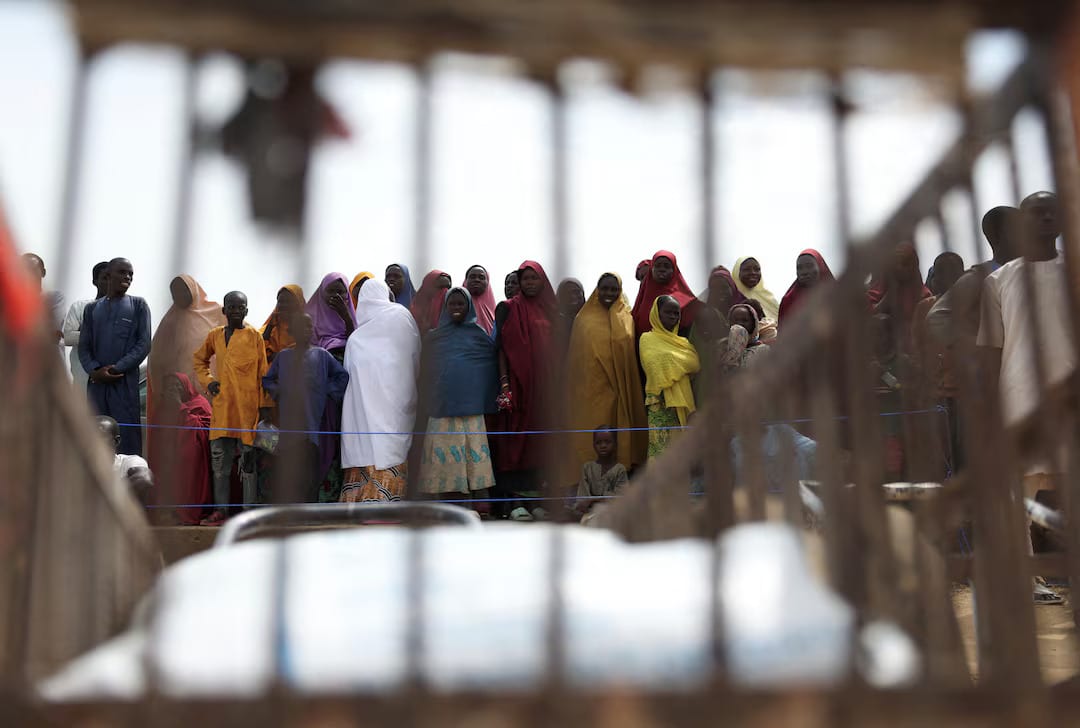
Cameroon is entering a period of increased vulnerability due to a high level of poverty and declining external support for food and nutrition assistance. Over 23% of the population lives below the international poverty line of US$2.15 (approximately 1189 FCFA) per person per day, and extreme poverty is expected to hit 25% by 2026 -impacting around 8 million individuals. Funding for World Food Programme (WFP) operations in Cameroon declined significantly between 2022 and 2025, leading to reductions in food assistance and nutrition services. Without appropriate actions, the number of individuals that will lose access to the food and nutrition aid could be up to 910,000 people by 2026 with the worst effects in the Far North, North-West, South-West, and East areas.
Consequently, in the absence of prompt funding, WFP estimates a cut of food aid to nearly 1 million individuals to only 168,000, and food nutrition aid has to be suspended to over 220,000 at-risk children and mothers. Already, Cameroon faces a high burden of undernutrition. The integrated food security phase classification (IPC) estimates that approximately 395,000 to 400,000 children aged 6 to 59 months were affected by acute malnutrition in 2024, including nearly 147,000 severe cases. According to the national demographic and health survey, 29% of children under five are stunted, 4% are wasted, and 11% are underweight. Micronutrient deficiencies are widespread: 57% of children aged 6–59 months and 40% of women aged 15–49 years are anaemic. At the same time, the fiscal implications are substantial. Evidence from low- and middle-income settings shows that treating one child for severe acute malnutrition (SAM) typically costs between USD100–500 (55284 FCFA to 276422 FCFA). With households financing nearly 70% of total health expenditure through direct payments, Cameroon’s health system offers limited financial risk protection.. In response to these challenges, WFP has played a critical role in supporting the Government of Cameroon financially and operationally to address food insecurity and malnutrition, particularly in crisis-affected regions The health consequences of reduced food and nutrition support are well documented. Significantly, undernutrition is a leading underlying cause of child mortality and the severity of diseases, exposing individuals to malaria, pneumonia, measles and diarrhoeal disease; and exacerbating the burden on individuals with HIV and tuberculosis. Even temporary food aid shocks in the conflict affected and food insecure environments are linked with quick rise in wasting, morbidity, and overburden healthcare services. As food aid contracts, more children are likely to progress to severe forms of malnutrition requiring hospitalization, bed occupancy, length of stay, medicine use, and staff workload. In this way, withdrawing food aid does not eliminate costs; it transfers them to Cameroon’s health system and vulnerable households, raising the risk of preventable mortality and fiscal inefficiency. This policy brief examines how recent reductions in donor-financed food and nutrition assistance may affect vulnerable populations and explores policy pathways through which Cameroon can strengthen domestic mechanisms to sustain essential nutrition services.
Government interventions to address nutrition and health risks in Cameroon.
The Government of Cameroon considers nutrition as a priority area, being incorporated into the health promotion, disease prevention and maternal and child health priorities under the Health Sector Strategy (HSS) 2016-2027. Nutrition and food security interventions are through programmes implemented by the ministry of public health and other sectoral ministries. Public expenditure tracking indicates that over 102 million CFA francs were allocated in 2017 to activities supporting the Integrated Management of Severe Acute Malnutrition (IMSAM) through the ministry of Public Health and regional health services. However, many critical inputs for these programmes, including therapeutic foods and medicines, were financed by external partners such as UNICEF.
In addition, the government introduced broader food-security initiatives. More than CFA 22 billion (approximately US$38 million) was allocated in 2024 to strengthen national food security and agricultural production. multisectoral approach to food and nutrition security has been applied by formulating national food and nutrition policies and agricultural development strategies to enhance the availability, access and use of food. The government of Cameroon has developed a national food systems transition roadmap and action Plan (2020-2030), although the roadmap estimates total financing needs at 1,900 billion FCFA, publicly available information on financing sources and implementation arrangements remains limited. This plan is further aligned with the National Development Strategy (NDS30) and Vision 2035 which positions agriculture as a central driver of economic transformation and national food self-sufficiency. Cameroon has also demonstrated leadership through participation in the UN Food Systems Summit and engagement in global coalitions on agroecology, school meals, zero hunger, and resilient local food systems.
Cameroon has adopted multiple nutrition- and food-security-related strategies, but publicly accessible evidence on the scale and adequacy of domestic nutrition financing remains limited. This opacity makes it difficult to determine whether existing commitments are sufficient to offset reductions in donor support.
The World Food Programme in Cameroon and its contribution to nutrition and health safeguarding.
WFP operations in Cameroon are financed through voluntary contributions from international donors and humanitarian partners. Major contributors include the United States, the European Union, Germany, the United Kingdom, Canada, Sweden and other bilateral partners. Funding levels have fluctuated significantly in recent years. According to report, WFP received approximately 59 billion FCFA (US$106 million) for operations in Cameroon in 2022, but funding had declined to around 11 billion FCFA (US$20 million) by 2025, forcing reductions in food rations and programme coverage.
Holistically, WFP has been the key player in nutrition and health protection in Cameroon, especially on war-torn and food insecure areas. WFP interventions have served proactive preventive functions in terms of malnutrition related morbidity and mortality in vulnerable populations. With its programmes, it has offered children below the age of five years with specific nutrition, pregnant and lactating women with preventive severe acute malnutrition and inpatient treatment that is expensive. WFP assistance has also figured in the process of HIV and tuberculosis treatment where good nutrition is needed to ensure successful treatment adherence, immune recovery and survival and hence protecting the performance of national and donor-funded disease control investments. WFP assistance in times of displacement and seasonal shortages and insecurity has served as a shock absorber, avoiding the sudden increases in acute malnutrition, and health-facility reports.
Furthermore, WFP has played a central operational role in supporting food security and nutrition in Cameroon, particularly in crisis-affected regions. In recent years, WFP has provided food and cash assistance to vulnerable populations including refugees, internally displaced persons and crisis-affected host communities. In 2023, WFP assisted 275,500 people with 1,890 metric tons of food and US$720,000 (406 million FCFA) in cash across the Adamawa, East, Far North, North, North-West, and South-West regions. This included seasonal support to 10,000 smallholder farmers in Adamawa, linking humanitarian aid with local agriculture.
Beyond emergency food assistance, WFP programmes have supported early recovery and resilience building in vulnerable communities. In the Far North and East regions, WFP helped create productive assets benefiting 27,900 smallholder farmers and community members, with 53% of participants receiving approximately US$110,000 (around 62 million FCFA) in cash assistance while others received about 140 metric tons of food support. Through these interventions, WFP has effectively complemented national efforts to address food insecurity and malnutrition while strengthening local food systems. To sustain life-saving assistance and prevent further deterioration in food security, WFP estimates that over US$156 million will be required to maintain operations in 2026, including urgent short-term financing needs.
These interventions illustrate the extent to which nutrition outcomes in crisis-affected regions remain dependent on external financing, reinforcing the urgency of strengthening domestic financing mechanisms.
Policy pathways to support a home-grown nutrition transition.
Cameroon’s food aid gap policies must be financially feasible and proven in similar low- and middle-income and fragile economies.
Firstly, a sustainable transition from externally financed nutrition support requires predictable domestic revenue. Modelling from low- and middle-income countries shows that a 20% tax increase on tobacco, alcohol, and sugar-sweetened beverages could generate revenue equivalent to 6-9% of government health expenditure while reducing consumption by 8-24%. For Cameroon, earmarking part of such health-aligned excise revenue could finance essential nutrition services and well as reduce costly hospital admissions for severe malnutrition.
Secondly, structured home-grown procurement provides a regionally tested pathway for linking nutrition programmes to domestic agriculture. In Rwanda, the home-grown school feeding model transitioned toward predominantly local sourcing, strengthening farmer cooperatives and stabilising school meal supply chains. In Ghana, school feeding and public procurement initiatives have channelled institutional food demand to smallholders, improving market access and rural incomes while reducing reliance on imports. Evidence shows that public food procurement representing roughly 13% of GDP globally can be leveraged as a development tool to stimulate agricultural productivity, reinforce local value chains, and enhance food system resilience in low- and middle-income settings.
Lastly, Cameroon can establish shock-responsive contingency financing mechanisms to protect nutrition services during recurrent crises. Evidence from low- and middle-income countries shows that social protection buffers activated by early warning indicators such as IPC food insecurity thresholds reduce mortality spikes, wasting and stunting. Rather than relying on ad hoc humanitarian appeals, dedicated contingency budget lines within health or social protection frameworks can ensure rapid deployment of targeted nutrition support during lean seasons or displacement shocks. This approach enhances fiscal predictability, protects vulnerable populations, and reduces the long-term treatment costs associated with severe acute malnutrition.
Conclusion
The reduction in donor-financed food and nutrition assistance suggests a significant financing gap in Cameroon’s nutrition protection system, which current domestic policy frameworks cannot absorb. Without predictable domestic financing, reductions in preventive support will increase severe malnutrition, hospital admissions, and out-of-pocket spending.
Recommendations
- Short-term: The Ministry of Finance, in coordination with the Ministry of Public Health, should create a dedicated nutrition financing window within the health budget. This can be supported through modest, health-aligned excise adjustments on tobacco, alcohol, and sugar-sweetened beverages. A portion of this revenue should be earmarked for a defined nutrition essential package targeting children under five and pregnant and lactating women.
- Mid-term: To limit fiscal exposure to imported food pipelines, Cameroon should institutionalize structured local procurement mechanisms that link public nutrition programs to domestic smallholder production. This reduces foreign exchange exposure and improves supply reliability.
- Long-term: Cameroon should establish pre-financed contingency mechanisms within health or social protection budgets, activated by early warning indicators. This approach improves fiscal predictability and protects vulnerable households from catastrophic health expenditure.

Musa Nji
Musa Nji is an emerging Cameroonian neuropharmacologist and global health researcher whose work bridges neuroscience, pharmacology, climate and health research. Musa has built a strong academic and professional profile rooted in scientific inquiry, interdisciplinary collaboration, and community-centered research.

Dr Vessah Mbouombouo Salim Ahmed
Mr Vessah Mbouombouo Salim Ahmed currently holds a PhD in Development Economics from the University of Yaoundé II-SOA. He holds a research Master II in Monetary and Banking Macroeconomics, and his research interests focus mainly on development economics.

Constantine Asahngwa, Ph.D
Dr. Asahngwa Constantine holds a PhD in Medical Anthropology from the University of Yaounde 1, Yaounde, Cameroon. He obtained his Master’s Degree in Medical Anthropology and Bachelor’s Degree in Anthropology both from the University of Yaounde 1, Cameroon. He has served as Director for the Cameroon Center for Evidence Based Health Care for 10 years as an evidence synthesis, translation and utilization expert.



Leave A Comment