
By Anthony Antem
Executive Summary
This paper examines the state of parliamentary independence in Cameroon and its implications for democratic accountability, governance quality, and institutional balance of power. It argues that while the National Assembly is constitutionally mandated to legislate, oversee the executive, and represent citizens’ interests, its effectiveness has often been constrained by executive dominance, limited oversight capacity, and structural weaknesses in legislative autonomy. As a result, parliamentary scrutiny of public policy, budgeting, and executive action remains insufficient to ensure robust democratic accountability. The analysis further explores the institutional, political, and procedural factors that undermine parliamentary independence, including party system dynamics, resource constraints, and gaps in legislative expertise. It also highlights comparative lessons from other African contexts where reforms have strengthened committee systems, enhanced budgetary oversight, and improved transparency. The paper concludes that enhancing parliamentary independence in Cameroon requires both legal-institutional reforms and practical capacity-building measures aimed at empowering legislators, strengthening oversight mechanisms, and reinforcing the separation of powers.
Policy highlights
- Despite its constitutional mandate, persistent gaps remain between Parliament’s formal powers and its actual capacity to act as an independent and accountable institution.
- Parliament continues to operate within a system characterized by strong executive dominance, structural and political constraints including the predominance of the ruling party (CPDM), weak enforcement of oversight mechanisms.
- The emergence of new parliamentary leadership could reform internal parliamentary procedures, improvetechnical capacities of MPs, reinforce oversight committees, and expand mechanisms for citizen participation and transparency
Introduction
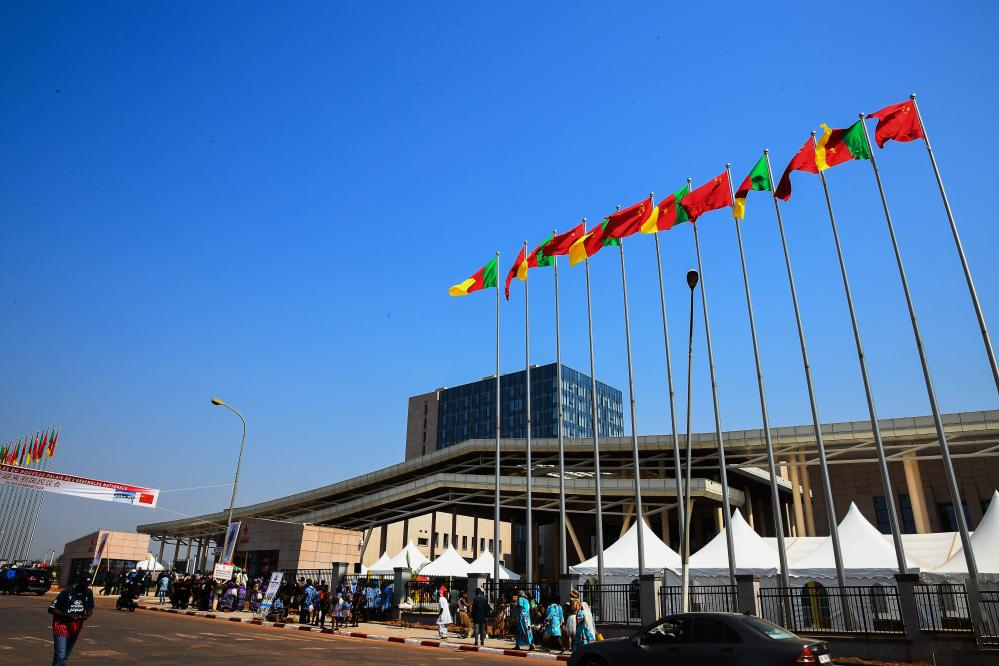
Cameroon’s Parliament is undergoing a notable leadership transition, with the recent election of new parliamentary heads signaling a generational shift and a potential inflection point for legislative governance. Long-standing leaders Hon. Cavaye Yeguie Djibril, former President of the National Assembly since 1992 and Senator Marcel Niat Njifenji, former President of the Senate since inception (2013) have been replaced by a new cohort of leaders, Hon. Datouo Theodore, newly elected President of the National Assembly and Senator Aboubakary Abdoulaye, newly elected President of the Senate, both reflecting political recalibration within the legislature and emerging expectations for institutional renewal. While largely symbolic, this transition presents an opportunity to reassess the role and effectiveness of Parliament within Cameroon’s broader governance architecture. Despite its constitutional mandate to legislate, oversee executive action, and represent citizens, Parliament continues to operate within a system characterized by strong executive dominance and limited institutional checks and balances. Structural and political constraints including the predominance of the ruling party, Cameroon People’s Democratic Movement (CPDM), weak enforcement of oversight mechanisms, and limited engagement with citizens and civil society have constrained its effectiveness. As a result, a persistent gap remains between Parliament’s formal powers and its actual capacity to act as an independent and accountable institution. This gap has significant implications for democratic governance across the country and the central African sub region at large. It undermines public trust in state institutions, weakens accountability, and reduces the responsiveness of policymaking to citizens’ needs.
This brief argues that enhancing parliamentary independence requires a multifaceted reform approach that strengthens institutional safeguards, builds the technical and analytical capacity of Members of Parliament, and fosters a political culture of accountability. Against this backdrop, the emergence of new parliamentary leadership offers a strategic window for reform. If effectively leveraged, this transition could catalyze efforts to strengthen legislative independence, enhance oversight functions, and promote more inclusive and accountable governance in Cameroon.
An empowered parliament
The Constitution vests legislative authority in a bicameral Parliament composed of the National Assembly and the Senate. The National Assembly, comprising 180 Members elected by direct and secret universal suffrage for five-year terms, is constitutionally mandated to deliberate and adopt legislation during three ordinary sessions per year, each limited to a maximum of 30 days. Laws are adopted by a simple majority and legislative initiative is formally shared between the President of the Republic and Parliament.
Despite this robust constitutional framework, a gap persists between Parliament’s formal powers and its practical capacity to function as an autonomous and effective legislative body. While Section 26 of the Constitution grants Parliament broad authority over critical domains including fundamental rights, institutional organization, public finance, natural resource governance, and education its ability to shape policy outcomes remains constrained in practice.
a- Structural constraints to parliamentary effectiveness
Structural factors, including strong executive influence over the legislative agenda, time-bound sessions, and executive/ruling party (CPDM) dominance in initiating legislation, significantly circumscribe parliamentary influence. In practice, Parliament often functions as a “recording chamber” rather than a drafting institution. By way of illustration, the executive controls agenda-setting and admissibility of bills, limiting independent legislative input. Government bills vastly outweigh private member bills, reducing Parliament to largely an approval body. This dynamic discourages MPs from investing in policy analysis and drafting expertise since their proposals rarely progress.
In cases where parliamentarians attempt to legislate, they face systemic barriers such as:
- strict admissibility rules and procedural bottlenecks hinder private legislative proposals,
- legislative processes are highly centralized and top-down, limiting deliberation and innovation,
- weak committee systems and limited autonomy reduce opportunities for evidence-based scrutiny and amendment.
Another major issue is the deficit in specialized expertise within Parliament. Parliament lacks sufficient legal drafters, policy analysts, and research support units. Technical deficits among parliamentarians and staff constrain engagement with complex policy issues, budgetary and oversight analysis is weak due to limited tools, data, and expertise. Further to these, limited citizen engagement, weak constituency feedback mechanisms, limited transparency and public access to parliamentary processes reduce parliamentary ability to collect data and draft evidence-informed bills that reflect local realities.
b- Overlapping Institutional Roles and Weak Separation of Powers
Cameroon’s parliamentary system is characterized by a structural duality in which formal legislative powers coexist with strong executive dominance. The President of the Republic, as Head of State, plays a central role in defining public policy, while Parliament largely performs a validating function by approving government-initiated legislation, thereby weakening effective checks and balances.
Although Parliament is constitutionally vested with law-making authority, the executive exercises significant control over the legislative agenda, with most adopted laws originating as government bills and limited space for private members’ initiatives. This dynamic is further reinforced by institutional interdependence, as the President of the republic retains the power to promulgate laws within 15 days of receiving them, request a second reading, or refer legislation to the Constitutional Council.
Despite the existence of oversight mechanisms through the National Assembly and Senate, the predominance of the ruling party often constrains Parliament’s ability to effectively hold the executive accountable. This predominance remains a defining feature of the country’s legislative landscape and a key constraint on institutional balance. In the National Assembly, the CPDM holds approximately 152 out of 180 seats (about 84%), while in the Senate it controls roughly 94 out of 100 seats (94%), reflecting an overwhelming super majority in both chambers. Overall, this translates to nearly 88% of parliamentary seats being held by a single party. This dominance is further reinforced by the constitutional provision allowing the President to appoint 30 senators, a mechanism that consolidates executive influence over the upper house. Such numerical superiority significantly limits the capacity of opposition parties to influence legislation, weakens parliamentary oversight of the executive, and constrains meaningful debate.
Policy pathways: Bridging the gap between constitutional provisions and practice
Beyond its well-defined constitutional mandate and established bicameral structure, the effectiveness of Cameroon’s Parliament depends on a pragmatic alignment of political realities, institutional strength, and financial independence. In particular, reforms must take into account the prevailing dominance of the ruling party (CPDM), while reinforcing Parliament’s institutional resilience and ensuring greater autonomy over its resources. Against this backdrop, the following recommendations are presented in order of priority to enhance parliamentary effectiveness and accountability in Cameroon.
Short term recommendations (within 3 months);
a- Strengthen Institutional Autonomy: Cameroon’s constitutional framework particularly under the Constitution of Cameroon grants significant powers to the President, often limiting Parliament’s autonomy. To ensure fair balance of power between the executive and the legislative arms of government, it is primordial to;
- Amend structural provisions that allow excessive executive control over the legislative agenda e.g., control of parliamentary sessions, rule/appointments by decree, veto power over the existence and functioning of the national assembly.
- Reform internal parliamentary rules to protect independenceby introducing mandatory parliamentary review timelines for executive actions (e.g., decrees, veto powers)
- Strengthen oversight tools such as motions of inquiry and question time with binding follow-up mechanisms.
- Enhance powers and resources of parliamentary committees.
b- PromoteTransparency and Citizen Engagement: To strengthen public legitimacy, the Parliament of Cameroon should prioritize reforms that enhance transparency and deepen citizen engagement. This includes the digitization of parliamentary proceedings to ensure real-time public access to debates, committee work, and voting records, thereby fostering openness and accountability. In parallel, Parliament should institutionalize regular constituency consultations and structured reporting mechanisms, requiring Members of Parliament to systematically engage with and report back to their constituents. These measures would not only improve public trust but also reinforce Parliament’s responsiveness and independence by anchoring its functions more firmly in citizen priorities.
Medium Term Recommendations (within 3 – 6 months)
a- EnhanceOversight Capacity: This can be achieved by institutionalizing regular oversight hearings and requiring systematic reporting from government ministries and public agencies, ensuring that executive actions are subject to continuous parliamentary scrutiny. In addition, Parliament should deepen its collaboration with key accountability institutions such as the Supreme State Audit Office of Cameroon and the National Anti-Corruption Commission, leveraging their findings to inform legislative oversight and decision-making. Such coordination would enhance evidence-based scrutiny, strengthen checks on executive power, and improve overall governance outcomes.
b- Build Technical and Research Capacity: Weak legislative drafting and limited policy analysis capacity remain significant constraints on the effectiveness of the Parliament of Cameroon. To address this, Parliament should invest in specialized technical structures such as a Parliamentary Budget Office and a dedicated research serviceto support evidence-based decision-making. Continuous capacity-building programs for Members of Parliament and staff in areas such as legislative drafting, oversight, and public financial management are also essential. Strengthening partnerships with academic institutions, think tanks, and civil society organizations can further enhance access to expertise and improve the overall quality of legislative outputs.
Conclusion
Cameroon’s Parliament stands at a critical juncture. While its constitutional mandate provides a strong foundation for democratic governance, its effectiveness has been constrained by institutional, political, and capacity-related challenges. The recent transition in parliamentary leadership presents a unique opportunity to bridge the gap between formal powers and actual performance. By implementing targeted reforms to strengthen independence, enhance oversight, and improve citizen engagement, Parliament can play a more meaningful role in promoting accountability and responsive governance. Seizing this moment for reform is essential to advancing democratic consolidation and restoring public confidence in Cameroon’s institutions.

Antem Anthony
Anthony is a Head of Conflict Prevention, and Analysis Unit at the Foretia Foundation. Prior to joining the Foundation, he served as conflict, policy and security assistant at the International Crisis Group, Kenya.



Leave A Comment