
By Dr. Metolo Foyet
Executive summary
As global power shifts toward multipolarity, Indigenous Peoples and Local Communities (IPLCs) face a pivotal chance to influence the emerging governance architecture of the BRICS+ alliance. Western-led frameworks (UNFCCC, CBD) recognize Indigenous rights but still struggle with implementation. BRICS, representing over half the world’s population and major biodiversity, offers an alternative platform to advance plural knowledge systems and South–South solidarity.
This brief proposes embedding Indigenous leadership within BRICS institutions, aligning new norms with UNDRIP and ILO 169, and creating financial and knowledge instruments that sustain community-led conservation. The goal is shared sovereignty in environmental decision-making, not token participation. The central question is whether BRICS can evolve from a geopolitical and financial bloc into a rights-based governance platform where IPLCs become co-architects of global environmental policy, and whether multipolar governance can close implementation gaps by embedding Indigenous authority at the design stage.
- The issue
IPLCs have long been at the forefront of biodiversity protection and climate resilience. Yet global environmental governance remains dominated by institutions and priorities that often overlook their knowledge systems and governance models. Recognition in the CBD and UNFCCC has not translated into equitable representation or access to climate finance. Decision-making authority and financial control remain concentrated at the state and multilateral agency level. For example, the Local Communities and Indigenous Peoples Platform (LCIPP) under the UNFCCC provides consultative participation but does not grant decision-making authority over climate finance mechanisms or nationally determined contributions (NDCs). Similarly, global climate finance has disproportionately bypassed Indigenous organizations: less than 1 percent of international climate funding for tenure and forest management reaches Indigenous Peoples and local communities directly. These gaps illustrate how recognition within Western-led environmental governance often remains procedural rather than structural.
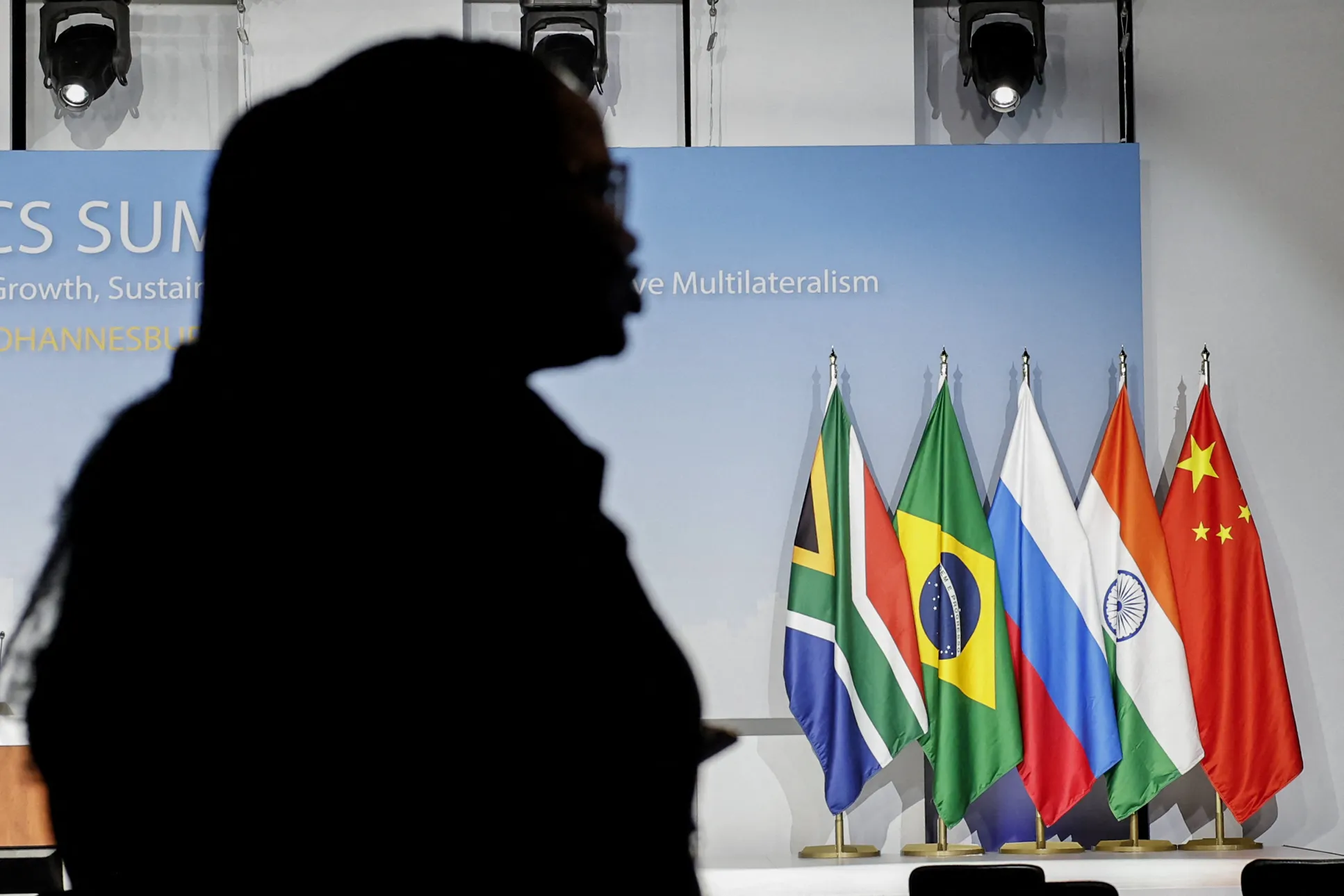
At the same time, the geopolitical landscape is changing. The BRICS+ alliance (currently ten members with twelve additional applicants) has positioned itself as a counterbalance to Western-centric systems of finance, trade, and resource management. Together, BRICS countries account for roughly 42 percent of global CO₂ emissions and 40 percent of global GDP, but they also command vast ecosystems and cultural diversity. As new governance arenas emerge through the expansion of BRICS, the central policy question becomes whether this next generation of institutions will reproduce existing participation ceilings or embed Indigenous authority at the rule-setting stage. As BRICS expands its agenda from trade and finance to climate and biodiversity, will Indigenous peoples have a seat at this new governance table, or again remain on the margins?
The emergence of BRICS therefore does not automatically resolve existing governance shortcomings, but it alters the institutional terrain in which they occur. The representation gap is not only a question of fairness but of institutional timing. In established multilateral and treaty-based regimes such as the UNFCCC and CBD, procedural norms and funding hierarchies are already entrenched; participation procedures exist but decision authority remains state-centric, making structural reform slow and politically costly. By contrast, emerging governance platforms, such as BRICS institutions, are still normatively under construction: defining participation rules, financial safeguards, and accountability mechanisms. The relevance of BRICS for IPLC engagement therefore lies less in its geopolitical positioning than in its institutional design: it represents one of the few active arenas where representation standards for environmental governance have not yet solidified. For instance, the New Development Bank’s Environmental and Social Framework includes stakeholder engagement provisions but lacks formalized Indigenous consent requirements comparable to Free, Prior and Informed Consent (FPIC) standards applied in some multilateral development banks. This absence represents both a risk and a policy opportunity: whereas established institutions exhibit entrenched participation ceilings, BRICS governance mechanisms remain a rare arena open to rule-setting, in which IPLCs and partner organizations can shape representation standards before they harden into precedent.
- Policy opportunity
BRICS offers an unprecedented opportunity for IPLCs and their allies to influence how global sustainability transitions unfold. As a coordination platform combining development finance, technical cooperation, and regulatory dialogue, it links arenas that are typically separated in treaty-based environmental regimes. This configuration allows participation rules, financing criteria, and knowledge standards to be shaped simultaneously, creating entry points for IPLCs not only as consultees but as contributors to governance architecture. Three structural features make this moment strategic:
- Multipolar governance: The bloc’s emphasis on decentralization and shared sovereignty aligns with Indigenous stewardship. IPLC caucuses can seek advisory status within BRICS working groups (environment, agriculture, climate) via research partners and national delegations, embedding territorial stewardship and collective decision-making into draft frameworks early.
- Alternative financing: The NDB and related mechanisms can diversify funding for conservation and Indigenous enterprises. With partner support, IPLC organizations can pilot projects that meet NDB safeguards and advocate dedicated windows and accreditation, shifting communities from beneficiaries to implementing entities.
- South-South knowledge exchange: BRICS’ cooperative frameworks encourage technology and knowledge transfer. By integrating Traditional Ecological Knowledge (TEK) into BRICS technical platforms, IPLCs can shape applied standards (e.g., participatory monitoring, Indigenous data governance, fire management, biodiversity mapping) rather than serve as consultative inputs.
If harnessed intentionally, these dynamics can move IPLCs from symbolic inclusion toward genuine policy co-creation.
- Current gaps and challenges
- Legal gaps
Despite its potential, BRICS lacks a coherent legal framework for Indigenous rights. None of the member states have ratified ILO Convention 169, and references to UNDRIP remain absent in official communiqués. The alliance’s diversity (spanning democratic, socialist, and hybrid systems) complicates consensus on shared standards.
The absence of a BRICS-wide Indigenous treaty does not mean protections are entirely absent. While Convention 169 and UNDRIP remain the gold standard for legally binding Indigenous rights, some BRICS countries have alternative (older or national) laws or frameworks, which may offer partial protections, but these vary widely in scope and enforcement. Legal pluralism within BRICS therefore produces uneven protection: while Brazil’s constitution recognizes Indigenous territorial rights, India remains under ILO Convention 107-type frameworks (an integration-oriented instrument later replaced by the rights-based Convention 169), reflecting the persistence of assimilation-era legal paradigms in parts of the Global South. China did not ratify either 107 or 169, but operates under comparable state-integration minority regimes rather than international Indigenous rights standards. In Russia and South Africa, Indigenous groups continue to face land-use conflicts tied to extractive industries. Without a unifying rights-based framework, BRICS risks replicating the same marginalization patterns already observed in other global governance systems.
- Institutional gaps
BRICS governance bodies currently lack formal mechanisms for Indigenous participation and representation. IPLC voices are largely absent from NDB governance, BRICS environmental ministers’ meetings, and civil-society dialogues. Although the NDB Environmental and Social Framework and Information Disclosure Policy contain stakeholder engagement provisions, they do not require systematic public consultation across project planning, design, and monitoring stages. Weak grievance procedures and limited transparency further constrain affected communities’ ability to influence decision-making.
- Gender gaps
Gender inequality deepens these exclusions. Although Indigenous women frequently lead conservation initiatives at the community level, they remain underrepresented in policy negotiations, technical bodies, and financial allocation processes. The absence of gender-responsive participation mechanisms risks marginalizing key knowledge holders within IPLC governance systems.
- Structural coordination gap
Because Indigenous definitions, legal recognition, and governance traditions vary widely across BRICS countries, developing a unified rights-based framework will face political and cultural constraints. For this reason, to transform BRICS into a platform for inclusive governance, development partners and think-tanks have a critical role in facilitating coordination mechanisms capable of translating diversity into workable institutional standards rather than fragmentation.
Lessons from central and southern Africa: From fragility to foresight
Central and Southern African IPLCs (particularly through CBNRM programs) illustrate both the fragility and foresight of Indigenous environmental governance. Despite donor fatigue, trophy-hunting bans, and shifting conservation agendas, communities in Namibia, Botswana, and Zimbabwe have sustained locally governed wildlife economies that link biodiversity protection to livelihoods.
These models demonstrate resilience grounded in three principles: self-organization, diversification, and digital connectivity. Through regional think-tank networks and digital platforms, such communities have learned to adapt external pressures into internal innovation. For BRICS, the lesson is to engage IPLCs as governance partners, using coalitions, negotiated benefit-sharing, and community-defined monitoring, to shape standards during design, not after adoption.
Policy recommendations
- Establish an Indigenous advisory mechanism within BRICS institutions: Create a formal IPLC council under the BRICS Environment Ministers’ Forum or the NDB. This body should address the BRICS’ diverse political systems, contrasting governance logics, and lack of institutionalized rights-based mechanisms.
- Develop a BRICS Indigenous Rights Charter (BIRC): Align with UNDRIP and ILO 169 principles to set baselines on land rights, FPIC, and equitable benefit-sharing.
- Create a BRICS Gender and Indigenous Equity Fund (BRIEF): Through the NDB, earmark financing for Indigenous women-led climate and biodiversity enterprises, with gender-balanced governance and authority to review proposals for cultural and ecological impacts.
- Build a South-South Knowledge and Innovation Network (SSKIN): Link IPLC organizations, universities, and think tanks on Indigenous data governance, climate adaptation, and biodiversity monitoring blending TEK with science.
- Launch a BRICS+ Indigenous Governance Observatory (BRIGO): Partner with academic and civil-society networks to track IPLC participation, funding flows, and gender representation via a public dashboard to ensure accountability.
Implementation pathways
For international development partners and think-tanks, supporting IPLC engagement with BRICS involves three parallel tracks:
- Diplomatic engagement: Facilitate dialogues between Indigenous networks and specific BRICS coordination arenas, particularly the Environment Ministers’ Meeting, the Environment Working Group’s Climate Change and Sustainable Development Unit (CGCCSD), and the annual BRICS Summit Sherpa track where draft communiqués are negotiated. Partners can also support IPLC participation in BRICS Academic Forum and Civil BRICS processes, which often shape policy language before ministerial adoption. Technical assistance should prepare IPLC representatives to intervene during consultation phases rather than post-adoption.
- Capacity and legal support: Fund training for IPLC negotiators and legal experts to interpret and adapt international instruments (e.g. UNDRIP, ILO 169, Paris Agreement, etc.) to BRICS institutional contexts, with particular focus on engagement with the NDB’s Environmental and Social Framework review processes, project grievance mechanisms, and national implementing agencies that submit projects for NDB financing.
- Research and policy innovation: Produce policy notes that feed directly into the bloc’s annual summits. Develop comparative research on Indigenous governance models across BRICS countries and channel findings directly into policy windows such as the BRICS Think Tank Council (BTTC), the Academic Forum policy tracks, and technical background papers prepared ahead of Leaders’ Summit declarations. Policy briefs should be timed to agenda-setting cycles when chair countries define annual priorities, while elaborated papers could be published via the BRICS Journal of Economics.
These efforts would equip IPLCs with the tools to influence decision-making while helping BRICS align its environmental agenda with global rights standards.
Conclusion
BRICS’ expansion is an inflection point. Whether it advances inclusive sustainability or reproduces closed state power will depend on choices made now. Development partners, think tanks, and IPLC leaders must ensure Indigenous knowledge and rights are embedded, not appended, in the design of BRICS environmental frameworks.
IPLCs are innovators of resilience and stewards of biodiversity. Centering their agency within BRICS+ can pioneer a governance model fit for a plural planet, where foresight replaces fragility and inclusion underpins sustainability.

Dr. Metolo Foyet
Dr. Metolo Foyet is a Non-Resident Associate at the Nkafu Policy Institute. She is a Human Geographer, UNESCO-trained World Heritage Professional, Agricultural Value Chain Expert and Conservation Equity and Safeguards Specialist with 15 years of accumulated experience working in Sub-Saharan Africa and North America.

Leave A Comment