

Surveys from the past half‐decade in Cameroon and the Central African Republic have found that between 60% to 70% of registered NGOs report experiencing heightened administrative delays, licensing obstacles, or harassment by government authorities. [1] On the press freedom spectrum, Freedom House degraded Equatorial Guinea and Cameroon on the rating, scoring them below 20 (on a 0–100 scale) in 2021. Following the murder of the renowned journalists Martinez Zogo, Director of Amplitude FM radio station, Cameroon again dropped by 20 places on Reporter Sans Frontiere’s (RSF) press freedom 2023 index. From 2015 to 2020, up to 25–30 new laws or amendments that restrict civic engagement were introduced in many countries in the region with many of these laws expanding state powers to restrict freedom of association and assembly. [2]
To exacerbate this situation, research establishes a correlation between longevity of leaders in power and their proclivity for digital repression, including ordering internet disruptions. Accordingly, the digital authoritarianism being witnessed cannot be divorced from the overall democratic regression and the longevity in power of authoritarian leaders”. [3] Central Africa alone harbors the top three longest-serving presidents in office, totalizing over forty years in power each. During the crisis in the Nord-West and South-west regions of Cameroon which broke out in 2016, the government suspended internet from January to April 2017, causing internet blackout for 94 days, one of the longest in Africa. [4]
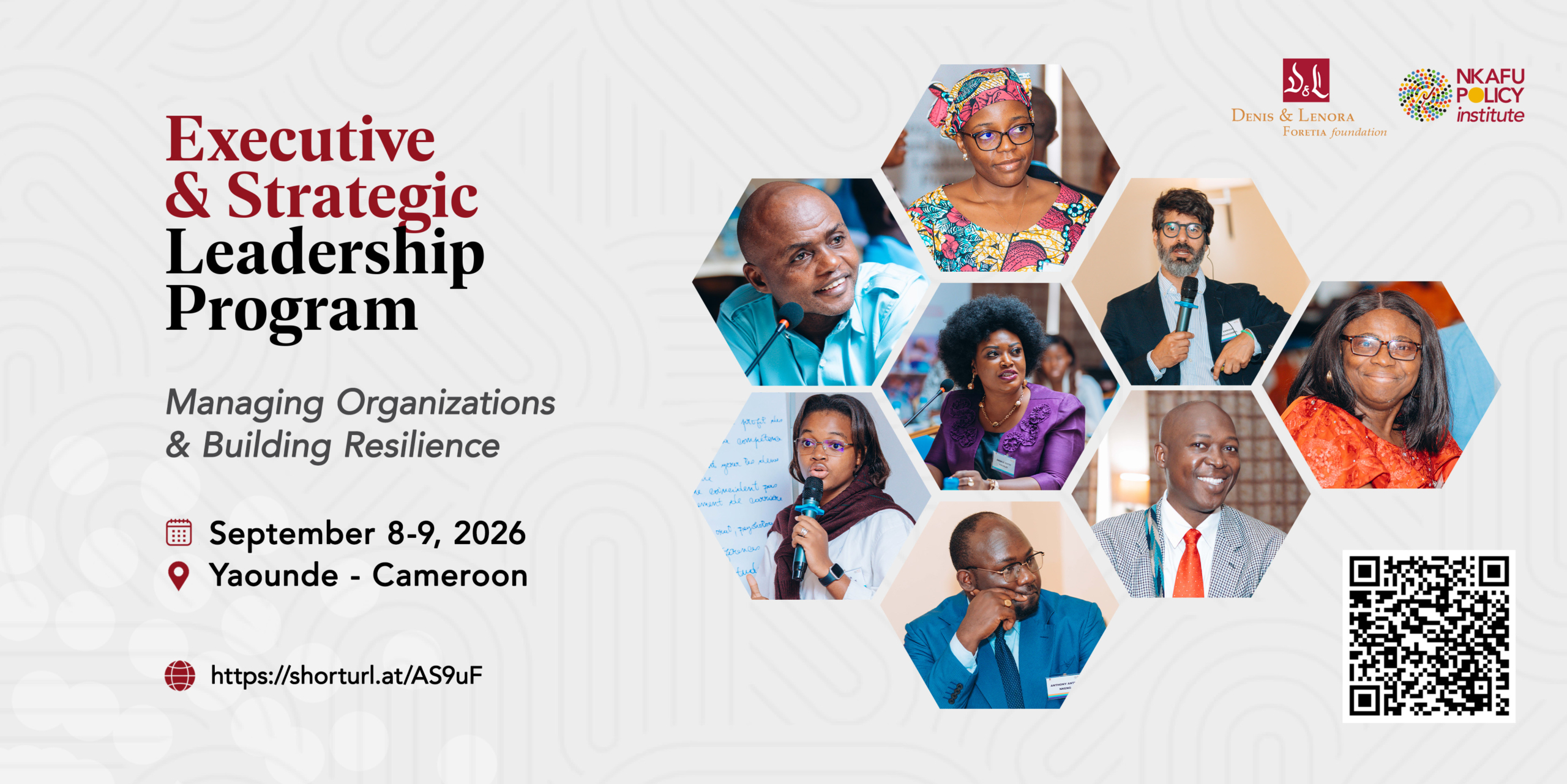
“Navigating Volatility: Sustaining Think Tanks and CSOs in Unstable Environments” could not be more timely, as the topic of the 2025 Executive & Strategic Leadership Program, organized by the Nkafu Policy Institute. The primary goal of the program is to sustain the leadership and operational efficiency of think tanks and CSOs in Central Africa, through transformative skills in governance, policy innovation, and strategic decision-making.
The 2025 edition of the think tank week would showcase an amazing cross generational featuring of a trifecta ushering the Emerging Leaders Program aiming to “drive impact” among grassroots leaders, followed by the Executive & Strategic Leadership Program, before culminating in the Central Africa Think Tank Forum, geared towards “Shaping the Future: Role of Think Tanks and Civil Society in Central Africa Policy Processes”.
The primary goal of this trifecta, organized by the Nkafu Policy Institute is to strengthen the influence of think tanks, foster partnerships and accountability, while providing actionable recommendations to advance policy innovation. Participants will thus engage in high-level workshops, peer exchange, and scenario-based training, tailored for impact in Africa’s evolving landscape. This strategic program is designed to sustain the leadership and operational efficiency of think tanks and CSOs in Central Africa, through transformative skills in governance, policy innovation, and strategic decision-making.
As the think tank weeks nears and expectations heightens, join us to strengthen your leadership and drive change in your institution this August 5-8, 2025, at Djeuga Palace Yaoundé with strategic capacity building, leadership empowerment, expanded visibility and reach.
By Ayukmba Nkonghonyor,
Senior Communications Manager, Denis & Lenora Foretia Foundation

Leave A Comment