
By Julienne Stéphanie Mesumbe, Deputy Director of Nkafu Policy Institute
Across Africa, think tanks are navigating shrinking civic spaces, financial constraints, and political pressures that often limit their ability to influence policy. Yet, recent convenings have demonstrated that collaboration is the most effective pathway to resilience and collective impact.
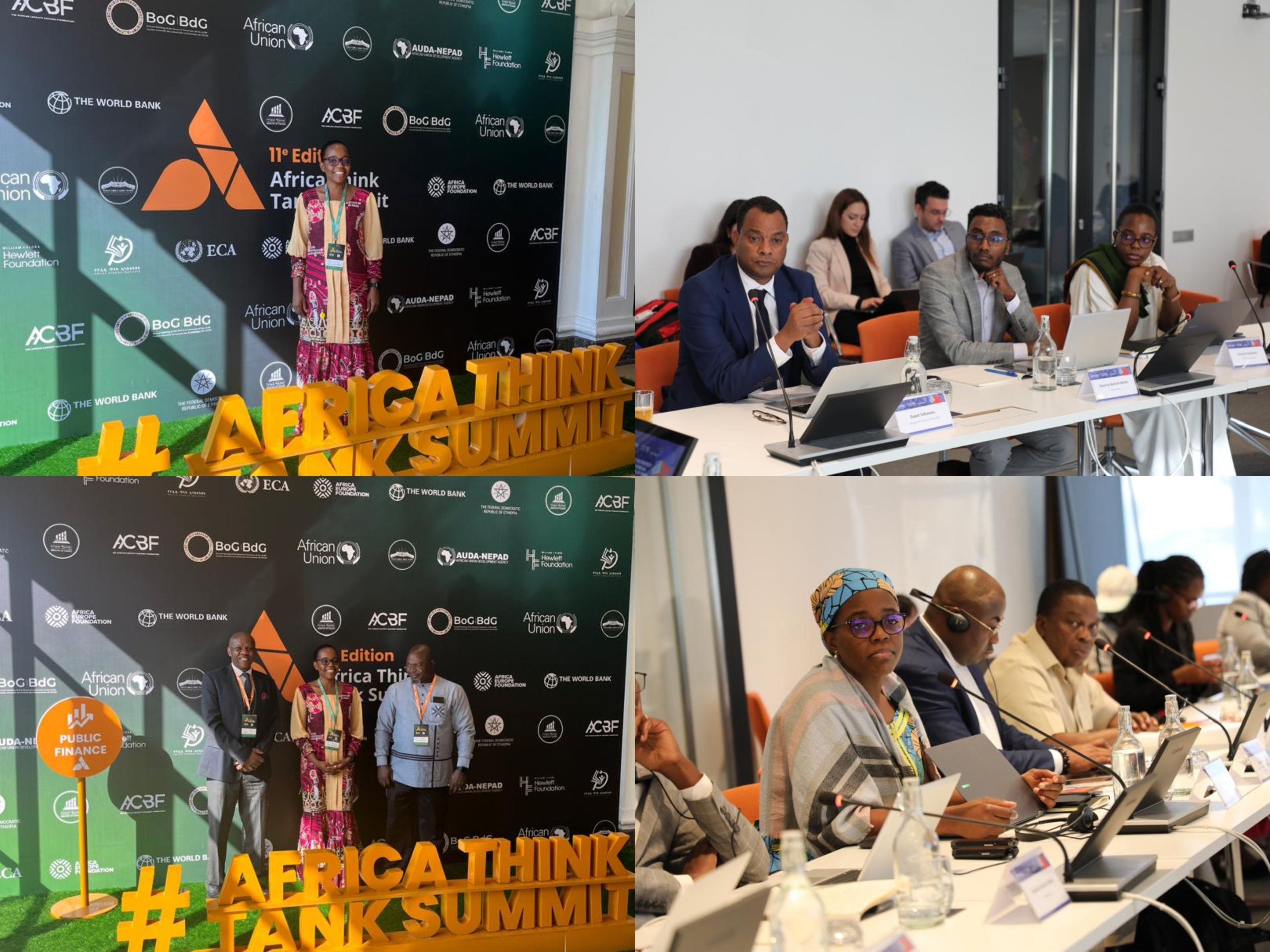
In October and November 2025, the Nkafu Policy Institute participated in two landmark gatherings: the 11th Africa Think Tank Summit in Addis Ababa and the Strategy Group Meeting of the African Union Network of Think Tanks for Peace (NeTT4Peace) in Rabat. Together, these events underscored a powerful truth: think tanks are stronger when they unite their voices.
Resilience Through Collaboration
Resilience for think tanks is not just about survival; it is about sustaining credibility, adapting to shifting contexts, and continuing to provide evidence-based policy recommendations. At the Africa Think Tank Summit, more than 500 participants from 40 countries emphasized fiscal sovereignty and institutional resilience. No single institution can overcome these challenges alone. Collaboration is the shield that allows think tanks to withstand shocks and remain relevant.
Cooperation and endogenous financing were clearly identified as pillars of resilience, going by the opening remarks of Ethiopia’s Minister of Revenue, H.E. Aynalem Nigussie, reminding participants that “Policy alone cannot bring about change. It must be matched with the right implementation and cross-sector cooperation.” A statement to further reinforced by Mr. Mamadou Biteye, Executive Secretary of the African Capacity Building Foundation (ACBF), who echoed that : “Africa is ready to fund its own future, not through dependency, but through effective, transparent, and equitable domestic resource mobilization.”
The Summit communiqué reinforced the need for sustainable funding, structured collaboration frameworks, and capacity building programs to empower think tanks as catalysts for reform.
Amplifying Collective Voices
The NeTT4Peace Strategy Group Meeting in Rabat demonstrated how collective voices can shape continental agendas. With 18 think tanks represented, discussions focused on aligning research outputs with the African Union’s priorities under Agenda 2063.
Dr. Isabella Warioba, speaking on behalf of the AU Commissioner for Political Affairs, Peace and Security, urged members to “solidify the work plan and deliverables, strengthen working methods, and improve communications both internally and externally.” Her call underscored the importance of collaboration not only in producing knowledge but also in ensuring it reaches policymakers effectively.
These lessons on resilience found a powerful echo in Rabat, where NeTT4Peace showed how collective voices can shape continental agendas. The message was clear: when think tanks speak together, their influence on policymakers multiplies. Collaboration ensures that African perspectives are not overshadowed by external narratives and that policy solutions reflect local realities.
Practical Pathways Forward
From both meetings, several strategies emerged for strengthening resilience and amplifying collective voices:
- Joint Research and Publications:Co-authoring briefs and studies enhances credibility and reduces duplication.
- Shared Platforms:Regional forums and continental networks provide visibility and legitimacy.
- Capacity Building:Collaborative training programs equip think tanks with negotiation, advocacy, and digital communication skills.
- Knowledge Hubs:Initiatives such as AUDA NEPAD’s Knowledge Capitalisation Plan and ACBF’s Ubora Academy centralize evidence sharing. Through its own Knowledge Hub, which serves as a bilingual Knowledge Hub, Nkafu ensures that continental lessons are translated into actionable strategies for Central Africa, reinforcing its role as a bridge between regional realities and continental debates.
- Inclusive Leadership:Ensuring gender balance and youth participation broadens perspectives and strengthens legitimacy.
- Innovative Financing:Exploring mechanisms such as diaspora bonds, digital economy taxation, and public–private partnerships to sustain think tank operations.
Conclusion
The Africa Think Tank Summit and the NeTT4Peace Strategy Group Meeting both reaffirmed that resilience and influence come from working together. As H.E. Zadig Abreha of AFLEX aptly stated: “Africa must move from being analyzed to becoming the authors of its own progress.”
Collaboration is not optional; it is the survival strategy that enables think tanks to amplify their voices, sustain credibility, and ensure that African solutions drive African development.
At Nkafu Policy Institute, we remain committed to fostering these partnerships, strengthening our collective resilience, and ensuring that think tanks across Central Africa and beyond continue to shape the governance and peace agendas of our continent.

Leave A Comment