
By Dr. Stéphane Mbiankeu Nguea and Dr. Wirajing Muhamadu Awal Kindzeka
Executive Summary
CEMAC countries share borders, a common currency, and a coastline. Yet intra‑regional trade accounts for only about 3% of their total trade – far below Southern or West Africa. Cameroon borders every CEMAC member, operates two major ports (Douala and Kribi), and has invested in transnational roads and railways. Still, trucks spend weeks at borders, and perishable goods spoil while paperwork piles up. The policy puzzle is this: why have decades of infrastructure investment failed to produce the expected trade outcomes? The answer lies not in asphalt but in administration. The new unified ECCAS‑CEMAC Customs Code (January 2026) offers a chance to fix this. What remains is the political will to implement it. This brief recommends immediate action on customs coordination, targeted investment in bottlenecks, and the creation of integrated logistics zones.
Key Messages
- Roads and ports are necessary but not sufficient. Withoutharmonized customs procedures and fewer checkpoints, goods will keep getting
- Fixing specific bottlenecks– bridge repairs, port dredging, dry ports – cuts transit times faster than spreading resources thinly.
- A unified customs code exists on paper. Implementing it consistentlyat border posts is what finally moves trade.
Introduction
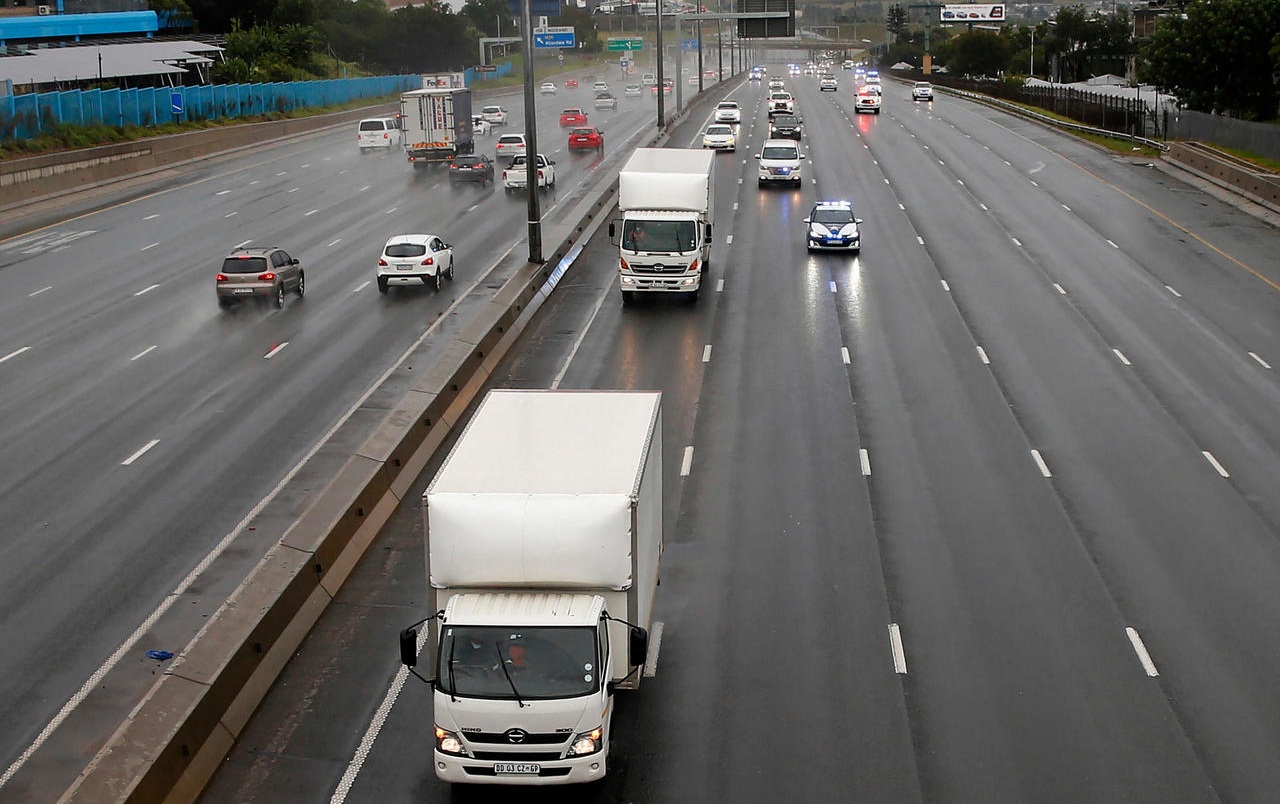
Driving from Douala to N’Djamena should take three days. It often takes three weeks. Not because the road is bad – it is mostly paved – but because of what happens along the way. At every checkpoint, papers are checked and rechecked. On each side of a border, different regulations apply. A truck carrying tomatoes from Garoua to Moundou may pass half a dozen such barriers, and the goods lose value before they ever reach a shop shelf. This is the reality of Central African trade. The region shares a common currency, a colonial heritage, complementary economies, and close geographical proximity. Cameroon alone borders every CEMAC nation, has two deep‑sea ports, and handles hundreds of billions of francs in transit goods for Chad and the Central African Republic. Yet intra‑CEMAC trade is the lowest in Africa – around 3% of total trade. In 2025, Douala port handled about 184,000 TEUs, while Kribi handled 110,000 TEUs, up 20.8% from the previous year. Kribi’s multipurpose terminal processed over 12 million tons cumulatively, with 2025 traffic up 33%. The volume is there. Infrastructure is improving. However, once goods leave the ports, they run into delays. Something is broken – and it is not the asphalt. This policy brief aims to diagnose why decades of infrastructure investment have failed to boost intra‑CEMAC trade, identify the binding administrative and informal barriers that continue to delay goods at borders, and propose sequenced, actionable recommendations to harmonise customs procedures, reduce checkpoints, and build integrated logistics zones
Diagnosis: Two Ports, Four Corridors, One Problem
Douala remains Cameroon’s economic heart, handling 75‑85% of national freight. However, congestion is severe. In early 2025, vessel calls dropped 11% in a single quarter, and ships now wait an average of nine days to dock – compared to about seven in Abidjan or Lekki. Access via the Wouri River requires constant dredging, which is often inconsistent. When the cocoa export campaign peaks, congestion worsens. Kribi is the rising star, with a quay line extended to 615 meters, storage space tripled, and the ability to handle two or three 80,000‑ton vessels simultaneously. Yet Kribi’s success has not yet translated into regional integration; most traffic serves direct import‑export, not transit to neighbours. The four main corridors tell a similar story. The Douala–N’Djamena route carries about 350 billion FCFA in Chadian goods annually, but it has become a gauntlet of road checks, police stops, and customs delays. The Douala–Bangui corridor handles another 55 billion FCFA; it is longer, more fragile, and shadowed by security risks. The 215‑km Sangmélima–Ouesso road linking Cameroon and Congo is still more promise than reality. In addition, the Logone Bridge, connecting Yagoua to Chad’s Bongor, sits within a 766‑km network that could eventually link CEMAC to ECOWAS. The hardware is being built piece by piece. However, the software – the rules, the procedures, and the human element at borders – is failing.
Obstacles: What Really Blocks Trade
The obstacles are well-known and stubborn. They can be grouped into physical, administrative, informal, and institutional barriers. However, the binding constraints are administrative and informal. Physical barriers exist: secondary roads deteriorate quickly, and rail networks are underdeveloped. However, these are secondary to the administrative problems. Administrative barriers are where the real damage happens. Multiple road checks are the norm, not the exception. Each stop costs time and money. Customs procedures are fragmented, so a truck carrying the same goods can face entirely different documentation requirements on each side of a border. A 2025 analysis noted that “divergent licensing requirements, incompatible professional standards, and opaque bureaucratic procedures have turned the region’s borders into formidable barriers.” The new Harmonised ECCAS‑CEMAC Customs Code, effective January 2026, was designed to fix this. It merges customs regulations across 11 countries, creating a single legal framework. In theory, a trader moving goods from Douala to N’Djamena now follows the same rules as one shipping from Luanda to Libreville. In practice, implementation will take years: training officials, harmonizing digital systems, and changing entrenched habits.
Informal barriers are the costs that never appear on receipts. Informal payments at checkpoints, bribes to speed clearance, fees to “facilitate” paperwork. These are built into the system. Drivers know exactly how many CFA francs will be expected at certain points – and budget for them. Institutional weakness compounds everything. Regional institutions have mandates but lack power. Decisions taken at the community level are slow to reach the ground. Coordination between CEMAC and ECCAS has historically been weak. The result is that moving goods across borders costs more in time and money than shipping them across oceans. A container from Douala to N’Djamena is often more expensive than one from Shanghai to Douala.
Opportunities: Why 2026 Could Be Different
Three developments offer genuine reasons for optimism.
First, the Harmonised ECCAS‑CEMAC Customs Code took effect on 1 January 2026. It is the technical foundation for a real customs union. However, implementation risk is high: border posts lack capacity, and training will take years. Without dedicated follow‑up, the code will remain a paper exercise. Second, the EU‑funded ECCAS Trade in Services Programme (€6.2 million) held its first steering committee meeting in Yaoundé on 18 March 2026. It aims to harmonize regulations across 12 service sectors – logistics, insurance, accounting, legal services – that make trade possible. This directly attacks the administrative barriers. Third, the AfCFTA framework is pushing member states to prepare schedules of specific commitments on services. This forces Central African countries to think systematically about what they can offer and how to negotiate. The process itself builds capacity.
Recommendations
Short Term (1–2 Years) – Tackle administrative fragmentation
- Implementthe Harmonized Customs Code (addresses administrative fragmentation). Customs officials should be trained, digital systems upgraded, and border posts coordinated. A dedicated task force with representatives from each CEMAC country should meet quarterly to track progress.
- Digitizecustoms procedures (addresses administrative and informal barriers). A single window for trade documentation, accessible across all member states, would slash processing times and reduce opportunities for informal payments.
- Alignnational service regulations with the ECCAS harmonization programme (addresses regulatory divergence). Member states should adapt their laws and train regulators.
Medium Term (3–5 Years) – Invest in choke points
- ModernizeDouala port (addresses the physical bottleneck of congestion). Regular dredging and equipment upgrades can cut waiting times from nine days to competitive levels.
- Developdry ports in N’Djamena and Bangui (addresses administrative delays and congestion). Clearing goods before they reach the coast reduces border friction. The private sector is ready to invest if the regulatory environment stabilizes.
- Expand Kribi’s hinterland connection(addresses the failure to translate port success into regional trade). Roads and rails must link Kribi effectively to the region.
Long Term (5–10 Years) – Build integrated systems
- Createintegrated logistics platforms at Douala, Kribi, N’Djamena and Bangui (addresses institutional fragmentation). Zones where goods are cleared, stored, processed, and re‑exported under one
- Extendthe railway network – especially the Chad extension (addresses physical and administrative constraints, as rail reduces the number of checkpoints).
- Institutionalizecorridor management (addresses institutional weakness). Each major corridor should have a permanent authority with representatives from all countries along the route to coordinate maintenance, harmonize procedures, and resolve disputes.
Conclusion
Central Africa has spent decades building infrastructure and hoping trade would follow. It has not, not because the roads are bad, but because governments have ignored the administrative, regulatory, and human barriers around them. The year 2026 offers a rare window: a unified customs code, a major services harmonization programme, and growing political commitment to the AfCFTA. These are the foundations of a functioning regional market. However, foundations alone do not make a building. Training customs officials, updating digital systems, reducing checkpoints, and building dry ports – none of this is glamorous. All of it is essential. The choice is simple: continue as we have, and watch ports fill with goods that never reach the hinterland. Alternatively, act deliberately, systematically, and together. Regional integration is not an engineering challenge. It is a governance challenge. Cameroon, with its two ports, its borders with every CEMAC country, and its central role in transit, has the most to gain – and the most responsibility to lead.


Leave A Comment