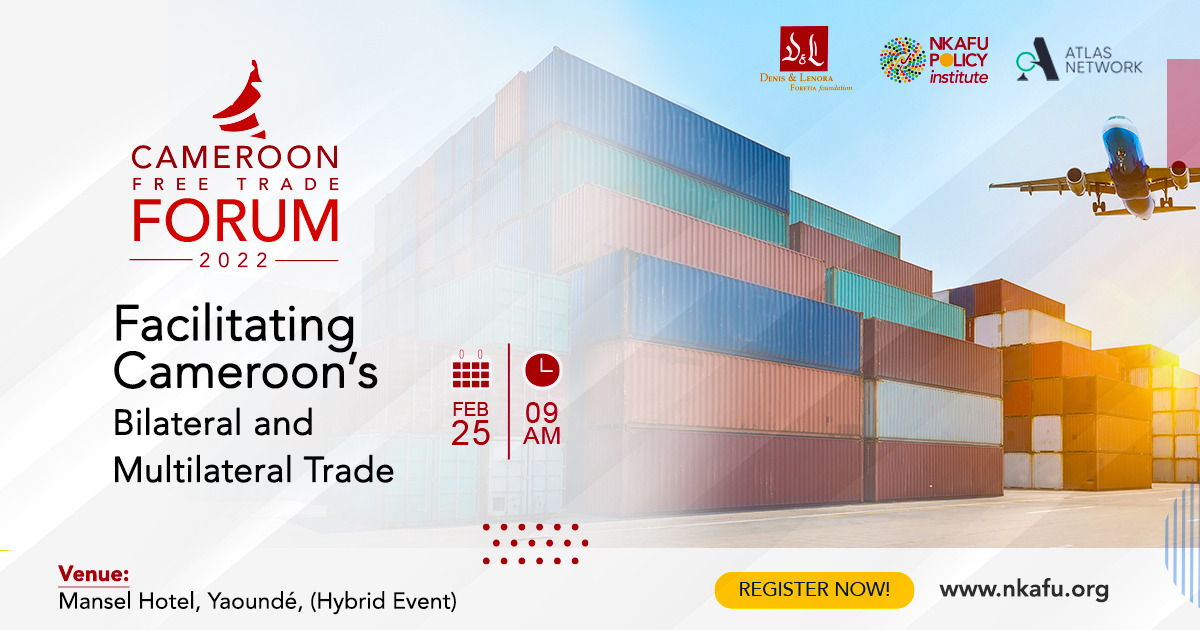
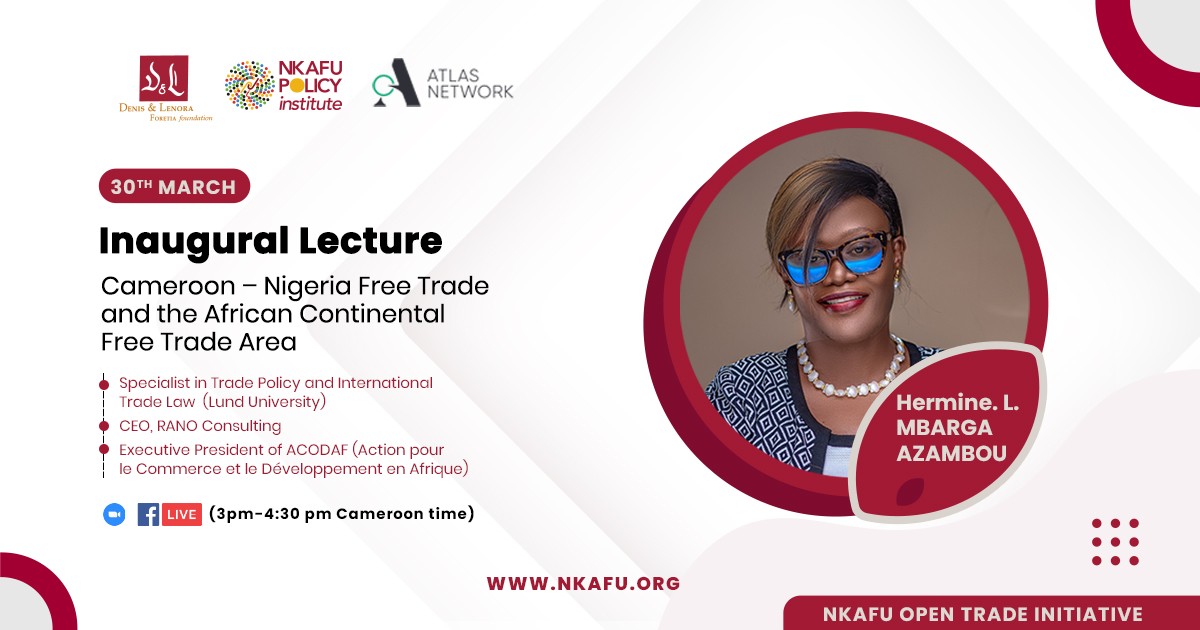
Inaugural Nkafu Distinguished Lecture on Free Trade
The main objective of this lecture is to emphasize the benefits of free trade and the requirements for the successful implementation of AfCFTA in Cameroon and Nigeria.
By TALLA Belder Carynthon|2022-03-24T16:41:16+00:00March 23rd, 2022|Tags: African Continental Free Trade Area, Free trade|
The main objective of this lecture is to emphasize the benefits of free trade and the requirements for the successful implementation of AfCFTA in Cameroon and Nigeria.
By Henri KOUAM|2022-01-06T13:46:17+00:00December 16th, 2021|Categories: Economics Affairs, NOTI- Policy Brief, Publications|Tags: Cameroon’s Manufacturing Sector, Free trade|
Free trade will increase competition in the Cameroonian market as lower trade barriers will increase the flows of goods and services into Cameroon. Admittedly, local manufacturers will innovate their processes in order to protect their market share and reduce the impact of foreign competition.
By Fabien SUNDJO and Dr. Sunjo Tata|2022-01-06T13:46:17+00:00December 16th, 2021|Categories: Economics Affairs, NOTI- Policy Brief, Publications|Tags: Free trade, Sustainable Development, Sustainable Trade|
Trade openness causes greater competition between local and foreign suppliers. This causes the price of inputs to fall and gives local producers access to a bigger market. In addition, trade plays an important role in helping the environment since it serves as a channel for green technology transfer.
By TALLA Belder Carynthon|2022-02-21T15:41:14+00:00December 10th, 2021|Tags: Cameroon and Nigeria, Free trade, Free trade forum, Nkafu Open trade Initiative|
To meet the development objectives set out in its new National Development Strategy 2020-2030 (NDS30), Cameroon is now seeking to take advantage of its strategic position in the Gulf of Guinea. The country intends to give significant impetus to the acceleration of true trade integration at the sub-regional and regional levels.
By TALLA Belder Carynthon|2022-02-28T10:44:57+00:00November 18th, 2021|Tags: AfCFTA, Free trade, Nigeria Cameroon trade|
The financing gap for businesses in Africa is well recognized. Small firms, especially, face challenges accessing finance (Hope, 2019). SMEs account for up to 90% of businesses in Sub-Saharan Africa and lack of access to finance has been shown to have a significant, negative effect on employment growth in African SMEs (Quartey, 2017)
Opposite College Jésus Marie – SIMBOCK, Yaounde Cameroon
Phone: +237 654 86 72 54
Email: [email protected]