
By Stéphane Mbiankeu Nguea
Executive Summary
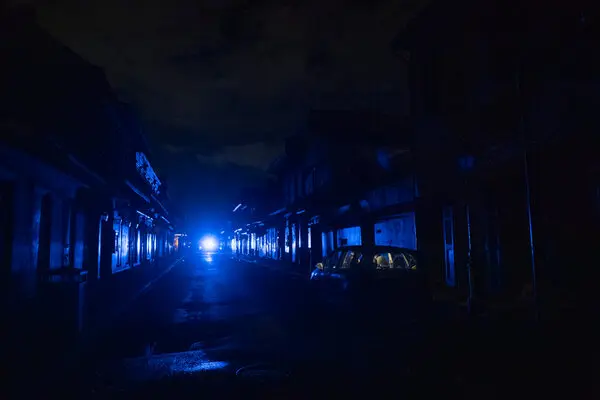
Power outages in Cameroon generate considerable economic and environmental costs. Between 2015 and 2024, they reduced GDP by an average of 3.32% per year, representing a cumulative loss of 10,361 billion CFA francs, equivalent to 35% of 2023 GDP. The tertiary sector is the most affected, followed by the secondary sector, while the primary sector is less so. The massive use of backup generators generated additional costs estimated at 169 billion CFA francs in 2024 and emitted nearly 3 million tonnes of CO₂ over the decade, worsening the country’s carbon footprint. In terms of governance, the successive partial privatisations and share buybacks (2001, 2014, 2025) raise questions about the valuation of public assets and the absence of a coherent industrial strategy. To break out of this deadlock, a reform is essential, based on decentralised management according to each region’s natural assets (solar in the North, gas in the South, hydropower in the West) and on strengthening interconnections between major cities. Concrete measures are proposed: independent audit, emergency programme of 1,000 MW, separation of functions, real-time outage monitoring, and tax incentives for clean generators. Reliable electricity is a strategic priority for industrial transformation, digitalisation and social well-being.
Key messages
- Power outages cost, on average, 3.32% of GDP per year over the period 2015-2024, more than the combined national budgets of 2020 and 2021.
- In 2024, additional expenditures related to generators reached 169 billion CFA francs, with CO₂ emissions equivalent to 30% of the emissions of the Swiss manufacturing sector.
- The successive transfers and buybacks of shares (AES, Actis, State) have not resolved the technical losses of 20% nor the degradation of networks, raising questions about the valuation of assets.
- Cameroon has untapped solar, hydro and gas potential. Decentralised management and targeted investments (solar in the North, gas in the South, hydropower in the West) could reduce outages and emissions.
Introduction
Cameroon currently produces about 1,742 MW of electricity, but it has set itself the target of reaching 3,000 MW by 2030 in order to meet constantly growing demand. In addition to this structural deficit, more than 20% of technical and commercial losses are recorded on transmission and distribution networks. An audit carried out between 2018 and 2021 reveals that the number of power cuts quadrupled, with the average duration of interruptions rising from 98.5 minutes in 2018 to 142.7 minutes in 2020, before falling back to 43.7 minutes in 2021. The Chamber of Accounts notes that Eneo’s efforts to reduce these outages did not really bear fruit during this period. Yet, changes in the electricity sector have taken place, including several partial privatisations and transfers of shares back to the State. In 2001, 56% of SONEL was sold to AES Corporation under a 20‑year concession. Then AES‑SONEL was resold to Actis in 2014 for 202 million dollars. Finally, in 2025, Actis returned its shares to the State for about 78 billion CFA francs. These transactions raise an important question: what is the real value of the assets of the Cameroonian Electricity Company (SOCADEL)? This policy brief summarises the economic and environmental effects of power cuts using a method developed by Trends&Poor, and then proposes reforms based on more decentralised management and stronger interconnections between regions.
Macroeconomic and environmental impacts
Between 2015 and 2024, power outages reduced Cameroon’s GDP by an average of 3.32% per year. Cumulative losses reached 10,361 billion CFA francs, equivalent to 35% of 2023 GDP, exceeding the combined national budgets of 2020 and 2021. In a counterfactual scenario with no outages, annual growth might have been substantially higher than the observed level. The tertiary sector is the most affected (impact above the national average) because it depends heavily on reliable electricity and makes little use of backup generators, except for banks. The secondary sector (industry) also suffers high costs, but firms there rely more on backup generators. According to the World Bank Enterprise Survey, in 2016 the percentage of electricity coming from generators owned by establishments varied considerably across sectors. In 2024, this trend intensified, with an even higher proportion of firms resorting to self‑production. The primary sector is the least affected (1.02% of sectoral GDP lost).
In 2024, additional costs related to backup generators are estimated at 169 billion CFA francs. In the secondary sector, these extra costs amount to 102 billion CFA francs – more than six times the combined profit of the cocoa, tea and sugar industries in 2018. For the tertiary sector, the extra cost (52 billion) represents 37% of the profit of the “information and telecommunications” sector in 2018. These additional burdens undermine the competitiveness of local firms, fuel inflation through pass‑through to selling prices, and discourage foreign investment. The massive use of backup generators emitted nearly 3 million tonnes of CO₂ over the decade, according to the Trends&Poor estimates. This corresponds to 30% of the emissions of the Swiss manufacturing sector, or to 7.5% of emissions of the French energy sector or the Dutch transport sector. In addition to CO₂, these generators release hazardous air pollutants. In a national low‑carbon and climate‑change strategy, these avoidable emissions are a contradiction: the lack of reliable electricity worsens the carbon footprint.
Governance: a liability to be clarified
The history of the transfer of SONEL’s shares (2001, 2014 and 2025) raises questions about the valuation of public assets and the relevance of successive privatisation operations. In 2001, the privatisation of SONEL transferred 56% to AES Corporation. This initial transfer laid the foundation for private management but did not include sufficient safeguards to ensure long-term investment in transmission infrastructure. AES’s exit in 2014, with a sale to Actis for $202 million, represented a significant capital gain for the US company but left the underlying issues of network degradation and high losses largely unresolved. Actis’s tenure, while bringing some operational improvements, did not reverse the trend of increasing outages, and its 2025 buyback by the State for 78 billion CFA francs represents a negative equity return for the private investor. This sequence of transactions suggests that short-term financial engineering may have taken precedence over a coherent industrial strategy. Today, most transmission and distribution infrastructure remain dilapidated, and the 20% technical losses have not been eliminated. Clarifying the real value of the assets and establishing independent performance monitoring (production, losses, connection times) is a priority.
To break the cycle of power outages, Cameroon must decentralise management and production according to each zone’s natural advantages:
- Far North: exceptional solar potential. Follow the example of the Moroccan Noor Ouarzazate plant (more than 500 MW), inaugurated in 2016 and equipped with a thermal storage system allowing operation for three hours without solar radiation. Launch calls for tenders for large‑scale solar farms with battery storage.
- South: use natural gas (associated and non‑associated) to produce baseload electricity that is cheaper and cleaner than diesel generators.
- West: exploit undeveloped hydropower potential (additional waterfalls, small hydroelectricity).
In parallel, the main cities where business demand is most urgent (Douala, Yaoundé, Garoua, Bafoussam, Limbé) need to be connected. Strengthening transmission lines and reducing losses through delegated management to regional authorities could improve efficiency. Finally, the deployment of cleaner backup solutions (solar + storage, industrial biogas) should be subsidised via a “decarbonisation bonus” mechanism for industries, in order to reduce the 169 billion CFA francs in annual extra costs.
Financing the proposed reforms, estimated at 4.5 billion USD over seven years, is significant but represents less than two years of cumulative outage costs and the 18 billion CFA Francs needed by the Cameroon power company from the government to prevent power outages across the country. A mix of public funds, multilateral loans (AfDB, World Bank), and private investment via PPPs is required. Implementation will require strong political commitment, a new regulatory framework to give regional hubs operational autonomy, and capacity building to manage these new entities. While complex, the operational feasibility is supported by existing regional development initiatives. Tariff reforms must ensure cost-recovery while protecting vulnerable households through targeted subsidies.
Priority recommendations
This brief calls for a profound overhaul of the governance of Cameroon’s electricity sector, beyond technical or tariff adjustments. Three priority areas emerge for public authorities:
- Strengthen transparency and accountability: An independent audit, conducted by international experts, must be carried out immediately to assess the real value of the assets of the Cameroonian Electricity Company (SOCADEL), technical and commercial losses, as well as the clauses of the concessions granted to ENEO. This audit should also produce public performance indicators (frequency and duration of outages, connection times, collection rates) in order to restore the confidence of investors and citizens. The establishment of an independent electricity observatory, with sanctioning powers, is recommended.
- Decentralise production and distribution: The current management, which is too centralised, does not make it possible to take advantage of regional specificities. It is proposed to create regional production and distribution hubs, with binding service continuity targets. In the Far North, calls for tenders for large-scale solar farms (500 MW by 2028) with battery storage should be launched, along the lines of the Noor Ouarzazate plant in Morocco. In the South, the use of natural gas (associated and non-associated) could provide baseload electricity that is cheaper and cleaner than diesel generators. In the West, the untapped hydroelectric potential (waterfalls, small hydro) must be reassessed and developed. At the same time, interconnections between the economic metropolises (Douala, Yaoundé, Garoua, Bafoussam, Limbé) must be strengthened to secure supply to areas with high demand.
- Incentivise the decarbonisation of backup solutions: The massive use of old, costly and polluting generators must be progressively replaced. To this end, a “decarbonisation bonus” mechanism could be introduced, subsidising the acquisition of clean solutions (solar + storage, industrial biogas) for businesses and local authorities. Tax incentives (exemption from customs duties, tax credits) should encourage the import of high-efficiency, low-emission generators, while providing for a gradual phase-out schedule for old diesel engines. These measures, combined with a real-time outage monitoring system (based on the sensors deployed by Trends&Poor), will make it possible to optimise planning and reduce avoidable costs.
Conclusion
Power outages cost 3.32% of GDP annually, harm competitiveness, and increase CO₂ emissions. These losses far exceed the investments needed to modernise the grid. Reliable electricity is not a simple commodity; it is the foundation of industrial transformation, digitalisation, social well‑being, competitiveness, and climate resilience. The time has come to move beyond disputes over asset‑sale prices and to act decisively on governance, regional decentralisation, and the acceleration of renewable energy suited to each area. Such reforms, if implemented with determination, could position Cameroon as a regional pioneer in the energy transition in Central Africa. Since the cost of the necessary investments remains well below the cumulative losses, their financing is not only justifiable but also urgent.



Leave A Comment