
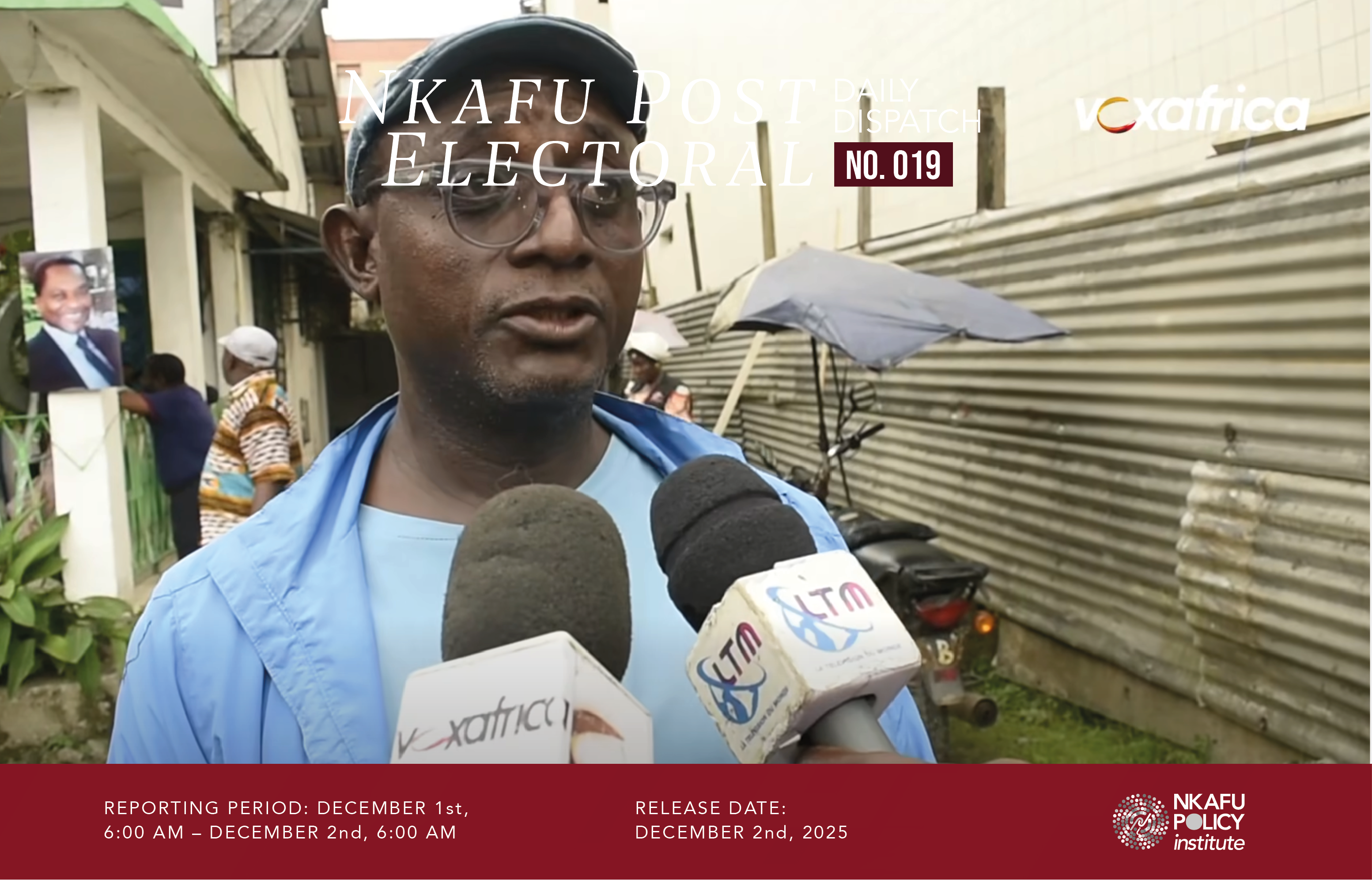
The reporting period of December 1–2 was dominated by the custodial death of opposition leader Anicet Ekane, which triggered a wave of political, diplomatic, and civic reactions. Government authorities sought to contain fallout by announcing a Defense Ministry investigation, while opposition figures in exile denounced the incident as evidence of systemic repression. The European Union Delegation to Cameroon issued one of the strongest international statements to date, condemning Ekane’s death and demanding the release of all detainees held since the October elections. This declaration elevated the crisis to a diplomatic priority and reinforced calls for accountability. Domestically, voices across the political spectrum—including former presidential candidate Hiram Iyodi and activist Michèlle Ndoki—joined in condemning the incident, while religious leaders such as Bishop Michael Bibi emphasized justice and reconciliation as prerequisites for peace. The Catholic Bishops’ Conference and ECCAS observers echoed appeals for restraint and dialogue. Meanwhile, government officials, notably Minister Paul Atanga Nji, reaffirmed plans to proceed with regional elections, underscoring the state’s determination to maintain institutional continuity despite unrest. On the ground, compliance with the opposition declared lockdown was uneven: videos showed deserted streets in northern regions, while activity in major urban centers remained more resilient. Economic pressures persisted, with fuel and cooking gas prices continuing to rise despite discount measures. Business associations warned of mounting losses, particularly in Douala, where disruptions have already cost billions of FCFA.
Disclaimer: This report presents verified factual updates from publicly available sources that have undergone integrity checks. It does not contain analysis, opinions, or institutional positions of the Nkafu Policy Institute.

Leave A Comment