
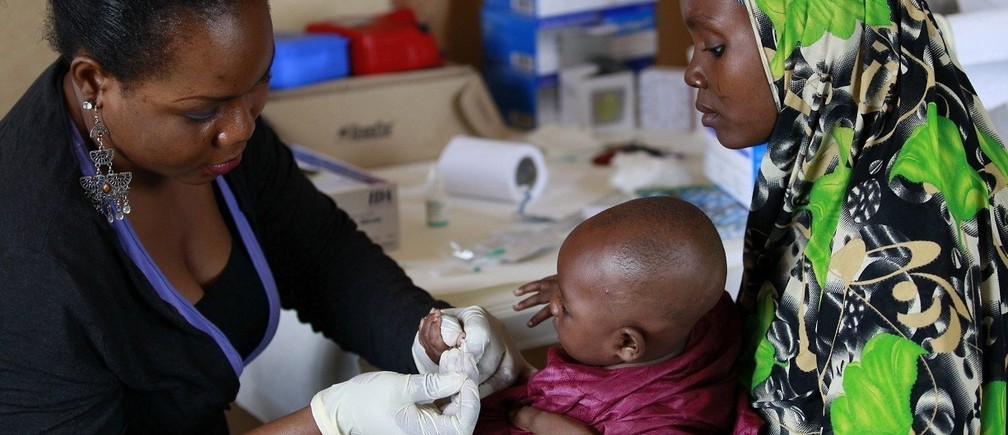
Universal Health Care Coverage and COVID-19
Healthcare is a fundamental human right. Health services, as well as the underlying determinants of health and universal health coverage, are critical tools for achieving health for all.
By Dr. Vera Kum|2022-12-06T18:55:54+00:00December 6th, 2022|Categories: Education & Health Policy, Publications|Tags: covid-19, Universal Health Care Coverage|
Healthcare is a fundamental human right. Health services, as well as the underlying determinants of health and universal health coverage, are critical tools for achieving health for all.
By Dr. Jean Cedric Kouam and Victoire Agnès Mokam|2022-12-06T18:49:59+00:00December 6th, 2022|Categories: Economics Affairs, Publications|Tags: Cameroon's Economic Growth, Financial Inclusion|
In Cameroon, the specific diagnostic analysis of the financial sector reveals the low effectiveness of the development policy put in place to revitalize the traditional banking system.
By Fabien SUNDJO|2022-12-06T18:28:15+00:00December 6th, 2022|Categories: Economics Affairs, Publications|Tags: Enhance Economic Growth|
Considering the importance of banks as drivers of economic growth and citizens’ well-being, Cameroon’s government has employed several measures to facilitate their success.
By Nkafu Policy Institute|2022-11-22T11:18:28+00:00November 22nd, 2022|Categories: Economics Affairs, Reports|Tags: Budget 2022 De L’état Du Cameroun, Promouvoir la Liberté Économique, Viabilité de la Dette Publique|
L'analyse de la viabilité de la dette publique effectuée révèle également que les ratios de solvabilité : dette extérieure/PIB et dette publique/PIB sont inférieurs à leurs seuils critiques respectifs calculés tandis que le ratio dette extérieure/exportations se situe au-dessus de son seuil calculé, ce qui indique que l’économie camerounaise est en situation de surendettement élevé bien que sa dette reste viable.
By Nkafu Policy Institute|2023-08-21T10:02:50+00:00November 16th, 2022|Categories: Education & Health Policy, Health, Private Health Insurance, Publications|Tags: Non-Communicable Diseases|
The burden of non-communicable diseases in low and middle-income countries has been on the rise this last decade. Despite the health financing strategies in place in Cameroon, there is an urgent need to develop better financial protection policies addressing non-communicable diseases (NCDs) as they count for more than 31% of the mortality rate in Cameroon and present a greater opportunity cost if left unaddressed.
Opposite College Jésus Marie – SIMBOCK, Yaounde Cameroon
Phone: +237 654 86 72 54
Email: [email protected]